
Review · DANISH DESIGN & ARCHITECTURE IN COPENHAGEN
Danish Design Classic and Modern Style Self-Guided Audio Tour
Design tells Copenhagen’s story. This GPS-guided audio walk connects grand churches, royal squares, museums, and modern Danish furniture in about 70 minutes. I like the freedom to walk at your own pace and the precise geolocation, which helps the narration begin when you reach the right place. The $11.99 price is fair for lifetime access, though you will need your own smartphone and headphones, and museum admission is not included.
The route is private, so your group is not tied to a guide or a fixed departure time. That suits independent visitors who want useful context without joining a crowd. The main tradeoff is that 70 minutes is enough for an introduction, not a full museum visit or a slow look at every building.
In This Review
- Key points before you set out
- Why this $11.99 audio walk works
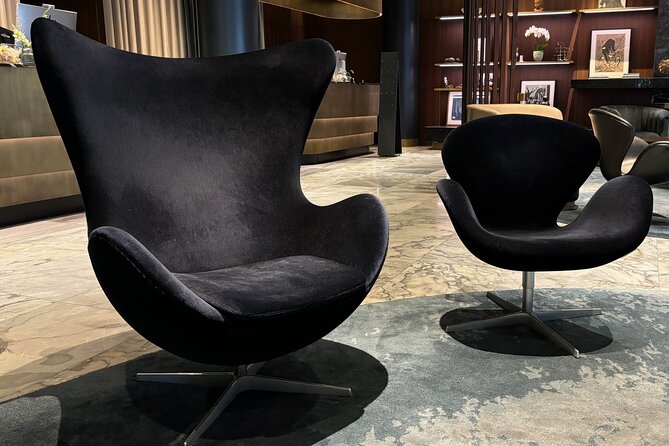
- Begin with Arne Jacobsen at the SAS Royal Hotel
- Tivoli Gardens and the city’s public face
- Glyptotek and the pleasure of a museum setting
- Viking objects at the National Museum
- Marble Church and the language of Rococo
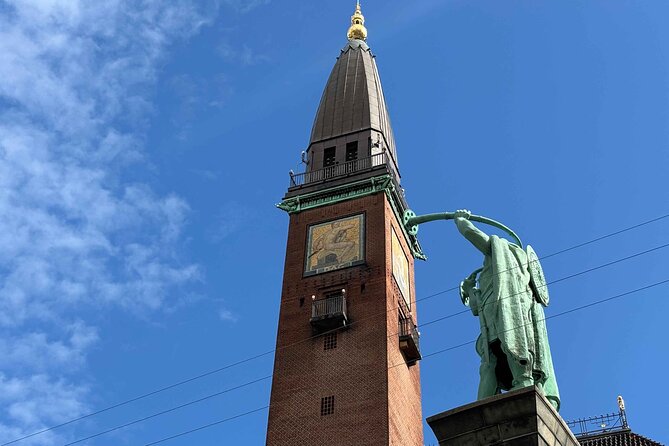
- City Hall and National Romantic design
- Royal Danish Theater and performance architecture
- Kongens Nytorv, Nyhavn, and Copenhagen’s changing center
- Thorvaldsen’s Museum and changing taste
- Christiansborg and the city’s working power
- Charlottenborg, Nikolaj Square, and adaptive buildings
- Odd Fellows Palace and the role of decoration
- Danish design at the final museum
- Timing, technology, and what to bring
- Who should book this Copenhagen design walk?
- Should you book it?
- FAQ
- Where does the Danish Design audio tour start?
- Where does the tour end?
- How long does the audio tour take?
- What does the $11.99 price include?
- Do I need to bring my own smartphone and headphones?
- Are museum admissions, transportation, food, or drinks included?
- Can I cancel for a full refund?
Key points before you set out
- Start at Arne Jacobsen’s SAS Royal Hotel: The route begins with one of the clearest examples of modern Danish design.
- Finish at Designmuseum Danmark: The final stop gives the tour a natural destination for anyone who wants to continue with Danish furniture and crafts.
- GPS triggers the narration: The VoiceMap app uses your location to guide you through the route and play the right commentary.
- Classical and modern styles share the route: You move from royal architecture and Rococo churches to Arne Jacobsen’s smooth, practical forms.
- Lifetime access adds value: You can repeat the audio walk instead of treating it as a one-use activity.
- Plan for your own costs: Transportation, food, drinks, headphones, and admission fees are not included.
Why this $11.99 audio walk works
I see this experience as a guided introduction to Copenhagen rather than a standard sightseeing tour. Its subject is Danish design, but the route also takes you through major parts of the city center, including Kongens Nytorv, Nyhavn, Christiansborg, and the area around Frederik’s Church.
That combination gives the tour its value. You are not simply walking from one furniture reference to the next. You are hearing how taste changed across centuries, from classical sculpture and Rococo architecture to National Romantic buildings and the clean lines linked with modern Danish design.
The price is low compared with a live private tour. At $11.99 per person, it can be a sensible choice if you want an orientation walk and are comfortable following directions on your phone. Lifetime access matters here. If you pass a stop too quickly, you can return to the route later and listen again.
The strongest feature is the technology. One rating describes the geolocation as very precise, and that is important for a city walk with many nearby buildings and squares. You are less likely to wonder which entrance, corner, or façade the narration is describing. The commentary also includes practical tips, giving the experience more use than a simple list of dates and names.
The limitation is just as clear. This is not a live conversation. You cannot ask why one designer influenced another, request a shorter route, or pause for a personal recommendation. The tour also lasts about 1 hour and 10 minutes, so anyone wanting to enter several museums or study architectural details will need extra time beyond the audio route.
More design and architecture walks:
- Copenhagen: Guided Architecture and Sustainability Tour
★ 4.8 · 73 reviews - Copenhagen Architecture and Sustainability Tour with local Guide
★ 5.0 · 39 reviews - Urban Design and Livability E-bike Tour
★ 4.8 · 21 reviews
Begin with Arne Jacobsen at the SAS Royal Hotel
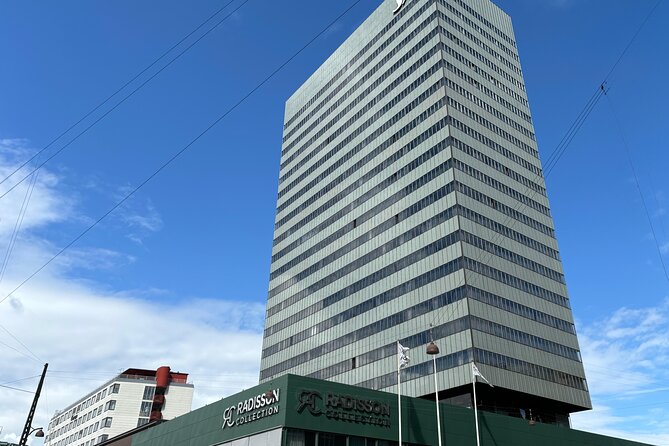
The starting point is the Radisson Collection Royal Hotel on Hammerichsgade, better known historically as Arne Jacobsen’s SAS Hotel. Completed in 1958, it is the right place to begin a story about modern Danish design.
Arne Jacobsen is presented as one of the people who helped shape the Danish design style known around the world today. His approach favored smooth, simple, organic, and practical forms. The building gives you a real setting for that idea before the tour moves into older parts of Copenhagen.
This opening also makes the route easy to understand. You begin with a complete modern design project, then walk through earlier styles and changing ideas about beauty, function, and craftsmanship.
You should arrive with your phone charged and the VoiceMap application ready. Directions to the starting point are included, and the audio begins when you reach the correct location. Since the tour is self-guided, you decide when to start during the listed operating period.
Tivoli Gardens and the city’s public face
Tivoli Gardens appears as an early stop and adds a different type of design to the route. Its elaborate Neoclassical stone entrance dates from a park that opened in 1843 and has operated ever since.
You are not being sent into an amusement-park ride program here. The point is the entrance and the long-running public character of the place. Tivoli shows how architecture can create anticipation before you even reach the attractions inside.
The tour helps you notice the contrast between Jacobsen’s mid-20th-century simplicity and the decorative language of an older entertainment venue. If you want to enter Tivoli, treat that as a separate visit and allow extra time. The audio experience itself does not include admissions.
Glyptotek and the pleasure of a museum setting
The Glyptotek is aimed at people interested in art from before the 20th century. Its winter garden and café make it more than a collection of galleries, while the collection grew from Carl Jacobsen’s personal holdings. Carl was the son of the founder of the Carlsberg brewery.
This stop adds a useful human detail to the route. Danish cultural institutions often reflect the taste and resources of individual collectors, and the Glyptotek provides a clear example. The museum’s architecture and interior spaces also support the tour’s larger theme: design is not limited to chairs and lamps.
You may find that the audio gives you enough background to decide if you want to return for a proper museum visit. The route is too short to replace time inside the Glyptotek, so think of it as a preview rather than a complete treatment.
Other self-guided routes in Copenhagen:
- Copenhagen Little Mermaid Exploration Game and Self-Guided Tour
★ 4.0 · 36 reviews - Half Day Self-Guided Audio Walking Private Tour in Copenhagen
★ 5.0 · 21 reviews - Monstour: A Self-Guided Audio Tour of Danish Folk Legends
★ 4.5 · 19 reviews - Copenhagen Self-Guided Murder Mystery Tour by the Round Tower
★ 4.0 · 11 reviews
Viking objects at the National Museum
The Danish National Museum building may not impress you from the outside, but its Viking material gives the design story an older starting point. Gold jewelry and other objects show that Danish design did not begin with 20th-century furniture.
This is one of the tour’s more useful ideas. Danish design can mean skill, proportion, decoration, and practical purpose across a very long period. The Viking artifacts provide evidence of careful making and visual judgment long before the modern designers discussed later in the route.
The stop may appeal to you most if you enjoy connections between archaeology and contemporary design. It also keeps the audio from becoming too narrowly focused on famous architects.
Marble Church and the language of Rococo
Frederik’s Church, usually called the Marble Church, introduces a grander style. It was built in the Rococo manner and based on St. Peter’s Basilica in Rome.
The scale and Roman reference make this a useful counterpoint to Jacobsen’s restrained modern forms. Here, design communicates power, ceremony, and religious ambition. The audio can help you read the building as part of a wider European tradition rather than as an isolated Copenhagen landmark.
The route does not promise an interior visit, so you should regard the church mainly as an architectural stop unless you independently choose to go inside. That distinction matters because the $11.99 fee covers the audio tour, not attraction admissions.
City Hall and National Romantic design
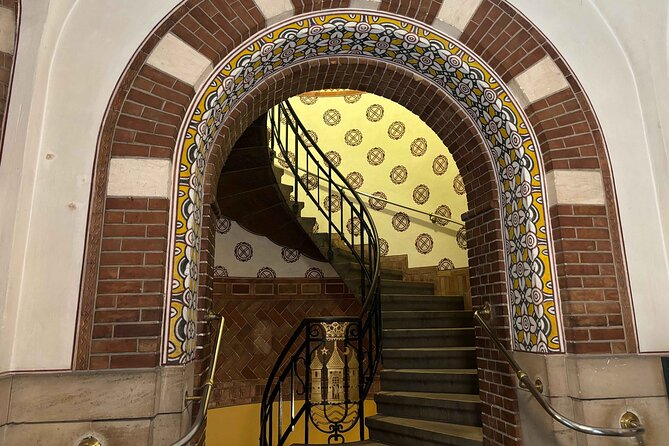
Copenhagen City Hall was completed in 1905 and is an excellent example of National Romantic style. In Denmark and elsewhere in Scandinavia, this style served as a local version of Art Nouveau, combining modern ideas with national references.
This stop helps bridge the gap between the older buildings and modern Danish design. It shows that the move toward modern forms was not instant. Copenhagen passed through several stages, including a period when architects looked for a style that felt both current and distinctly Scandinavian.
I like this part of the route because it gives you a way to compare buildings rather than merely collect names. Look at how City Hall differs from the SAS Hotel. The contrast makes the audio’s discussion of changing taste easier to follow.
Royal Danish Theater and performance architecture
The Royal Danish Theater is a Neo-Baroque building now used mainly for the Royal Danish Ballet. The description also notes that it is hardly ever full, an unusual practical detail that gives the stop some personality.
The building brings theatrical design into the route. Neo-Baroque architecture is concerned with ceremony and visual impact, which fits a theater meant to announce performance before the curtain rises.
You may not enter during the walk, and the tour does not include a ballet performance. Still, the exterior belongs on a design route because it shows how a building’s style can support its purpose.
Kongens Nytorv, Nyhavn, and Copenhagen’s changing center
Kongens Nytorv, or King’s Square, is one of Copenhagen’s major hubs. It links several important areas and gives you a sense of how the city’s streets and public spaces connect.
Nearby Nyhavn offers a different view. The 17th-century waterfront canal and entertainment district runs from Kongens Nytorv toward the harbor. Its brightly colored façades are now one of Copenhagen’s most recognizable scenes.
The audio uses these places to broaden the idea of design beyond individual monuments. Urban design includes the way a square organizes movement, the way a canal shapes a street, and the way colorful façades create a memorable public identity.
Nyhavn can be crowded, so the self-guided format helps. You are not waiting for a group to gather around one guide. You can pause, move aside, or replay a section when you have a clearer view.
Thorvaldsen’s Museum and changing taste
Thorvaldsen’s Museum is a good symbol of changing Danish taste. Bertel Thorvaldsen was a Danish sculptor who went to Italy and learned to work in the Classical style.
His museum represents a period when the Classical tradition carried great prestige. The tour uses that background to show how preferences later shifted. Styles that once seemed modern and ideal can eventually feel formal or old-fashioned as new ideas take hold.
This is an especially helpful stop if you are unfamiliar with the difference between Classical, Rococo, Neo-Baroque, Art Nouveau, and modern Danish design. You do not need an art degree. The route gives you a simple thread: Copenhagen’s design story is also a story about what each generation decides is attractive, useful, and worth preserving.
Christiansborg and the city’s working power
Christiansborg Palace is used for state dinners and is home to Denmark’s Parliament, the Folketing. It brings political life into a route otherwise focused on museums, churches, theaters, and hotels.
The palace matters because design often reflects who holds power and how that power wants to be seen. Formal state architecture communicates continuity and ceremony, while the nearby modern design tradition later places more weight on function and everyday use.
You can treat this stop as part of a broader city walk. The tour does not include palace admission, state events, or transportation between points. If you want to visit the interiors, plan that separately.
Charlottenborg, Nikolaj Square, and adaptive buildings
Charlottenborg Palace was originally a private mansion for a king’s brother. It now houses the Royal Danish Academy for the Fine Arts.
That change of purpose fits the tour’s focus on design and taste. A building can survive while its function changes, and the new use can give an old structure a place in modern cultural life.
The church near Nikolaj Square offers another example. The current building is a 1909 restoration of an older church that burned down. It has served as a naval museum and a library, and it is now a modern cultural venue rather than a working church.
These stops are valuable because they show Copenhagen as a living city, not a collection of frozen monuments. You see how buildings can be repaired, reused, and assigned new roles. The drawback is that the audio may leave you wanting more detail about the current exhibitions or interiors, which are outside the tour price.
Odd Fellows Palace and the role of decoration
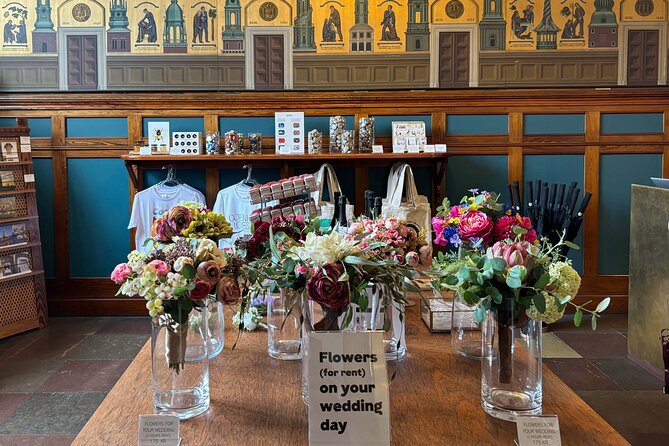
The Odd Fellows Palace gets its name from its long connection with a Masonic Lodge. It is now used mainly as a wedding and party venue.
This is a smaller stop, but it helps keep the route varied. Not every important design example is a museum or government building. Private halls and event spaces also use architecture to create a sense of occasion.
The stop may be most interesting when you compare it with the SAS Hotel. One uses ceremony and decoration, while the other is associated with clean, practical forms. The audio walk works best when you make these comparisons as you go.
Danish design at the final museum
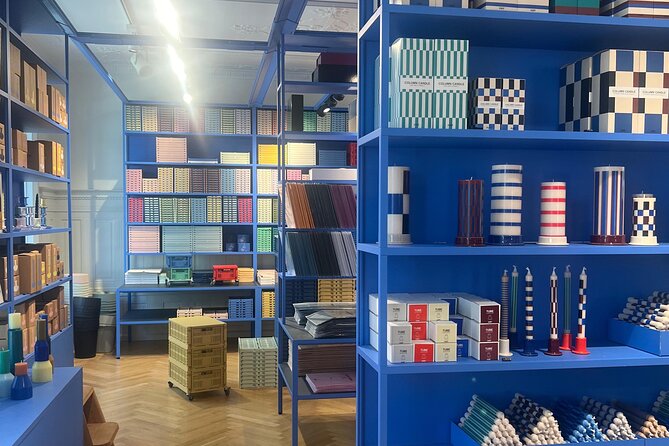
The route ends at Designmuseum Danmark on Bredgade. This is a fitting finish because the museum covers Danish and international design and crafts, including work by Arne Jacobsen, Jacob Jensen, and Kaare Klint.
You can think of the final stop as a handoff. The audio gives you a framework for understanding Danish design, then the museum gives you a chance to see objects and designers in a more focused setting.
Admission is not included, so budget separately if you want to go inside. That is not a major flaw, but it does affect the day’s total cost. The tour itself remains inexpensive, while the museum can become the main follow-up activity.
Ending at Designmuseum Danmark also makes the route practical for design fans. You are not left at a random street corner after hearing about modern furniture. You finish at the place most likely to help you continue the subject.
Timing, technology, and what to bring
The advertised duration is about 1 hour and 10 minutes. I would treat that as listening and walking time, not a full schedule for photographs, café breaks, museum visits, or long stops inside churches and cultural sites.
Bring:
- A smartphone
- Headphones
- A charged battery
- The VoiceMap application
- Comfortable walking shoes
- Extra time if you plan to enter any museum or attraction
The tour includes offline access to the audio, maps, and geodata. That is useful if you prefer not to rely on a constant mobile connection while walking. You still need your own device and headphones, since neither is supplied.
Transportation is not included. The route is designed as a walking experience, so you should not expect a vehicle, transit pass, or transfer between the start and finish. You also pay for your own food, drinks, and personal expenses.
The GPS feature is the heart of the format. A precise location trigger can make an independent walk feel organized without making it rigid. You can pause the audio, take a photo, or slow down when a square is busy. If your family dislikes being tied to a guide but still wants explanation, this format is particularly well suited.
Who should book this Copenhagen design walk?
I would recommend it to independent visitors who want more context than a map provides. It works especially well for:
- First-time Copenhagen visitors who want a city-center orientation
- Design fans interested in the path from classical architecture to modern furniture
- Families who prefer private sightseeing
- Couples who want to set their own pace
- Repeat visitors looking for a focused walk with lifetime access
- Budget-conscious visitors who do not need a live guide
It is less suitable if you want a long museum visit, a personal conversation, or a tour built around food and shopping. It may also feel rushed if you stop often for photographs or plan to enter several sites.
The experience has a perfect rating from three published ratings, with the strongest praise focused on its clear narration, useful tips, accurate geolocation, and independence from a live guide. Those are the features I would value most here. The high score should be read alongside the small sample size, but the praise matches what the format is designed to do.
Should you book it?
Book this audio walk if you want a low-cost, private way to connect Copenhagen’s major sights through the idea of design. At $11.99, lifetime access gives you room to repeat sections, revisit the city later, or use the route as a starting point before spending more time at Designmuseum Danmark.
Skip it if you want included admissions, transportation, or a human guide who can adjust the tour around your interests. For everyone else, it is a practical introduction with a strong route, good historical range, and enough flexibility to make Copenhagen feel like your own city walk.
Free cancellation is available up to 24 hours before the start time. Cancellations within 24 hours are not refunded, and changes in that period are not accepted.
FAQ
Where does the Danish Design audio tour start?
It starts at the Radisson Collection Royal Hotel, formerly Arne Jacobsen’s SAS Royal Hotel, at Hammerichsgade 1 in Copenhagen.
Where does the tour end?
The tour ends at Designmuseum Danmark, Bredgade 68, Copenhagen.
How long does the audio tour take?
The stated duration is approximately 1 hour and 10 minutes.
What does the $11.99 price include?
It includes lifetime access to the Danish design audio tour, the VoiceMap application, offline audio, maps, geodata, GPS guidance, and directions to the starting point.
Do I need to bring my own smartphone and headphones?
Yes. A smartphone and headphones are not included, so you need to provide both.
Are museum admissions, transportation, food, or drinks included?
No. Transportation, food, drinks, personal expenses, and admission fees during the tour are not included.
Can I cancel for a full refund?
Yes. You can cancel at least 24 hours before the experience start time for a full refund. Cancellations or changes made within 24 hours are not accepted, and the amount paid is not refunded.
More Audio Tours in Copenhagen
- Explore Copenhagen: Self-Guided Audio Tour
★ 4.0 · 8 reviews - The Philosopher’s Last Walk: An audio tour on the life of Søren Kierkegaard
★ 4.5 · 5 reviews - Cool Nørrebro and Foodie Tips Self Guided Audio Walking Tour
★ 5.0 · 4 reviews - Copenhagen Scavenger Hunt and Highlights Self Guided Audio Tour
★ 4.5 · 3 reviews
Newest around Copenhagen
- WWII Copenhagen Nyhavn and War Museum Private Walking Tour★ 5.0 · 2 reviews
- Half Day Exploration of Helsingør and Kronborg★ 3.5 · 3 reviews
- Helsingør Castle and Historic City Self-Guided Walking Tour★ 4.0 · 4 reviews
- Full-Day Tour; Castle, Palace & Cathedral, Winter(JAN-MAR)★ 5.0 · 11 reviews
- walking tour – Copenhagen and Christiansborg 3 hours★ 4.0 · 7 reviews
- Copenhagen Walking Tour with Food Testing (smorrebrod dish & snap)★ 4.5 · 10 reviews
- The Philosopher’s Last Walk: An audio tour on the life of Søren Kierkegaard★ 4.5 · 5 reviews
- The Forgotten Giants Private Tour★ 5.0 · 3 reviews
Danish Design & Architecture, compared.

Copenhagen Architecture and Sustainability Tour with local Guide
Read our review →
Copenhagen City, Old Town, Nyhavn, Architecture Walking Tour
Read our review →Copenhagen City, Old Town, Nyhavn, Architecture Walking Tour
Read our review →Browse the lists this tour appears in