
Review · DANISH DESIGN & ARCHITECTURE IN COPENHAGEN
Copenhagen: Guided Architecture and Sustainability Tour
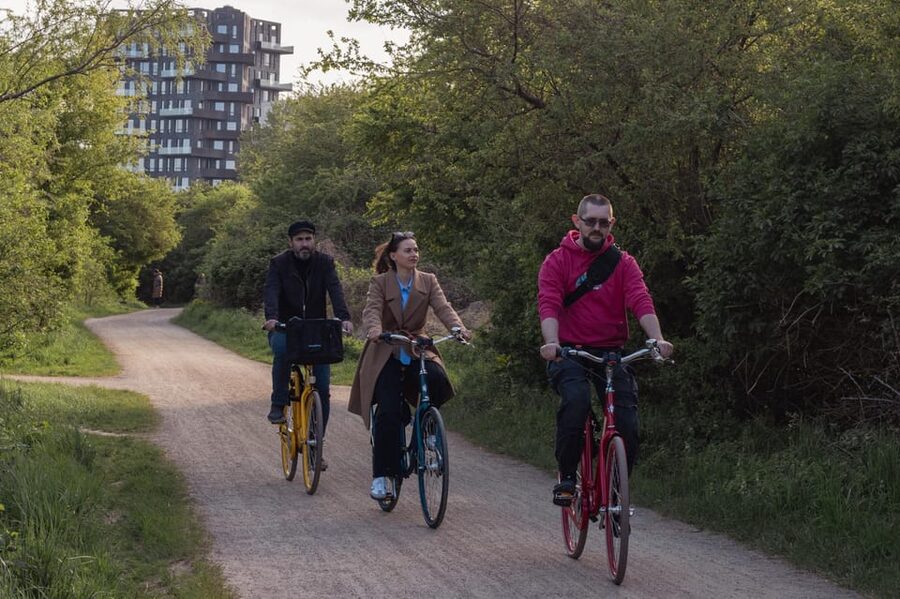
Copenhagen makes urban design feel personal. This three-hour bike tour connects modern architecture with the daily life it supports, from harbor swimming areas to student housing and car-free public spaces. I like the way it gets beyond the usual inner-city sights, and I like that guides such as René, Jörn, and Josephine add their own stories rather than simply pointing at buildings. The main drawback is the distance: you will cycle about 17 kilometers, and one group had trouble staying together.
You will see Copenhagen by bike, which is often the right tool for understanding the city. Sustainability and human-centered planning are not treated as abstract ideas here. They show up in bridges, housing, public squares, former industrial areas, and the way people move around. The tour is strongest for visitors who enjoy modern design. It gives less attention to older architecture, and you need to be comfortable riding in city conditions.
In This Review
- Copenhagen architecture by bicycle: key points
- Why this bike tour shows Copenhagen at its best
- Starting at Tropical Bikes on Vester Voldgade
- Blox and Lille Langebro: design beside the harbor
- Islands Brygge: a former port turned public space
- Karen Blixens Plads and the ride toward Ørestad
- Tietgen Residence Hall: student housing with a strong idea
- Amager Fælled and Gemini Residence: city and open space
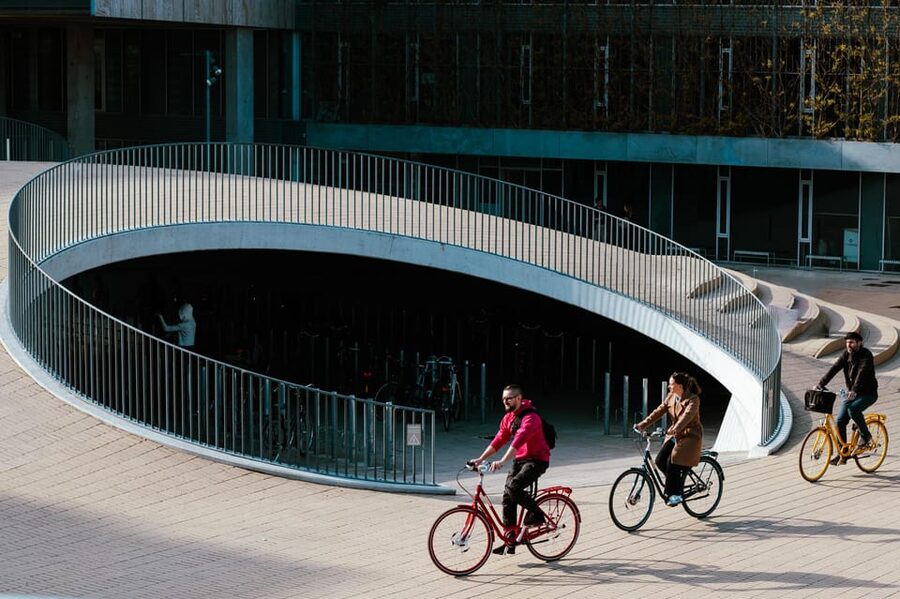
- Cykelslangen and Kaktus Towers: Copenhagen’s bicycle-first thinking
- Enghave Plads and Israels Plads: public squares with new purpose
- What the $70 price buys you
- Who should book this Copenhagen architecture tour?
- The final call: book it for the city behind the postcard
- FAQ
- How long is the Copenhagen architecture and sustainability tour?
- What languages are available?
- Where does the tour start?
- Are bicycles included?
- Are children’s bikes available?
- What happens if it rains?
- Are baskets and phone holders included?
- Can I cancel the booking?
Copenhagen architecture by bicycle: key points
- 17 kilometers of riding: Expect a real half-day outing, not a short city spin.
- Modern city planning: See how Copenhagen connects architecture, cycling, public space, and environmental goals.
- Less familiar stops: The route reaches Ørestad, Amager Fælled, the harbor, and former industrial districts.
- Personal local guiding: René, Jörn, Josephine, and other guides have been praised for clear explanations, humor, and careful attention to safety.
- Practical setup: Bikes, helmets, rain ponchos, luggage storage, toilets, and a lounge are included.
- Extra bike equipment costs more: Baskets and phone holders cost 49 DKK each, while e-bikes and other upgrades require advance booking.
Why this bike tour shows Copenhagen at its best
Copenhagen is easy to admire from a sightseeing bus. You can also understand it better from a bicycle. At street level, you notice how bridges meet cycle paths, how old industrial buildings gain new uses, and how public squares are designed for people instead of only cars.
This tour uses that advantage well. Rather than staying around the most photographed central sights, it follows a broad route through newer parts of the city and several major redevelopment projects. You will still see water, historic districts, and familiar Copenhagen character, but the focus is on how the city has changed.
I especially like the link between design and ordinary life. A building is not presented only as an object to photograph. You hear how it fits into housing, transport, recreation, or public space. That makes the tour useful even if you are not an architecture specialist.
The guides also seem to be a major part of the experience. René is praised for being friendly, informative, and careful with group safety. Jörn brings a personal account of the decisions that shaped Copenhagen. Josephine combines architectural knowledge with humor. Those details matter because a three-hour route can feel dry if the guide treats it like a lecture.
More design and architecture walks:
- Copenhagen Architecture and Sustainability Tour with local Guide
★ 5.0 · 39 reviews - Urban Design and Livability E-bike Tour
★ 4.8 · 21 reviews - Urban Design and Livability E-bike Tour
★ 5.0 · 18 reviews
Starting at Tropical Bikes on Vester Voldgade
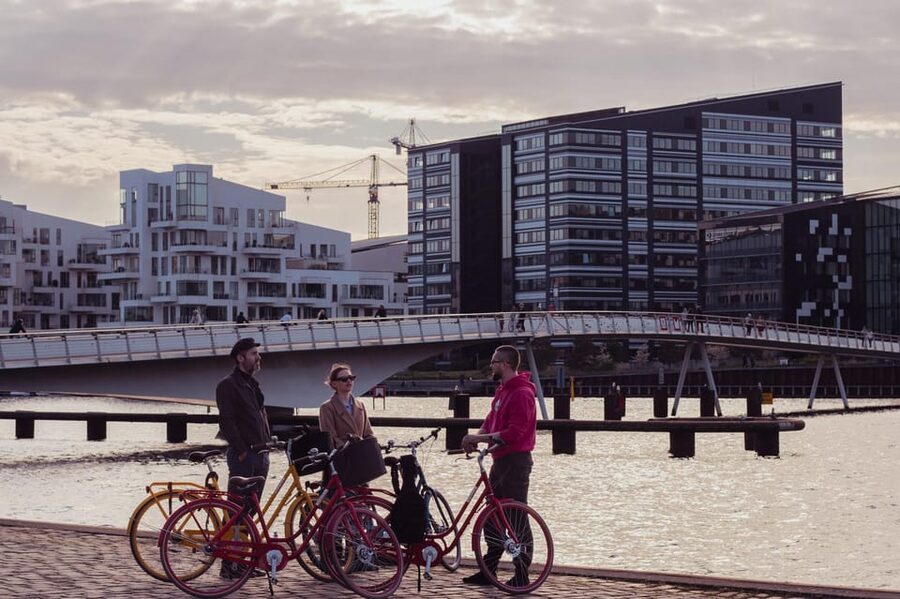
The listed starting point is Tropical Bikes at Vester Voldgade 2A, though the exact meeting point can vary with the option you book. The shop provides bikes in 48, 51, and 56-centimeter frame sizes, along with 24-inch and 26-inch children’s bikes that must be reserved ahead of time.
A helmet is included, and you can leave luggage at the shop. There is also a lounge with toilets before and after the ride. That is a small but useful feature, especially if you have just arrived in Copenhagen or are fitting this tour between other activities.
You should wear comfortable shoes and clothing suited to the weather. The tour runs in rain as well as sunshine, and a rain poncho is provided if needed. Copenhagen’s weather can change quickly, so the sensible approach is to dress in layers and keep your hands free for riding.
Baskets and phone holders are not included. Each costs 49 DKK on site. If you need an e-bike, cargo bike, tandem, e-cargo bike, or child seat, reserve it in advance. The listed upgrade prices are 249 DKK for an e-bike, 449 DKK for a cargo or tandem bike, 649 DKK for an e-cargo bike, and 119 DKK for a child seat.
Blox and Lille Langebro: design beside the harbor
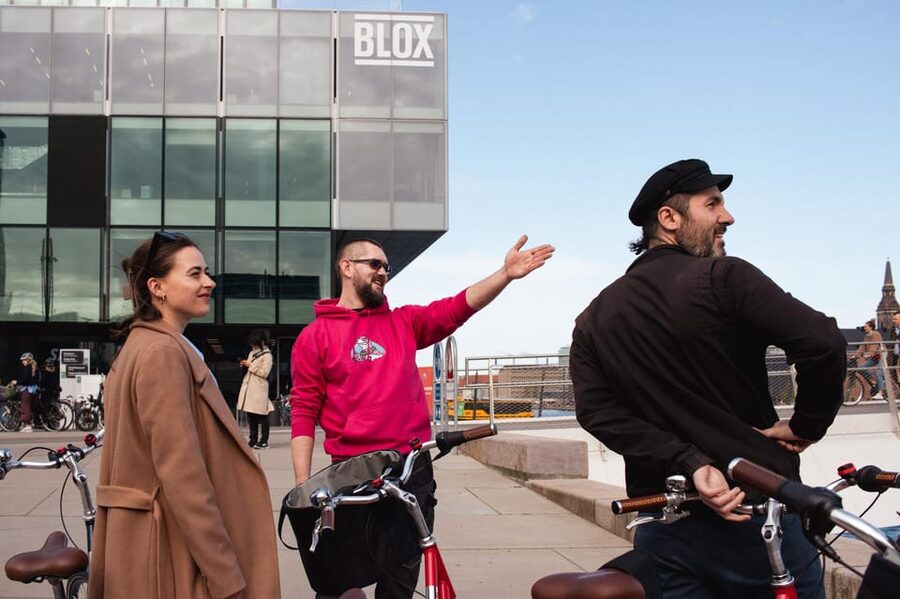
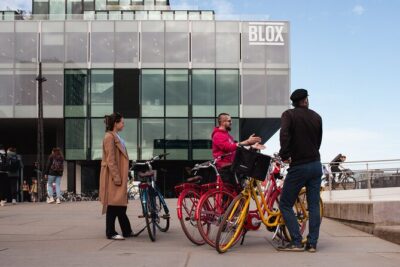
The first stop is Blox, a major example of Copenhagen’s newer architectural direction. The tour spends about 10 minutes here, giving you time to look at how a contemporary building fits into the waterfront and the city center.
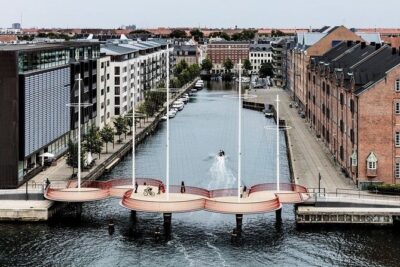
From there, you continue to Lille Langebro, the graceful bicycle and pedestrian bridge across the harbor. The stop is short, around five minutes, but it makes an important point: Copenhagen’s bridges are not just for cars. They help connect neighborhoods by foot and bicycle, making the harbor part of everyday city movement.
You may find this early section especially useful if you are still getting used to Copenhagen’s cycling culture. The guide can point out how the route works, while you see the relationship between architecture and transportation at close range. The brief stops also keep the tour moving.
Islands Brygge: a former port turned public space
At Havnebadet Islands Brygge, the focus shifts from buildings to public life. The harbor bath is an example of how a once-industrial waterfront can become a place for recreation and community use.
You stop for about 10 minutes. The point is not only the swimming area itself, but the change in attitude toward the harbor. Instead of treating the water as a working edge closed off from residents, Copenhagen has opened parts of it for daily use.
This is one of the tour’s strongest ideas. Sustainability is not limited to solar panels or energy-efficient construction. It can also mean reusing central land, improving access to water, and giving people attractive places to spend time without driving elsewhere.
A few more Copenhagen outings worth comparing
- Copenhagen Card-Discover: 80+ Attractions & Public Transport
★ 4.6 · 5,351 reviews - Copenhagen: Hop-On Hop-Off Bus Tour with Boat Tour Option
★ 3.9 · 4,122 reviews - Private Walking Grand Tour of Copenhagen
★ 5.0 · 3,953 reviews - From Copenhagen: Lund and Malmö 2-Country Tour
★ 4.7 · 3,807 reviews
Karen Blixens Plads and the ride toward Ørestad
Karen Blixens Plads brings you to another public space shaped by contemporary planning. The tour allows about 10 minutes here, then continues toward Ørestad, with scenic views along the way.
Ørestad is one of the clearest places to judge Copenhagen’s modern building program. Its architecture is bold and often experimental, but the important question is how those buildings work as part of a larger district. The tour examines the connection between modern form and sustainable living rather than treating unusual shapes as decoration.
The views on the way are part of the experience. A bicycle lets you cover more ground than a walking tour without sealing you inside a vehicle. You can see how the newer district changes as you move through it, though you should expect some riding between the formal stops.
If you mainly want old churches, royal interiors, and medieval streets, Ørestad may feel like a change of subject. If you want to understand the city’s newer direction, this is a central part of the route.
Tietgen Residence Hall: student housing with a strong idea
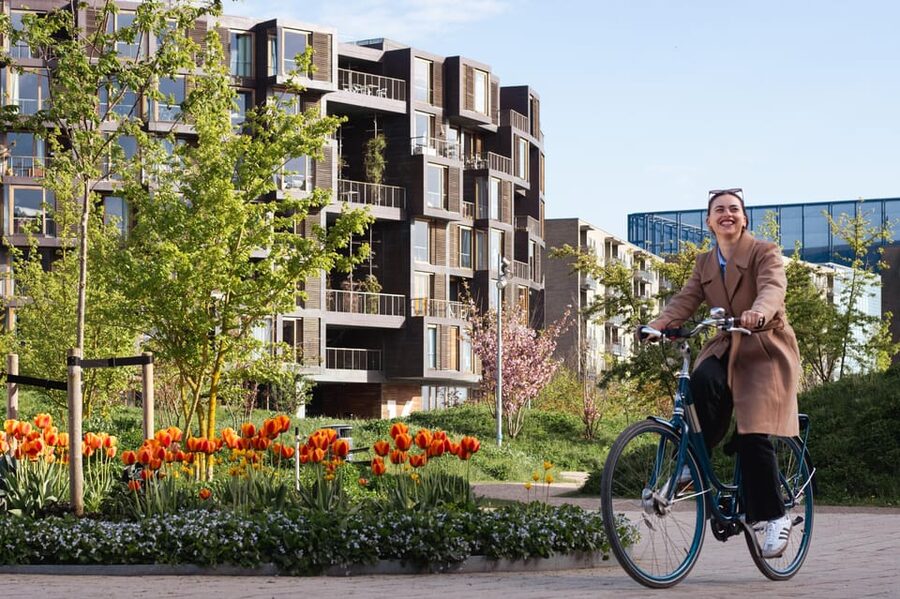
The Tietgen Residence Hall receives about 10 minutes of guided attention. Its circular form is one of Copenhagen’s most recognizable modern housing designs, and its purpose gives the architecture practical weight.
Student housing can easily become a discussion about appearance alone. Here, you look at how the shape relates to shared life, private rooms, and community. The stop is a good reminder that architecture affects how people meet, study, rest, and move through their home.
The tour does not require you to know architectural terms in advance. Guides explain what you are seeing in accessible language, and Josephine in particular has been praised for making complex points easy to follow while keeping the mood light.
Amager Fælled and Gemini Residence: city and open space
Amager Fælled adds a different setting. The guide spends around 10 minutes here, giving the route a break from dense construction and showing how open space fits into Copenhagen’s wider planning goals.
This is where the tour can feel broader than a standard architecture outing. You are not only looking at buildings. You are considering how a city preserves room for nature, recreation, and relief from hard surfaces while it continues to grow.
Next comes E/F Gemini Residence, another example of a former industrial structure adapted for housing. The tour gives it about 10 minutes. Its value lies in the idea of reuse: an old industrial framework can gain a new life instead of being cleared away and replaced.
I find this pairing useful. Amager Fælled shows the value of leaving open space in an expanding city. Gemini Residence shows the value of keeping and adapting what already exists. Together, they make the sustainability discussion more practical.
Cykelslangen and Kaktus Towers: Copenhagen’s bicycle-first thinking
Cykelslangen, or the bicycle snake, is covered as a scenic riding section of about five minutes. It is a memorable example of infrastructure designed specifically for cyclists, allowing you to experience the route rather than simply view it from the side.
This part can be one of the most enjoyable moments for anyone curious about Copenhagen’s cycling system. You see how a dedicated route can make bicycle travel smoother and more direct. You also get a short change of pace after several stops that involve listening.
The next major stop is Kaktus Towers, where the guide spends roughly 10 minutes. The towers bring the discussion back to high-density housing and the question of how to fit more people into the city without giving up design quality.
You will not simply collect names of buildings. The guide uses places such as Kaktus Towers to explain the choices behind new construction. The result is more useful than a list of famous architects because you start asking how each project serves residents and the wider district.
One practical note: a later addition to the route has been suggested, including other waterfront bridges and CopenHill. Those are not listed stops, so do not book this tour expecting them. The route already has a full schedule and a considerable riding distance.
Enghave Plads and Israels Plads: public squares with new purpose
Enghave Plads is another stop where architecture meets daily urban life. The route gives you about 10 minutes to consider how a public square can support local activity and movement while fitting into a changing neighborhood.
The final main stop is Israels Plads, also covered for around 10 minutes. This space shows how an older city area can be reshaped into a more environmentally conscious public place while retaining links to Copenhagen’s past.
These final stops help tie the route together. You have seen harbor redevelopment, newer housing, open space, bicycle infrastructure, and adapted industrial buildings. At Israels Plads, the focus returns to the public realm and the way a city can update familiar places without losing its sense of identity.
The tour then returns to Tropical Bikes, with drop-off options connected to the starting location. The exact start and finish arrangement depends on the option booked, so check that detail before setting a tight schedule afterward.
What the $70 price buys you
At $70 per person, this is not the cheapest way to spend three hours in Copenhagen. You can rent a bicycle for less and visit several districts on your own. The value here is the route design and the guide’s interpretation.
You are covering roughly 17 kilometers, using bikes in several sizes, with a helmet, rain poncho, luggage storage, and access to the lounge and toilets. Most important, you are not spending time planning the route or researching the architectural background of every stop.
The price makes the most sense if you want context. It is also useful early in a Copenhagen visit, because the route helps you understand how the city fits together. Afterward, you may want to return to a district that caught your eye.
The price is less convincing if you already know Copenhagen’s modern architecture well or prefer a slow walking tour with long visits inside buildings. The itinerary is mainly an outdoor ride, and the short stops often last five or 10 minutes.
Who should book this Copenhagen architecture tour?
I would recommend it to:
- Visitors who enjoy modern buildings and urban planning
- Cyclists who want to see Copenhagen as residents do
- Repeat visitors seeking areas beyond the central attractions
- Couples, families, and private groups comfortable with a 17-kilometer ride
- People interested in how sustainability shapes housing, transport, and public areas
- Anyone who appreciates a guide with personal stories and a little humor
You should think twice if you cannot ride a bicycle or dislike cycling in a city. The tour is not suitable for people who cannot ride, and it begins in any weather.
Families can request children’s bikes, but they need to reserve the correct size in advance. A child seat is also available for an additional fee. Private groups are offered, which may be worthwhile if you want a slower pace or more control over the conversation.
One caution deserves attention: group management has not always been perfect. A report of people getting separated suggests you should stay alert, keep the guide in sight, and follow instructions at crossings. The guide’s safety focus is a plus, but cyclists still need to manage their own attention.
The final call: book it for the city behind the postcard
Book this tour if you want Copenhagen explained through its buildings, bridges, housing, harbor, and public spaces. The strongest feature is the way the bicycle route connects places that make the city’s sustainability goals visible in ordinary life.
The best guides add real value. René has been praised for safety and warmth, Jörn for passionate storytelling, and Josephine for clear explanations and jokes. You get the strongest experience when you arrive ready to ride, listen, and look beyond the most famous sights.
Skip it if your main interest is historic Copenhagen, indoor architecture, or a short and gentle outing. At $70, it earns its price through the guide and the carefully chosen route, not through lavish extras. For an active visitor who wants a fresh view of the city, it is a thoughtful and useful three hours.
FAQ
How long is the Copenhagen architecture and sustainability tour?
The tour lasts three hours and covers roughly 17 kilometers by bicycle.
What languages are available?
Live guiding is available in English and German.
Where does the tour start?
One listed starting point is Tropical Bikes at Vester Voldgade 2A. The meeting point may vary depending on the option booked.
Are bicycles included?
Yes. Bikes in 48, 51, and 56-centimeter frame sizes are included, along with helmets.
Are children’s bikes available?
Yes. Children’s bikes with 24-inch and 26-inch frames are available, but you need to reserve them beforehand.
What happens if it rains?
The tour starts in any weather. A rain poncho is provided, but you should wear suitable clothing and comfortable shoes.
Are baskets and phone holders included?
No. Baskets and phone holders can be purchased on site for 49 DKK each.
Can I cancel the booking?
You can cancel up to 24 hours before the tour for a full refund. A reserve-now-and-pay-later option is also available.
Newest around Copenhagen
- WWII Copenhagen Nyhavn and War Museum Private Walking Tour★ 5.0 · 2 reviews
- Half Day Exploration of Helsingør and Kronborg★ 3.5 · 3 reviews
- Helsingør Castle and Historic City Self-Guided Walking Tour★ 4.0 · 4 reviews
- Full-Day Tour; Castle, Palace & Cathedral, Winter(JAN-MAR)★ 5.0 · 11 reviews
- walking tour – Copenhagen and Christiansborg 3 hours★ 4.0 · 7 reviews
- Copenhagen Walking Tour with Food Testing (smorrebrod dish & snap)★ 4.5 · 10 reviews
- The Philosopher’s Last Walk: An audio tour on the life of Søren Kierkegaard★ 4.5 · 5 reviews
- The Forgotten Giants Private Tour★ 5.0 · 3 reviews
Danish Design & Architecture, compared.
Copenhagen Architecture and Sustainability Tour with local Guide
Read our review →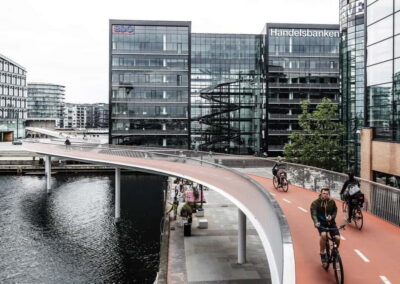
Copenhagen City, Old Town, Nyhavn, Architecture Walking Tour
Read our review →
Danish Design Classic and Modern Style Self-Guided Audio Tour
Read our review →Copenhagen City, Old Town, Nyhavn, Architecture Walking Tour
Read our review →Browse the lists this tour appears in