
Review · SELF-GUIDED TOURS IN COPENHAGEN
Explore Copenhagen: Self-Guided Audio Tour
Copenhagen rewards curious walkers. I like the offline map and audio directions, which help you move between sights without relying entirely on a live GPS signal. I also like the broad route: City Hall, the Round Tower, Rosenborg Castle, Marble Church, Amalienborg, the Royal Danish Theatre, and Christiansborg’s kitchens. The main concern is uneven audio quality, with background effects and a flat narration making some sections harder to hear.
This is a self-guided walk, not a live tour with a guide waiting at the first stop. You download a ZIP file before setting out, then use the included map and 13 audio files on your own phone. At $15.29, it is a sensible buy if you want structure and historical context without paying for a private guide, but admission tickets and transportation are extra.
In This Review
- Key points to know before you walk
- Starting at Copenhagen City Hall Square
- The Round Tower and its unusual ramp
- Rosenborg Castle and Christian IV’s Copenhagen
- Marble Church and the planning of Frederiksstaden
- Amalienborg, the octagonal royal complex
- The Royal Danish Theatre’s changing role
- Christiansborg’s Royal Kitchens and layers of power
- What the audio format gets right
- Price, time, and the real value
- Who should choose this Copenhagen walk?
- Should you book it?
- FAQ
- Where does the Copenhagen audio tour begin?
- Where does the tour end?
- How long does the tour take?
- What sights are included?
- Is a physical guide included?
- Are admission tickets included?
- What do I need before starting?
- What language is available?
- Can I cancel for a full refund?
Key points to know before you walk
- Offline directions make the route practical: The tour includes a map and spoken directions to each destination, so you are not left guessing when your phone loses its signal.
- Seven major sights fill two to three hours: The route links central Copenhagen’s civic buildings, royal palaces, churches, theaters, and historic kitchens.
- You control the pace: You can pause, linger, skip a stop, or change your starting and ending points to fit your day.
- Admission is not included: The audio takes you to each place, but entry fees for the Round Tower, Rosenborg Castle, or other paid interiors come from your own pocket.
- Prepare before leaving: Download and unzip the files ahead of time, and make sure the audio is ready before you reach City Hall Square.
- English is the only language offered: The material suits English-speaking visitors who want basic historical context while walking independently.
Starting at Copenhagen City Hall Square
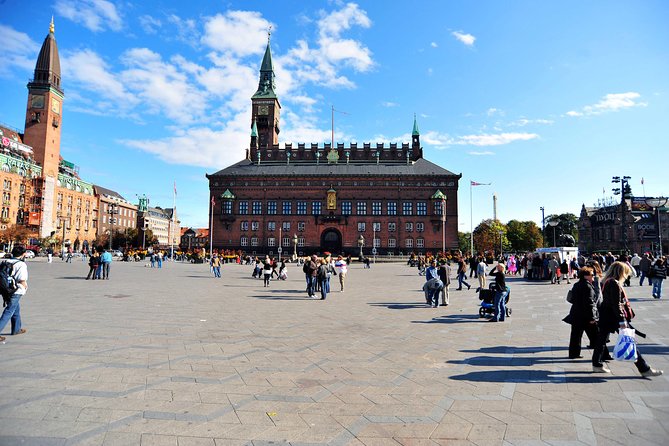
The route begins at Rådhuspladsen, Copenhagen’s largest square. This is a useful place to begin because it gives you a clear sense of the city center before the walk turns toward royal Copenhagen.
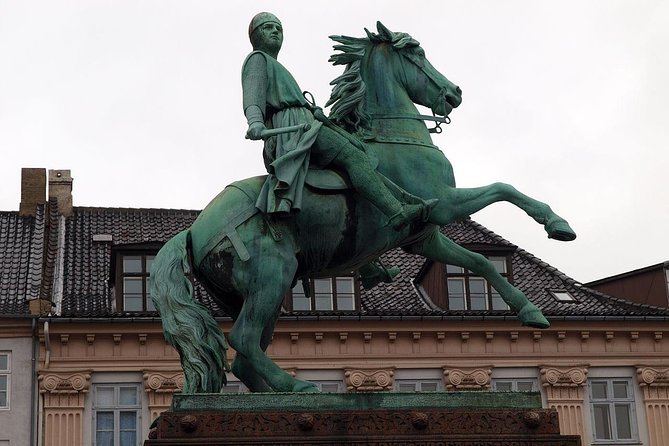
Copenhagen City Hall is easy to recognize. Look for the ornate brick front, the clock tower, and the gilded statue of Bishop Absalon above the front balcony. Absalon is remembered as the city’s founder, so the building connects modern civic life with Copenhagen’s early beginnings.
The hall was designed by Martin Nyrop in the National Romantic style. Nyrop took inspiration from Siena’s City Hall, which gives the building a distinctly northern European character with an Italian reference behind it. The audio stop lasts about 15 minutes, enough time to look carefully at the exterior and get oriented.
Admission is not included, and the route information does not promise interior access. I would treat this first stop mainly as an architectural introduction and meeting point. City Hall Square is also a good place to check that your downloaded files are working before you get farther from the center.
Other self-guided routes in Copenhagen:
- Copenhagen Little Mermaid Exploration Game and Self-Guided Tour
★ 4.0 · 36 reviews - Half Day Self-Guided Audio Walking Private Tour in Copenhagen
★ 5.0 · 21 reviews - Monstour: A Self-Guided Audio Tour of Danish Folk Legends
★ 4.5 · 19 reviews
The Round Tower and its unusual ramp
The Round Tower is one of the most memorable stops because its design is different from the usual European lookout tower. Built in the 17th century as an astronomical observatory, it forms part of the Trinitatis Complex with Trinitatis Church and an academic library once connected to Copenhagen University.
The tower’s great practical detail is its spiral ramp. Instead of climbing a conventional staircase all the way up, you follow a winding path inside the building. That feature alone gives the stop a different feel from a standard church tower or castle stairway.
The library opened in 1657 and once held the university’s entire collection, about 10,000 books. That number gives you a useful sense of how concentrated academic life once was. Today, you can focus on the building’s purpose, its connection to the church and library, and the way its interior was designed for movement as well as observation.
The audio portion is listed at about 15 minutes. Entry is extra, so decide in advance if you want to pay to go inside. If you are trying to keep the outing close to two hours, you can listen outside and continue. If you have more time, this is one of the stops where an interior visit may add the most to the walk.
Rosenborg Castle and Christian IV’s Copenhagen
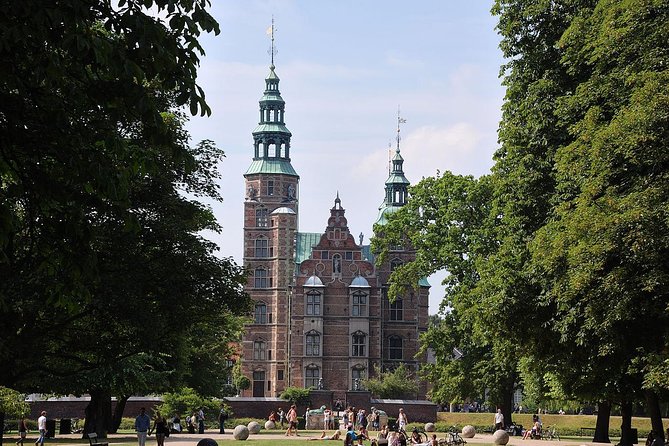
Rosenborg Castle introduces you to the building projects of King Christian IV. The castle was built in the Dutch Renaissance style, a look marked by tall gables and spires. It did not reach its present form until 1624, after several rounds of expansion.
The stop works well after the Round Tower because the two sights place you in the Copenhagen of ambitious royal construction. You get a sense of a king who commissioned several major architectural projects, rather than seeing the castle as an isolated monument.
The audio gives you about 15 minutes here. That is enough for an exterior visit and a short explanation, but it is not a substitute for exploring the castle rooms if you decide to buy admission. Since entry is not covered, the tour is best seen as a guide to the setting and significance, not as a full castle visit.
I like this arrangement for an independent walk. You can make a quick stop if you have already seen royal interiors elsewhere, or pause longer if Rosenborg is a priority. The route does not force you to follow a group or keep up with a guide.
Marble Church and the planning of Frederiksstaden
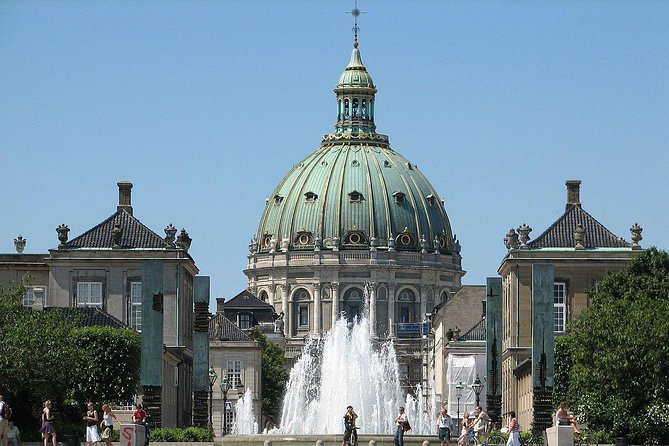
Frederiks Kirke, usually called Marble Church, brings the route into the grand district planned under King Frederik V. Its dome is the largest church dome in Scandinavia, making the building easy to identify from a distance.
The official name is Frederiks Kirke, or Frederik’s Church. Frederik V began planning the church and the surrounding district in 1748. That detail matters because the church is not simply a single grand building. It was part of a larger plan for Frederiksstaden, an area designed to express royal power and order.
The audio stop is again about 15 minutes. Use that time to study the dome and the church’s scale, then connect what you see with the planned neighborhood around it. The information is most useful when you look beyond the façade and ask why such a large church was placed here.
Admission is not included. The supplied information does not specify an interior ticket price or opening schedule, so check current details separately if you want to go inside. For a short walk, the exterior gives you enough to appreciate the building’s place in the district.
A few more Copenhagen outings worth comparing
- The Philosopher’s Last Walk: An audio tour on the life of Søren Kierkegaard
★ 4.5 · 5 reviews - Cool Nørrebro and Foodie Tips Self Guided Audio Walking Tour
★ 5.0 · 4 reviews - Danish Design Classic and Modern Style Self-Guided Audio Tour
★ 5.0 · 3 reviews - Copenhagen Scavenger Hunt and Highlights Self Guided Audio Tour
★ 4.5 · 3 reviews
Amalienborg, the octagonal royal complex
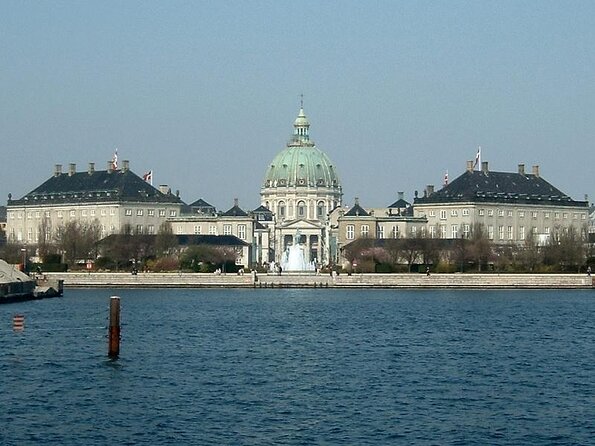
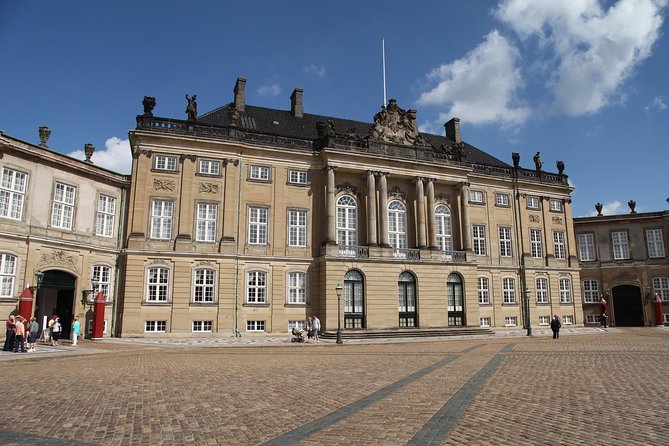
Amalienborg is the current residence of the Danish royal family, so this is one of the route’s most important stops. The palace complex is arranged around an octagonal space, a layout that gives the area a formal and balanced appearance.
The first palace on the site was built between 1669 and 1673 by Queen Sophie Amalie, wife of King Frederik III. Later, Frederik V dismantled the existing palace and created the octagonal complex you see today. It was intended as the crowning feature of Frederiksstaden.
The audio gives you another 15 minutes of background. I find the succession of buildings especially helpful here. You are not hearing only that a palace exists. You are following a change from an earlier royal residence to the present planned complex.
The experience does not include a physical guide or palace admission. If you want to visit interior rooms, you will need to arrange and pay for that separately. If you are content with the exterior and the square, the audio supplies the basic context without making you commit to a longer palace visit.
The Royal Danish Theatre’s changing role
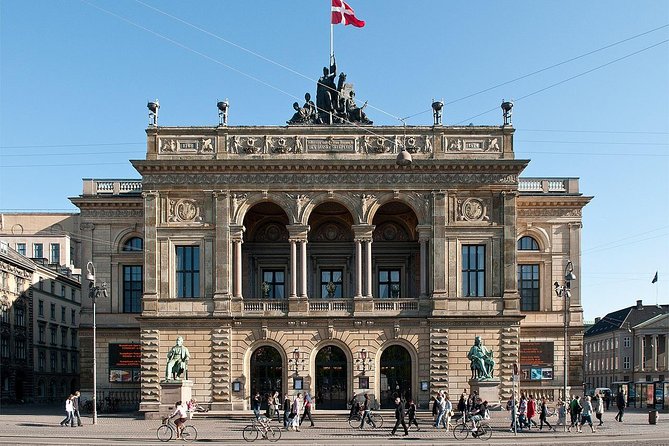
The Royal Danish Theatre Play House adds a cultural stop to a route otherwise shaped by government and royalty. The first theater on this location opened in 1748. It seated 800 people and employed eight actors and four actresses, with French comedies making up much of the program.
That first building soon proved too small for Copenhagen. It was rebuilt in 1774 for a larger audience, and the Royal Danish Theatre became a home for ballet, opera, and the royal orchestra as well as theater.
This is a useful reminder that royal Copenhagen was not only about palaces and ceremonies. Performance was part of public life, too. The 15-minute audio stop lets you place the building within the city’s cultural story.
No performance ticket is included, and the tour does not say that you attend a show. Think of this as an exterior history stop. It is easy to keep moving if you are focused on the palaces, but the theater helps break up the route and adds another side of Copenhagen’s past.
Christiansborg’s Royal Kitchens and layers of power
The Royal Kitchens of Christiansborg Palace provide the final major history stop before the route heads toward Tivoli Gardens. Christiansborg has been built over the remains of four earlier castles, so the site carries several different stages of Copenhagen’s political past.
In 1167, Absalon built the first castle on the island. The Hanseatic League later destroyed it, and Copenhagen Castle was built over the ruins. That castle lasted for several hundred years and is linked to the Blue Tower, where Leonora Christina, daughter of Christian IV, was held captive for almost 22 years.
The kitchen stop is listed at about 15 minutes. The information supplied for the experience focuses heavily on the earlier castles and the Blue Tower, so you should expect historical context around Christiansborg rather than a food-focused activity. Despite the name, food and drinks are not included, and there is no meal or cooking class.
This part of the route is valuable because it gives you a sense of layers beneath the present palace. Copenhagen’s royal sites were rebuilt, altered, and replaced over time. The audio helps you connect those changes instead of treating each building as a separate postcard.
What the audio format gets right
The best practical feature is the combination of spoken directions and a map. Many phone-based audio walks assume GPS will guide you perfectly from one stop to the next. This one includes directions in the audio files, which gives you a useful backup when the signal is weak or you need to confirm your route.
The ZIP download contains 13 audio files, a map, and additional files. The number of recordings suggests that you receive more than one short track for each of the seven main sights. Follow the download instructions in the ticket’s Before You Go section, unzip everything before leaving, and test the files at home or at your hotel.
The self-paced setup is another clear advantage. You can stop for coffee, spend extra time at Rosenborg, or shorten the route if the weather turns. You are not tied to a group’s walking speed, and you can choose your own starting and ending points even though the suggested start is City Hall Square and the suggested finish is Tivoli Gardens.
The audio has limits. One section can be hard to hear because background sounds and effects muffle the speaker, and the recording may become staticky when played loudly. Another concern is the narrator’s delivery, which can sound like a script being read rather than an enthusiastic explanation.
I would bring headphones and listen at a moderate volume. If the sound is still poor, use the map and written files as your backup. The historical facts are useful, but the presentation may not have the warmth or responsiveness of a live guide.
Price, time, and the real value
At $15.29 per person, the tour sits in the low-cost range for a city introduction. You are paying for audio files, directions, and a map, not admission, transportation, food, or a device.
That makes the value strongest for people who want a planned route through central Copenhagen. You get seven substantial stops and a basic thread linking civic Copenhagen, royal building projects, church architecture, theater, and old castles. A private guide would cost far more, while a completely free walk would require you to research and organize the route yourself.
The price is less attractive if you already know Copenhagen well or plan to visit only one or two interiors. The tour does not include entry to the Round Tower, Rosenborg Castle, Marble Church, Amalienborg, or Christiansborg. Add those costs only if you want more than exterior context.
Plan for two to three hours, with each listed stop taking about 15 minutes. Your real time will depend on walking between sites, pauses, photographs, and any admission lines. Moderate physical fitness is recommended. Transportation is not included, so you should be comfortable covering the route on foot or arranging your own connections.
The listed start time is 9:00 a.m., but the self-guided format lets you decide how to fit the walk into your day. The experience is offered in English only. Service animals are allowed, and the route is near public transportation.
Who should choose this Copenhagen walk?
I would recommend it to a first-time visitor who wants orientation without joining a group. It suits independent people who like historical facts, prefer to pause when they wish, and are willing to prepare their phone before going out.
It also works for a short Copenhagen stay. The route touches several of the city’s best-known civic and royal sights in one compact outing. You can use it as a morning framework, then return to one or two places for paid interior visits later.
Families and mixed-age groups may appreciate the flexible pace, though the moderate fitness requirement still matters. You can listen in sections, stop often, and skip a site if younger walkers lose patience.
I would be more cautious if clear, polished narration is essential to you. The sound problem and restrained delivery are real drawbacks. The experience is still usable, especially because the map and directions are strong, but you should not expect studio-quality production.
The maximum group size is listed as 50, though a self-guided format means you do not follow a physical guide or move as one organized group. Free cancellation is available if you cancel at least 24 hours before the start time. Changes or cancellations inside that window are not accepted for a refund.
Should you book it?
Book this tour if you want an affordable, self-directed introduction to Copenhagen and value reliable route instructions more than polished audio. The sequence from City Hall to the royal district gives you a useful first look at the city, while the map and extra audio files make independent navigation easier.
Skip it if you want admission tickets, a live guide, or lively storytelling. You will need to handle transportation, food, and entry fees yourself, and the audio may require patience. For the right kind of visitor, though, $15.29 buys a practical route and enough context to turn a city walk into a meaningful first afternoon.
FAQ
Where does the Copenhagen audio tour begin?
The suggested starting point is Rådhuspladsen, or City Hall Square, in central Copenhagen.
Where does the tour end?
The suggested ending point is Tivoli Gardens at Vesterbrogade 3. Since the experience is self-guided, you can choose your own ending point according to your schedule.
How long does the tour take?
The estimated duration is two to three hours, with about 15 minutes listed for each main stop.
What sights are included?
The route includes Copenhagen City Hall, the Round Tower, Rosenborg Castle, Frederiks Kirke or Marble Church, Amalienborg, the Royal Danish Theatre Play House, and the Royal Kitchens of Christiansborg Palace.
Is a physical guide included?
No. This is a self-guided audio tour. You receive audio files and a GPS map rather than a person leading the walk.
Are admission tickets included?
No. Admission fees are not included in the price.
What do I need before starting?
You should download the audio package before the walk and unzip the ZIP file on your smartphone. The package includes a map, 13 audio files, and additional files.
What language is available?
The tour is available only in English.
Can I cancel for a full refund?
Yes, if you cancel at least 24 hours before the experience start time. Cancellations or changes made less than 24 hours beforehand are not accepted for a refund.
Newest around Copenhagen
- WWII Copenhagen Nyhavn and War Museum Private Walking Tour★ 5.0 · 2 reviews
- Half Day Exploration of Helsingør and Kronborg★ 3.5 · 3 reviews
- Helsingør Castle and Historic City Self-Guided Walking Tour★ 4.0 · 4 reviews
- Full-Day Tour; Castle, Palace & Cathedral, Winter(JAN-MAR)★ 5.0 · 11 reviews
- walking tour – Copenhagen and Christiansborg 3 hours★ 4.0 · 7 reviews
- Copenhagen Walking Tour with Food Testing (smorrebrod dish & snap)★ 4.5 · 10 reviews
- The Philosopher’s Last Walk: An audio tour on the life of Søren Kierkegaard★ 4.5 · 5 reviews
- The Forgotten Giants Private Tour★ 5.0 · 3 reviews
Self-Guided Tours, compared.
The Ancient Viking Stronghold of Aros: A Self-Guided Audio Tour in Aarhus
Read our review →
Copenhagen Little Mermaid Exploration Game and Self-Guided Tour
Read our review →
Half Day Self-Guided Audio Walking Private Tour in Copenhagen
Read our review →
Monstour: A Self-Guided Audio Tour of Danish Folk Legends
Read our review →
Copenhagen Self-Guided Murder Mystery Tour by the Round Tower
Read our review →
Copenhagen Christiania: Hidden Stories Self-Guided Adventure
Read our review →
Copenhagen Royal Conspiracy Exploration Game and Tour
Read our review →
Copenhagen’s Royal History: A Self-Guided Walking Tour
Read our review →Browse the lists this tour appears in