

Review · DANISH DESIGN & ARCHITECTURE IN COPENHAGEN
Copenhagen: Danish Design and Architecture Walking Tour
Design makes Copenhagen easier to read. This two-hour walking tour links the Opera House, Nyhavn, Rosenborg Castle, and Designmuseum Danmark while showing you how Danish ideas about light, space, function, and beauty shape both buildings and everyday objects. I like the well-chosen route and the chance to handle three iconic Danish design objects. I also like that the tour connects grand architecture with ordinary items, rather than treating design as something found only in museums. The main drawback is timing: the experience is described as two hours in one place and about two and a half hours in another, so you should leave room in your schedule.
I also appreciate the guide-led historical detail. Outi specifically praised Linnea for explaining Danish architectural history and pointing out details easy to miss without a guide. The tour costs $63 per person, which is fair if you want interpretation rather than just a walk past famous buildings, but less compelling if you already know Copenhagen’s architecture well.
In This Review
- Key points to know before you book
- Why this Copenhagen design walk is worth your time
- Starting at the Royal Danish Academy on Holmen
- Copenhagen Opera House and the language of light
- Crossing Inderhavnsbroen toward the old harbor
- Nyhavn, where old buildings meet present-day use
- Rosenborg Castle and King’s Garden
- Finishing at Designmuseum Danmark
- What the guide adds to the experience
- Is $63 a fair price?
- Timing, walking comfort, and accessibility
- Who should book this walk?
- Should you book the Danish Design and Architecture Walking Tour?
- FAQ
- Where does the tour start?
- Where does the tour finish?
- How long does the tour last?
- What language is the tour conducted in?
- What is included in the price?
- Are attraction entrance fees included?
- What should I bring?
Key points to know before you book

- Starts on Holmen: You meet at the Royal Danish Academy, Architecture, Design and Conservation, across the harbor from central Copenhagen.
- Covers major sights and smaller design details: The route includes the Opera House, Inderhavnsbroen, Nyhavn, Rosenborg Castle, King’s Garden, and Designmuseum Danmark.
- Three hands-on design objects: This adds a practical element to a subject that can otherwise feel abstract.
- English-speaking live guide: Linnea received special praise for making architectural history clear and interesting.
- Plan for 2 to 2.5 hours: The walking route has several visits and short breaks, so do not schedule another timed activity too tightly.
- Accessibility needs checking: The activity is marked wheelchair accessible in one section but also listed as unsuitable for wheelchair users and people with mobility impairments.
Why this Copenhagen design walk is worth your time

Copenhagen is often praised for good design, but that phrase can become vague. This tour gives the idea some shape. You look at how buildings use light, how old structures are adapted for new purposes, and how an object can be attractive because it works well, not simply because it looks stylish.
That makes the walk useful for first-time visitors and design fans alike. You are not only collecting photos of the Opera House or Nyhavn. You are being encouraged to ask why a building feels calm, welcoming, practical, or surprising.
The route also gives you a broad slice of Copenhagen. You move from Holmen’s newer cultural buildings to the harbor bridge, then into the historic center. By the end, you have seen how traditional architecture and newer ideas share the same city.
The hands-on section with three iconic Danish design objects is an especially good feature. Danish design is often discussed through famous names and polished showrooms, but touching and examining objects can make the principles easier to understand. You can compare shape, materials, function, and visual balance in a direct way.
The tour is conducted in English. Outi praised Linnea for bringing out small historical details and choosing examples from different centuries. That suggests the experience is not limited to modern furniture or contemporary buildings. It links older architecture with newer design thinking.
More design and architecture walks:
- Copenhagen: Guided Architecture and Sustainability Tour
★ 4.8 · 73 reviews - Copenhagen Architecture and Sustainability Tour with local Guide
★ 5.0 · 39 reviews - Urban Design and Livability E-bike Tour
★ 4.8 · 21 reviews
Starting at the Royal Danish Academy on Holmen
The walk begins at Det Kongelige Akademi, Architecture, Design and Conservation, on Holmen. This is a fitting starting point because the academy represents the study and practice of the subjects at the center of the tour.
You should arrive 10 minutes early. The meeting point is not in the middle of the usual pedestrian center, so give yourself time to reach Holmen without rushing. Transportation to the meeting point is not included, and the route back to your accommodation is also your responsibility.
Starting here gives the tour a clear structure. Instead of beginning with a famous postcard view and working backward, you start with the ideas behind buildings and objects. Your guide can then show how those ideas appear in the city itself.
The tour is aimed at anyone curious about the spaces you live in and the objects you use every day. You do not need a background in architecture. If you can notice how a room feels or why one chair is easier to use than another, you have enough to take part.
Copenhagen Opera House and the language of light
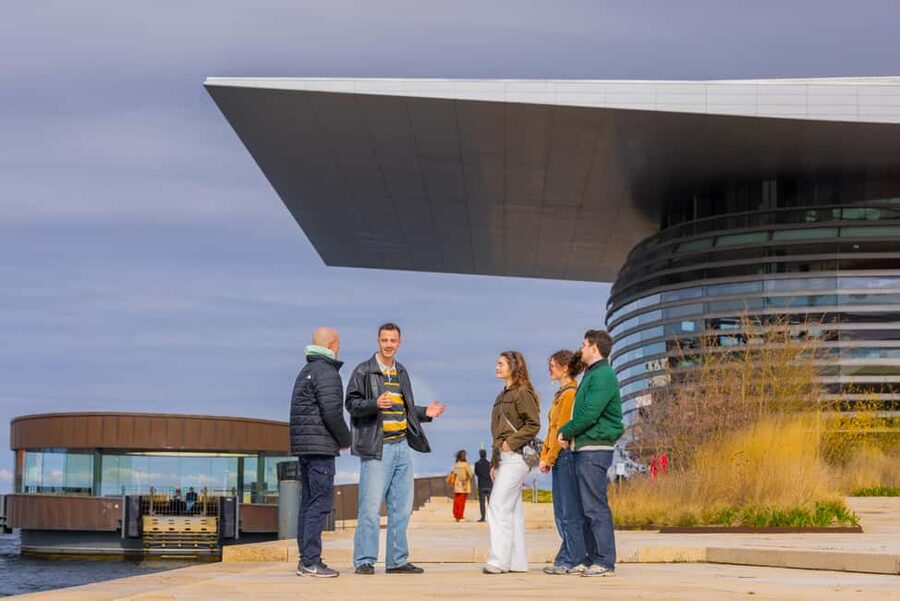
The Copenhagen Opera House is the first listed stop, with about 20 minutes for the visit. Its main value on this tour is not simply its fame. You look at the relationship between light and space, and how a large public building can create a sense of order and openness.
Your guide uses the building to explain Danish architectural thinking in visible terms. Pay attention to how the building presents itself across the water, how people move toward it, and how its scale affects the surroundings.
Twenty minutes is enough for an introduction, but not enough for a full architectural study. That is part of the tradeoff. You receive a focused explanation and then continue through the city, rather than spending the whole afternoon at one site.
Bring a camera, but listen before reaching for it. The useful part of this stop is learning what to look at. Once your guide points out the role of light, proportion, and space, the building becomes more than a dramatic exterior.
Crossing Inderhavnsbroen toward the old harbor
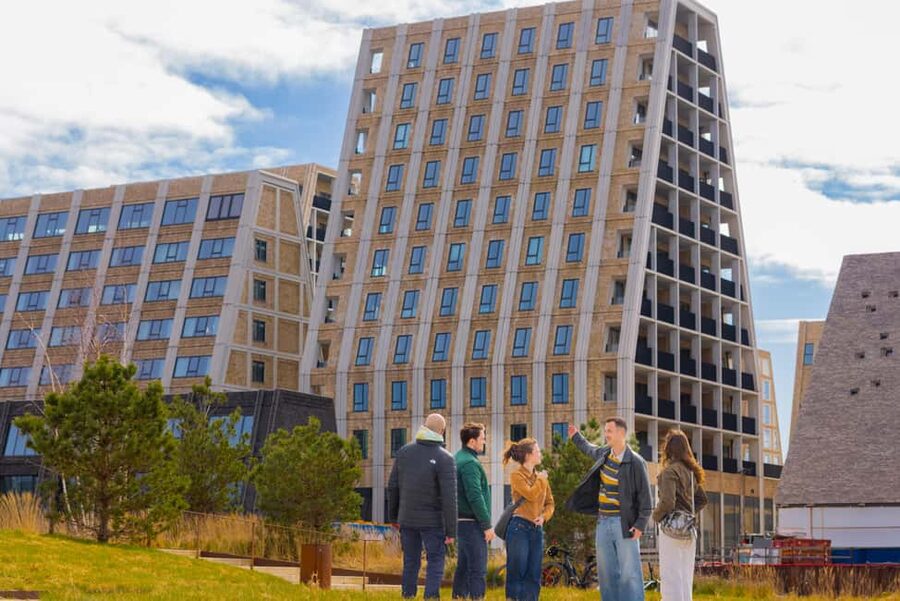
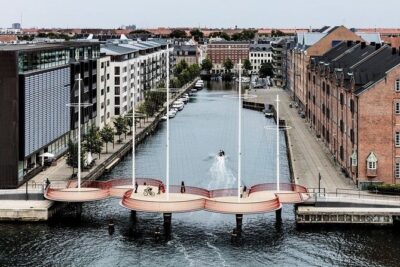
The walk across Inderhavnsbroen takes about 15 minutes. This bridge is an important transition in the route because it links the newer harbor setting around Holmen with the older center of Copenhagen.
A bridge is a good place to discuss movement and connection. You are not looking at a building in isolation. You are seeing how a piece of infrastructure changes the way people move through the city and how different districts relate to one another.
This part is also a reminder that architecture is not only about museums, castles, or grand halls. A bridge affects your route, your views, and your sense of distance. That fits the tour’s wider point that design reaches into everyday life.
Weather matters here. Comfortable shoes and clothing suited to the conditions will make the walk more pleasant. The tour is outdoors for much of its length, and the harbor section may feel less forgiving on a cold or wet day.
Other guided walks in Copenhagen:
- Private Walking Grand Tour of Copenhagen
★ 5.0 · 3,953 reviews - Copenhagen Highlights Walking Tour
★ 5.0 · 2,324 reviews - Politically Incorrect Private Highlights Walking Tour
★ 5.0 · 1,244 reviews - Copenhagen: Group Walking Tour – City Highlights – 2 Hours
★ 4.7 · 1,088 reviews
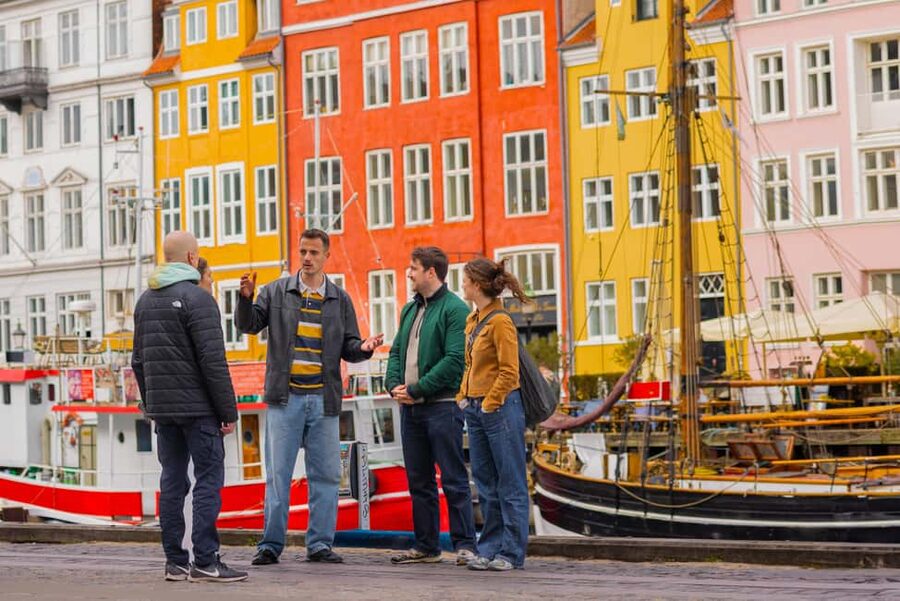
Nyhavn, where old buildings meet present-day use
The stop at Nyhavn lasts about 20 minutes. Its colorful harbor houses are among Copenhagen’s most recognizable sights, but the tour uses the area to discuss more than its appearance.
Nyhavn shows how traditional architecture can remain part of a living city. Historic buildings line a working urban setting that is now also a major place for dining, walking, and sightseeing. Your guide can help you notice how older facades, narrow building forms, and the waterfront work together.
This is one of the route’s most familiar locations, so you may already have seen photographs of it. A guide adds value by shifting your attention from the bright colors to the structure and history of the street.
The short visit also keeps the tour moving. You get enough time to take in the harbor and architectural details, but not enough to linger over a meal. Food and drinks are not included, so plan to eat before or after the walk rather than expecting a café stop during the tour.
Rosenborg Castle and King’s Garden

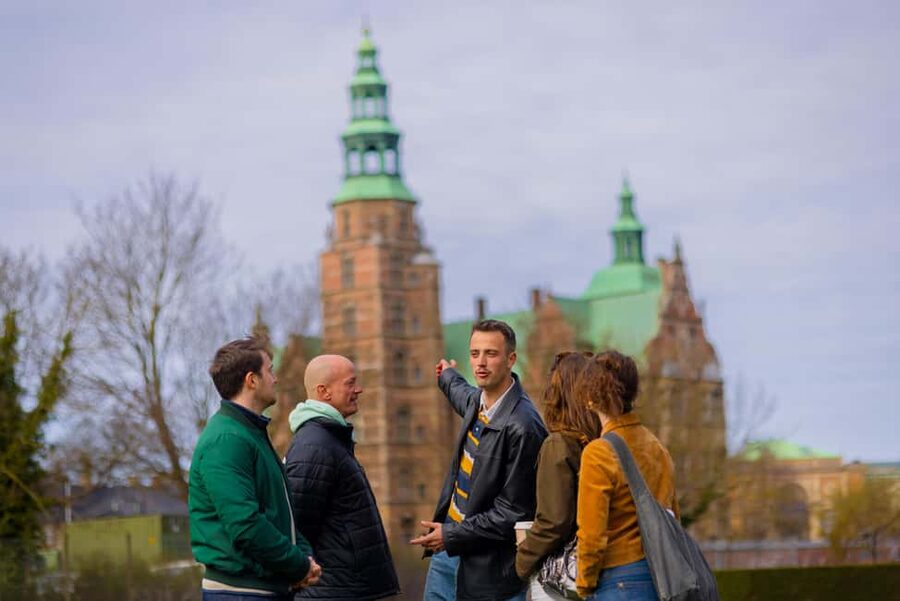
Rosenborg Castle receives about 15 minutes, followed by roughly 25 minutes in King’s Garden. This section gives the tour a change of pace. After the harbor and city streets, you enter a setting where historic architecture, formal open space, and public use come together.
The castle helps place Danish design in a longer timeline. The tour is not only about current buildings or twentieth-century objects. It also looks at how older architectural ideas continue to shape Copenhagen’s identity.
King’s Garden adds room to consider the relationship between buildings and open space. A building can be carefully designed, but the setting around it affects how you experience it. The garden gives you a chance to see that relationship from a slower, more spacious angle.
The itinerary lists break time around Rosenborg Castle. That is useful during a walking tour, especially if you need a brief pause. Still, the break is not described as a food stop, so do not count on refreshments being provided.
The 15-minute castle visit is brief. If you want to tour the castle interiors or study its collections in detail, you would need separate time and an entrance ticket. Entrance fees to attractions are not included in the $63 price.
Finishing at Designmuseum Danmark
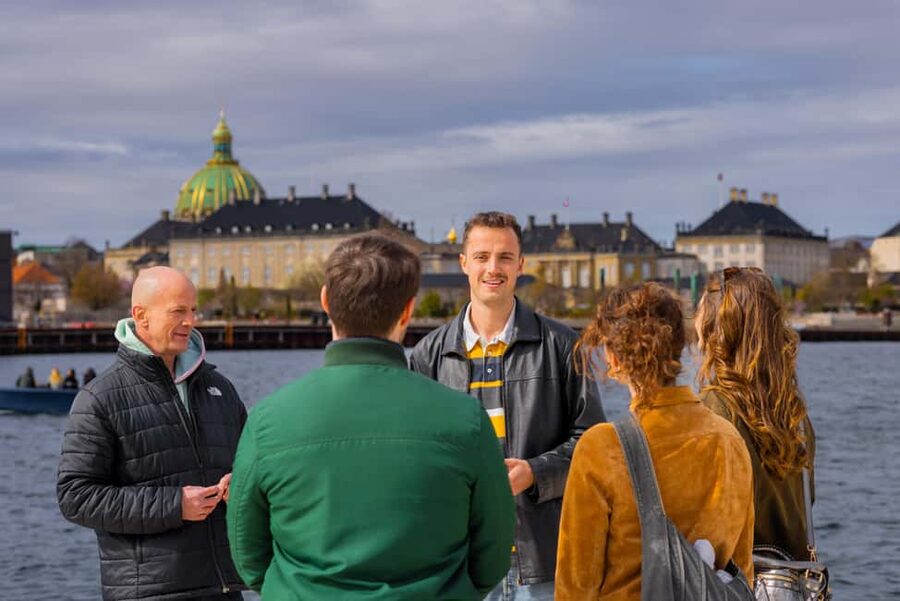
The final stop is Designmuseum Danmark, with about 15 minutes of free time. This ending makes sense because the museum brings together many of the ideas discussed on the walk.
You can use the free time to reflect on the objects introduced during the tour and to decide if you want to return for a longer museum visit. The tour does not include museum entrance fees, so treat this stop as an orientation rather than a full museum tour.
That distinction matters. Fifteen minutes is enough to get a sense of the place and its subject, but not enough to explore a major design collection carefully. If Danish furniture, household objects, or visual culture are central to your interests, reserve additional time and budget for a separate visit.
Ending here is convenient for anyone who wants to continue with design-focused sightseeing. It also gives the tour a clear conclusion: you have moved from architectural examples in the city to objects and ideas gathered under one roof.
What the guide adds to the experience

The guide is the main reason to choose this tour instead of following a free self-guided route. Copenhagen’s buildings are attractive without explanation, but the design principles behind them are easier to understand when someone points out specific choices.
The strongest praise given to Linnea focused on Danish architectural history, lesser-known details, and the selection of art and design from different centuries. That combination is important. A tour limited to famous modern buildings can make Danish design seem like a recent trend. Historical context shows how ideas develop over time.
You should also expect conversation about everyday objects. The tour asks you to think beyond buildings and consider the tools, furnishings, and products around you. The three hands-on objects make that discussion more concrete.
The other recorded experience described the guides as friendly and informed about the area, with a pleasant afternoon atmosphere. That is a useful signal for people who prefer a relaxed walk rather than a lecture. The experience is educational, but it is not presented as a formal academic class.
Is $63 a fair price?
At $63 per person, this is not the cheapest way to see Copenhagen. You can walk past Nyhavn, the Opera House, Rosenborg Castle, and King’s Garden on your own without paying for a guide.
The price makes more sense if you value interpretation. You are paying for a planned route, an English-speaking guide, architectural context, and the hands-on work with three Danish design objects. The tour also saves you from having to research how the stops connect.
It is less good value if you mainly want quick photo stops or if you already have a strong understanding of Danish architecture. The visits are short, and no attraction entrances, transportation, food, or drinks are included.
For a visitor who wants a guided introduction in a compact format, $63 is reasonable. I would see it as a specialist walking tour rather than a general city tour. Its value depends on your interest in design and on how much you want to understand what you are seeing.
Timing, walking comfort, and accessibility
The advertised duration needs a little care. One section gives the duration as two hours, while the route description says approximately two and a half hours. The listed visits and walking segments also suggest that the experience may run closer to the longer estimate, particularly if the guide allows questions.
I would keep at least half an hour free after the stated finish. That protects you from a rushed museum visit or a tight connection to another booking.
Wear comfortable shoes. The route includes several walks between stops, and this is not a ride-based sightseeing experience. Bring weather-appropriate clothing and a camera. Smoking is not allowed during the activity.
There is conflicting information about accessibility. The activity is described as wheelchair accessible in one place, but it is also marked as unsuitable for wheelchair users and people with mobility impairments. You should contact the provider before booking if this affects you. Do not assume the route is suitable based on the accessibility label alone.
Free cancellation is available up to 24 hours before the start for a full refund, and you can reserve now and pay later. Those options help if your Copenhagen plans are still shifting, but they do not remove the need to check the exact start time and meeting point.
Who should book this walk?
I would recommend it to you if you enjoy architecture, furniture, urban spaces, museums, or the small decisions that make a place work well. It is also a good pick if you want an introduction to Copenhagen that avoids a simple list of royal sights.
First-time visitors can use it to get their bearings across several central areas. Repeat visitors may find more value in the design focus, since the route encourages you to notice details you may have passed before.
Families with older children and adults who like visual subjects may enjoy the hands-on objects. The tour is also suited to solo visitors who want a structured way to explore without committing to a full-day group activity.
I would skip it if you want long interior visits, a food-focused walk, or a broad history tour covering every major Copenhagen sight. The tour is selective. Its subject is Danish design and architecture, not the whole city.
Should you book the Danish Design and Architecture Walking Tour?
Book it if you want to understand why Copenhagen looks and feels the way it does. The combination of the Opera House, harbor bridge, Nyhavn, Rosenborg Castle, King’s Garden, and Designmuseum Danmark gives you variety, while the guide supplies the thread connecting them.
The best reasons to go are the practical design discussion, the three objects you can handle, and the detailed historical explanations associated with Linnea. Just allow up to two and a half hours, budget separately for entry fees and food, and confirm accessibility if needed.
If you are happy taking photos without context, spend your $63 elsewhere. If you want a thoughtful, compact introduction to the city’s buildings and everyday design, this walk is a solid choice.
FAQ
Where does the tour start?
The tour starts at Det Kongelige Akademi, Architecture, Design and Conservation, on Holmen in Copenhagen.
Where does the tour finish?
The tour finishes at Designmuseum Danmark.
How long does the tour last?
The duration is listed as two hours, while the route description says approximately two and a half hours. Allow extra time so you are not rushed afterward.
What language is the tour conducted in?
The live guided tour is conducted in English.
What is included in the price?
The price includes a guided walking tour of Copenhagen’s architectural landmarks, a hands-on experience with three iconic Danish design objects, and explanations of Danish design philosophy.
Are attraction entrance fees included?
No. Entrance fees, transportation, food, and drinks are not included.
What should I bring?
Bring comfortable walking shoes, a camera, and clothing suitable for the weather. Arrive at the meeting point 10 minutes before the tour starts.
Newest around Copenhagen
- WWII Copenhagen Nyhavn and War Museum Private Walking Tour★ 5.0 · 2 reviews
- Half Day Exploration of Helsingør and Kronborg★ 3.5 · 3 reviews
- Helsingør Castle and Historic City Self-Guided Walking Tour★ 4.0 · 4 reviews
- Full-Day Tour; Castle, Palace & Cathedral, Winter(JAN-MAR)★ 5.0 · 11 reviews
- walking tour – Copenhagen and Christiansborg 3 hours★ 4.0 · 7 reviews
- Copenhagen Walking Tour with Food Testing (smorrebrod dish & snap)★ 4.5 · 10 reviews
- The Philosopher’s Last Walk: An audio tour on the life of Søren Kierkegaard★ 4.5 · 5 reviews
- The Forgotten Giants Private Tour★ 5.0 · 3 reviews
Danish Design & Architecture, compared.
Copenhagen Architecture and Sustainability Tour with local Guide
Read our review →
Copenhagen City, Old Town, Nyhavn, Architecture Walking Tour
Read our review →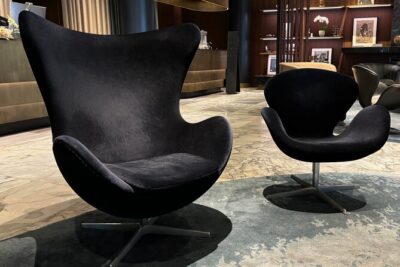
Danish Design Classic and Modern Style Self-Guided Audio Tour
Read our review →Browse the lists this tour appears in