
Review · HYGGE EXPERIENCES IN COPENHAGEN
Good Morning, Copenhagen: Feel The Danish Hygge & Happiness
Copenhagen rewards slow wandering. This 3.5-hour walk pairs quiet cobbled lanes, royal landmarks, Danish pastries, flødeboller, coffee, and an honest look at how hygge fits daily life. I especially like the small group of up to 10 and the local guides, including warmly praised guides such as Therese, Oskar, Laura, Peter, and Karoline. The main consideration is focus: you see many places from outside, and the tour gives culture and atmosphere more time than detailed palace interiors or formal history.
I also like the gentle pace and the useful city advice at the end. You are not rushed from one major sight to the next without a pause. Still, the walk can feel brisk at times, especially when the group covers several central neighborhoods in one morning. If you want a full history lesson or long visits inside Copenhagen’s castles, this is not the right fit.
In This Review
- Key points for deciding quickly
- Starting among Nyboder’s yellow houses
- Cobblestones, timber frames, and the slower side of Copenhagen
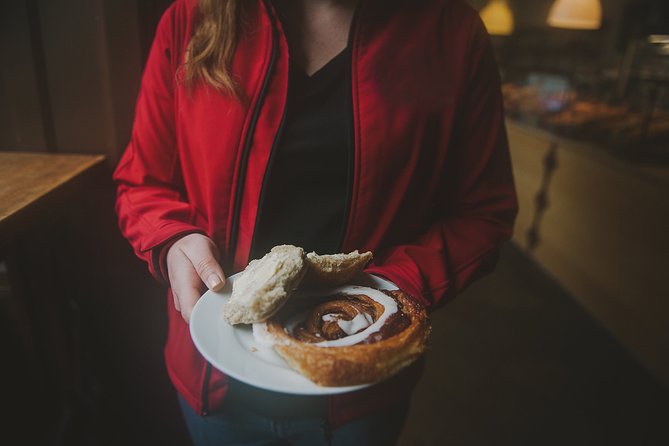
- Danish pastry as a lesson in childhood and routine
- Kongens Have and the story behind the royal park
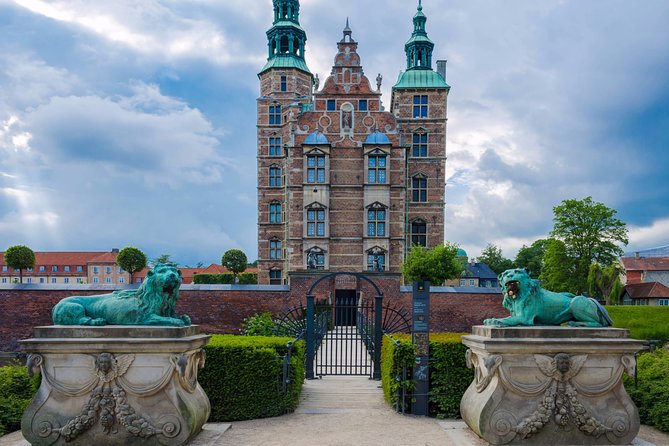
- Rosenborg Castle from the outside
- Flødeboller in the quiet lane of Pistolstræde
- From a busy pedestrian street to Nikolaj Kunsthal
- Christiansborg and the Danish idea of happiness
- Magstræde and a final café pause
- What $82.23 buys you
- Who will enjoy this Copenhagen walk most
- Should you book Good Morning, Copenhagen?
- FAQ
- How long does the Good Morning, Copenhagen tour last?
- What is included in the price?
- What is not included?
- Where does the tour begin and end?
- Does the tour enter Rosenborg Castle or Christiansborg Palace?
- How large is the group?
- Is the tour suitable for children?
Key points for deciding quickly
- Up to 10 people: The small group gives you a better chance to ask questions and speak with your guide.
- A local view of hygge: The tour explains Danish comfort, trust, customs, food, and social habits rather than treating hygge as just candles and blankets.
- Three tasty pauses: Expect Danish pastry, a flødebolle, and coffee or tea along the route.
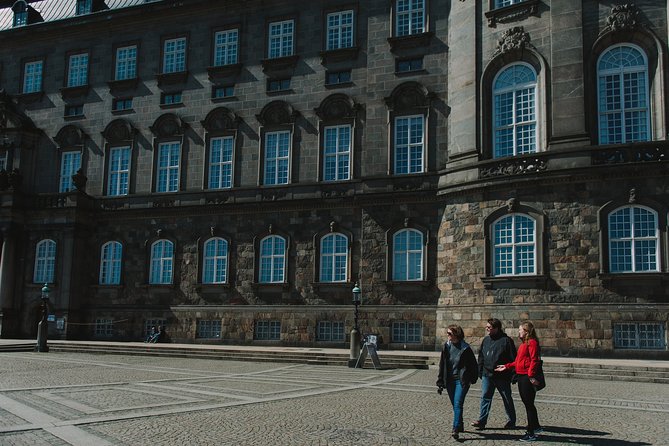
- Many landmarks, outside only: See Rosenborg Castle, Christiansborg Palace, Nikolaj Kunsthal, the old yellow houses, and other sights without entering them.
- Easy city orientation: The route finishes in central Copenhagen, close to artisan shops and useful places for continuing your day.
- Best for first-time visitors: You get a friendly introduction to central Copenhagen, though a second visit may be needed for longer sightseeing stops.
Starting among Nyboder’s yellow houses
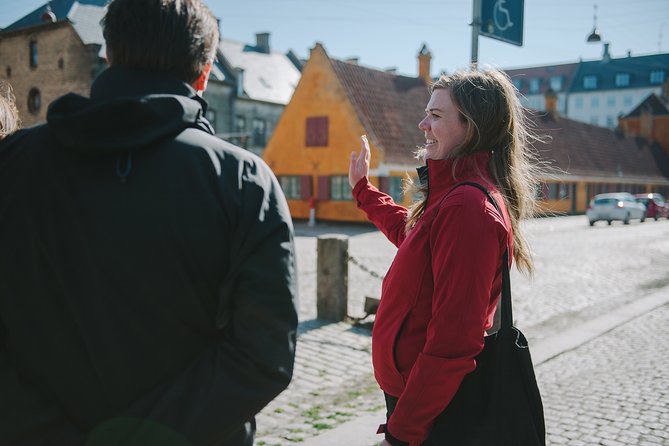
The tour begins at Krokodillegade 21, near Nyboder, a district known for its rows of yellow houses. This is a fitting starting point. To understand hygge, you need to see more than polished design shops and stylish cafés. You need a sense of older neighborhoods, ordinary homes, narrow streets, and the way people make comfort part of daily surroundings.
Your English-speaking guide meets the group here and sets the tone. Guides are native Copenhageners, and the strongest part of the experience is the personal angle they bring. Therese is praised for her warmth and pride in Denmark. Oskar combines humor with solid city knowledge. Laura is especially good at explaining what it is like to live in Denmark, while Peter has been praised for making the walk welcoming for an older parent.
The guide has time to answer questions because the group is capped at 10 people. That matters. A large walking group can turn a cultural tour into a one-way speech. Here, you can ask about Danish habits, food, politics, or daily life without needing to shout across a crowd.
The first stop is short, about 15 minutes, so think of Nyboder as an introduction rather than a full neighborhood visit. You will hear local stories and historical details, then move into the older streets of the center.
Other slow, hygge-shaped afternoons:
- Copenhagen: Hygge and Happiness Culture Walking Tour
★ 4.9 · 539 reviews - Copenhagen Walking Tour: Highlights and Hygge w/Lunch
★ 5.0 · 272 reviews - Copenhagen: Highlights & Hygge Guided Walking Tour w/ Lunch
★ 4.9 · 75 reviews
Cobblestones, timber frames, and the slower side of Copenhagen
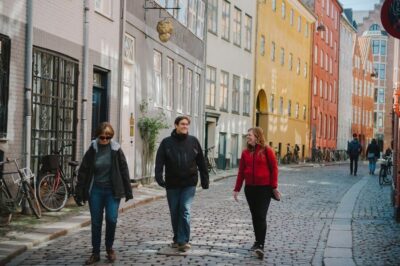
The next section leads through older parts of Copenhagen, including Krusemyntegade. Its cobblestones and older buildings create the sort of calm, close-knit setting that helps explain hygge better than a dictionary definition can.
I like this part because it asks you to notice the city at walking speed. Copenhagen’s center has busy streets, shops, and traffic, but it also has small lanes where the mood changes within a few steps. The guide points out these shifts and explains how quiet public spaces can shape the way a city feels.
This is not a fast march through a checklist of famous sights. You stop, look, and listen. The tradeoff is that a short tour cannot give every street a long explanation. Some stops last only five or 10 minutes, so you should treat the walk as an orientation to places you may want to revisit later.
Comfortable shoes are important. The route uses cobbled streets and lasts about three and a half hours, with reviews indicating that the experience can sometimes run closer to four hours. Bring an umbrella or rain jacket as well. Copenhagen weather does not always respect a carefully planned morning.
Danish pastry as a lesson in childhood and routine
Food is not decoration on this tour. It is part of the explanation.
A Danish pastry stop gives you a taste of something tied to both childhood and adult routines in Denmark. The pause lasts about 20 minutes, long enough to enjoy a treat without turning the morning into a formal meal. You may also receive small servings rather than a large breakfast, so eat something beforehand if you need a substantial start to the day.
This is one of the tour’s most appealing ideas. Instead of hearing only that Denmark is happy, you see how small pleasures can be built into ordinary life. Sitting down with something sweet and a hot drink is not treated as an expensive reward. It becomes a shared pause.
The food also helps the group connect. Several guides have been praised for creating a relaxed atmosphere among people from different countries. That social side is important to hygge. It is less about luxury than about being comfortable with other people, having time to talk, and enjoying something simple together.
Kongens Have and the story behind the royal park
Kongens Have, or the King’s Garden, provides a welcome change from stone streets. This green space sits in the center of the city and offers a calm place to hear a lively story about royal ambition, mental illness, and an improper love triangle.
The stop lasts about 15 minutes. You will not have time to explore every path or sit for a long rest, but the park gives the route breathing room. It also shows why Copenhagen works so well on foot. Major sights, public gardens, old streets, and cafés sit close together.
The guide’s storytelling is more important here than a list of dates. Karoline, for example, has been praised for using stories to connect visitors with Copenhagen’s culture and past. Oskar has also received praise for mixing history with funny commentary. That style suits this tour, which aims to make the city feel human rather than academic.
Somewhere else in Denmark, for a completely different day:
- Copenhagen Card-Discover: 80+ Attractions & Public Transport
★ 4.6 · 5,351 reviews - Copenhagen: Hop-On Hop-Off Bus Tour with Boat Tour Option
★ 3.9 · 4,122 reviews - Private Walking Grand Tour of Copenhagen
★ 5.0 · 3,953 reviews - From Copenhagen: Lund and Malmö 2-Country Tour
★ 4.7 · 3,807 reviews
Rosenborg Castle from the outside
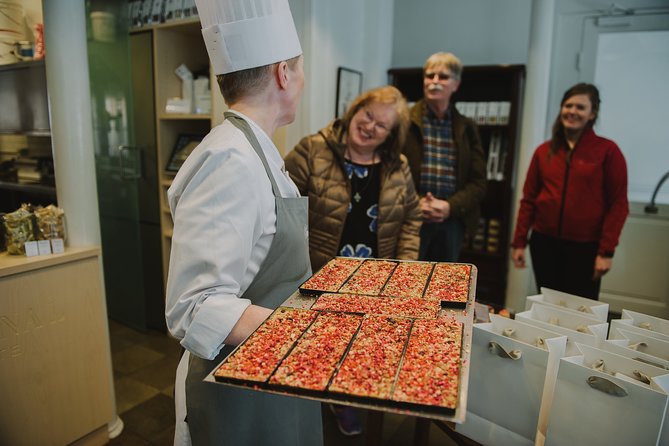
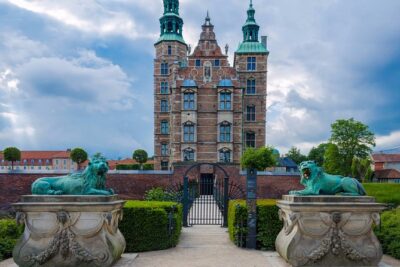
Rosenborg Castle is one of the morning’s visual highlights. You stop outside for about 15 minutes and hear about King Christian IV, who built the castle in the 17th century, along with the ideas behind its design.
The castle is often described as miniature and charming, and the outside view makes a good photo stop. It is also a useful reminder of the limits of this experience: you do not go inside Rosenborg. If you want the royal collections, interiors, or detailed castle exhibits, plan a separate visit.
That limitation is not a problem if you want a broad first look at Copenhagen. It becomes more important if this is your only day in the city and you hoped to see the interior. The same outside-only rule applies to several other major buildings on the route.
Flødeboller in the quiet lane of Pistolstræde
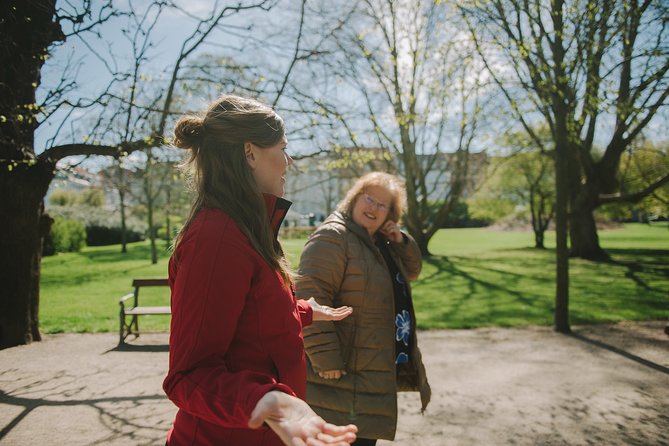
Pistolstræde offers one of the tour’s most distinctly local-feeling pauses. This tucked-away alley has old-world character and a quieter mood than the main shopping streets.
Here, your guide brings out flødeboller, a Danish sweet made with a soft marshmallow-like center and a chocolate coating. The guide explains why it matters in Danish childhood and how treats such as this fit into hygge.
The stop lasts around 20 minutes, giving you time to sit and talk. This is where the tour’s theme becomes most practical. Hygge is not simply an architectural style or a word for coziness. It can be a shared snack, a quiet corner, and a moment when nobody needs to hurry.
One honest note: the food portions are described as small. You receive several tastings, including pastry, chocolate-covered marshmallow, and a drink, but this is not a food tour or a replacement for lunch. I would call it a pleasant sampling experience with cultural context.
From a busy pedestrian street to Nikolaj Kunsthal
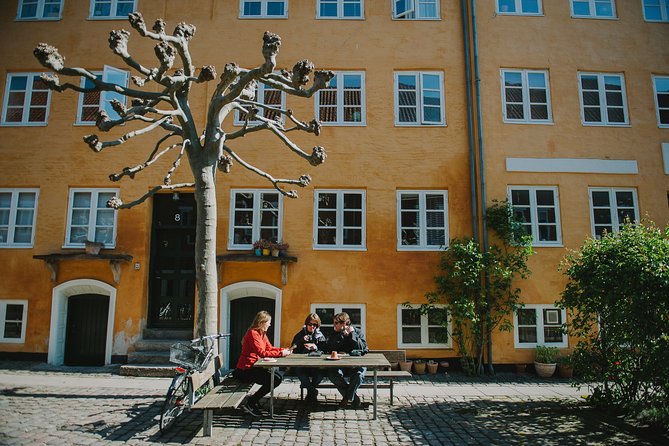
The route then lets you notice how quickly Copenhagen’s mood can change. You move from quieter lanes toward one of Europe’s busiest pedestrian streets, where the noise, crowds, and shopping energy feel different.
That contrast is useful. The tour does not pretend all of central Copenhagen is calm. Instead, it shows you both sides: the commercial center and the small streets where locals can pause. If you want a slow morning, the guide generally keeps the walk measured, but this section may feel less peaceful.
At Nikolaj Kunsthal, you stop in a quiet cobbled square and look up at the tall spire. The building appears to be a church, but its present role is different. The guide discusses Danish attitudes toward religion and how those views connect with modern culture.
You do not enter Nikolaj Kunsthal. The stop lasts about 15 minutes, and the emphasis is on the exterior, the square, and the cultural conversation. It is a good example of the tour’s method: use a building as a doorway into Danish life, rather than spending the whole morning on architecture alone.
Christiansborg and the Danish idea of happiness
Christiansborg Palace is now home to the Danish parliament, and this is the clearest point for discussing politics and social life. The guide covers the Danish welfare system, social trust, and the cultural idea of Jante.
Jante refers to a set of social expectations that discourage people from acting superior or placing themselves above the group. The tour presents it as one part of a wider Danish system that places value on equality and trust.
This section is especially useful if you want to understand why Denmark is often associated with high happiness scores. The guide does not reduce happiness to cheerful personalities. Instead, the discussion connects it with daily security, public systems, social expectations, and the way people relate to one another.
Still, keep your expectations realistic. The Christiansborg stop lasts about 20 minutes, and the palace is viewed from outside. One person felt the tour could have spent more time explaining happiness itself, while another praised the guide’s ability to answer questions about it. If this topic matters most to you, ask direct questions during the stop.
Magstræde and a final café pause
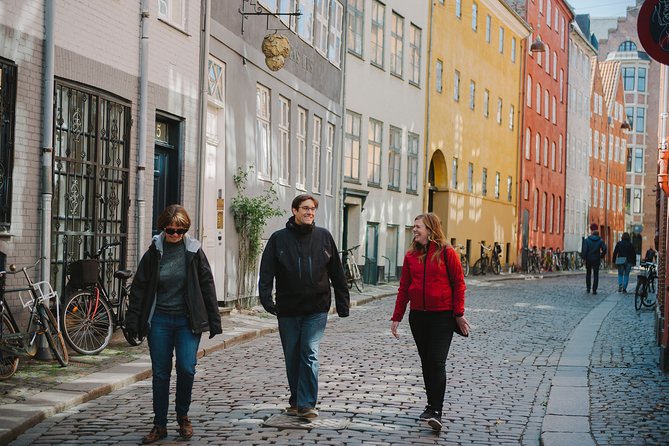
Magstræde is one of Copenhagen’s prettiest old streets, and the five-minute stop works as a small visual treat on the way back toward the center. It is the kind of place you might miss if you only follow the largest streets.
The tour ends at a café on a quiet central street near Læderstræde. Here you receive coffee or tea and a final Danish treat, then have time to ask for personal suggestions about the rest of your stay.
This ending adds real value. A guide who has spent several hours with you can often give better advice than a generic city list. You might ask where to eat, what to see next, or which neighborhoods deserve more time. The finishing point also puts you near artisan shops, making it easy to continue exploring on foot.
What $82.23 buys you
At $82.23 per person, this is not the cheapest way to walk around Copenhagen. You can see many central streets and buildings without paying for a tour. The value comes from the combination of a small group, local interpretation, several tastings, and personal recommendations.
You are paying for access to context. Nyboder becomes more than yellow houses. A pastry becomes part of a conversation about Danish life. Christiansborg becomes a starting point for discussing welfare and trust. Pistolstræde becomes a place to understand how a simple sweet can fit into shared time.
The price makes the most sense if you are visiting Copenhagen for the first time, want a friendly start to your trip, or prefer culture explained through food and ordinary routines. It makes less sense if you mainly want museum interiors, extensive royal history, or a dedicated food crawl.
The tour offers group discounts, and the maximum group size is 10. Children aged six through 11 pay the listed child rate, while children under six can join free of charge if you notify the operator in advance. Service animals are allowed, and the meeting point is near public transportation.
Who will enjoy this Copenhagen walk most
I would choose this for a first morning in the city. It gives you a mental map of central Copenhagen and helps you decide which places deserve a return visit.
It also suits people who enjoy conversation more than crowds. The strongest praise goes to the guides’ warmth, humor, local insight, and ability to answer questions. The names vary by departure, but guides such as Therese, Oskar, Laura, Peter, Karoline, Sandra, Liva, and Jacob have all been praised for making the walk personal and informative.
Families can join, and the gentle approach worked well for one group traveling with an 85-year-old parent. You still need moderate physical fitness and suitable footwear, since this is a long urban walk over cobblestones.
I would not choose it as your only Copenhagen sightseeing plan if you want to enter Rosenborg Castle, Christiansborg Palace, or Nikolaj Kunsthal. You will see these places from outside, so set aside another visit if interiors matter to you.
Free cancellation is available up to 24 hours before the start time. After that, the payment is not refunded, and late changes are not accepted.
Should you book Good Morning, Copenhagen?
Book it if you want a local introduction to Danish culture, a manageable walking route, and small food treats along the way. The guides are the heart of the experience, and the small group makes it easier to ask the questions that turn a pleasant walk into a useful one.
Skip it if you want a formal architectural tour, a full meal, or extended time inside Copenhagen’s major buildings. Go in expecting a cultural walk with snacks and stories, not a complete survey of the city.
For many first-time visitors, it is a smart way to get oriented, learn how Danes use the idea of hygge, and finish with a warm drink in the city center. Just leave room in your schedule for your own return visits.
FAQ
How long does the Good Morning, Copenhagen tour last?
The tour lasts approximately 3 hours and 30 minutes. Some experiences may take closer to four hours, so allow extra time before your next appointment.
What is included in the price?
The tour includes a native English-speaking guide, coffee or tea, a pastry, flødeboller, personal recommendations, and the hygge-themed cultural experience.
What is not included?
Additional food and drinks are not included beyond the tastings and beverages provided during the tour.
Where does the tour begin and end?
The tour begins at Krokodillegade 21, 1326 København K, Denmark. It ends on Læderstræde in Copenhagen City Centre, near artisan shops.
Does the tour enter Rosenborg Castle or Christiansborg Palace?
No. Rosenborg Castle, Christiansborg Palace, Nikolaj Kunsthal, the King’s Yellow Houses, and the Old Stock Exchange are experienced from the outside only.
How large is the group?
The tour has a maximum of 10 participants. This small format gives you more opportunity to ask the guide questions.
Is the tour suitable for children?
Yes. Children aged six through 11 can join at the listed child rate. Children under six may join free of charge, but you must inform the operator when booking.
Newest around Copenhagen
- WWII Copenhagen Nyhavn and War Museum Private Walking Tour★ 5.0 · 2 reviews
- Half Day Exploration of Helsingør and Kronborg★ 3.5 · 3 reviews
- Helsingør Castle and Historic City Self-Guided Walking Tour★ 4.0 · 4 reviews
- Full-Day Tour; Castle, Palace & Cathedral, Winter(JAN-MAR)★ 5.0 · 11 reviews
- walking tour – Copenhagen and Christiansborg 3 hours★ 4.0 · 7 reviews
- Copenhagen Walking Tour with Food Testing (smorrebrod dish & snap)★ 4.5 · 10 reviews
- The Philosopher’s Last Walk: An audio tour on the life of Søren Kierkegaard★ 4.5 · 5 reviews
- Explore the Instaworthy Spots of Copenhagen with a Local★ 3.5 · 3 reviews
Hygge Experiences, compared.
Copenhagen Walking Tour: Highlights and Hygge w/Lunch
Read our review →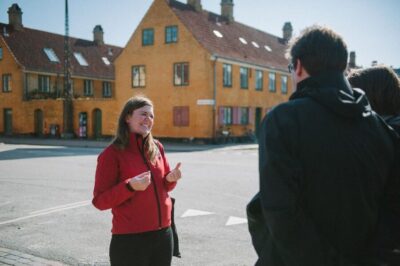
Highlights & Hygge Guided Walking Tour w/ Lunch
Read our review →
Hygge & Highlights Walking Tour with Local Guide
Read our review →
Private 90-Min Ultimate Christmas: Tivoli & Hygge
Read our review →Browse the lists this tour appears in