
Review · HYGGE EXPERIENCES IN COPENHAGEN
Copenhagen: Hygge & Highlights Walking Tour with Local Guide
Copenhagen rewards a good first walk. This 2.5-hour tour links royal palaces, old harbor streets, yellow naval housing, quiet lanes, and major city squares with a local English-speaking guide. I especially like the mix of famous sights and overlooked corners, plus the small group size, capped at 10 people.
I also like the relaxed pace and the chance to ask questions as you go. Guides Laura and Hamid have earned especially warm praise for clear storytelling and friendly help. The main thing to consider is that this is an outdoor-only tour, so you pay $61 for guiding and local context, not interior visits. Anyone who wants to enter churches, castles, or the Round Tower will need separate tickets.
In This Review
- What makes this Copenhagen walk worth your time
- Starting at Sankt Pauls Kirke and entering Nyboder
- Frederik’s Church and the royal quarter
- Ten minutes at Nyhavn
- Kongens Nytorv and the story of central Copenhagen
- Pistolstræde: the quieter turn
- King’s Garden and Rosenborg Castle
- The Round Tower and a finish at Gråbrødretorv
- What $61 buys you
- Pace, group size, and practical comfort
- Who will enjoy this tour most?
- Should you book the Hygge & Highlights walk?
- FAQ
- How long is the Copenhagen Hygge & Highlights Walking Tour?
- Where does the tour begin?
- Where does the tour finish?
- What language is the tour offered in?
- How large is the group?
- Are entrance fees included?
- Can I see the Changing of the Guard at Amalienborg?
- What should I bring?
- Is the tour suitable for people with mobility impairments?
- Can I cancel the booking?
What makes this Copenhagen walk worth your time
- Nyboder’s yellow naval homes: Start with a distinctive residential district built for Danish sailors under King Christian IV.
- A royal quarter in one compact route: See Frederik’s Church, Amalienborg, Nyhavn, and Kongens Nytorv without arranging separate visits.
- A real change of pace: Move from the busy shopping streets to Pistolstræde’s narrow cobbled passage and colorful courtyards.
- Small-group attention: With no more than 10 participants, you have a better chance to hear the guide and ask personal questions.
- Practical local advice: The guide can point out things to do and places worth returning to after the walk.
- A strong first-day choice: The route gives you a useful map of central Copenhagen before you explore on your own.
Starting at Sankt Pauls Kirke and entering Nyboder
Meet in front of Sankt Pauls Kirke at Gernersgade 33. From there, the tour begins in Nyboder, one of Copenhagen’s most recognizable historic neighborhoods.
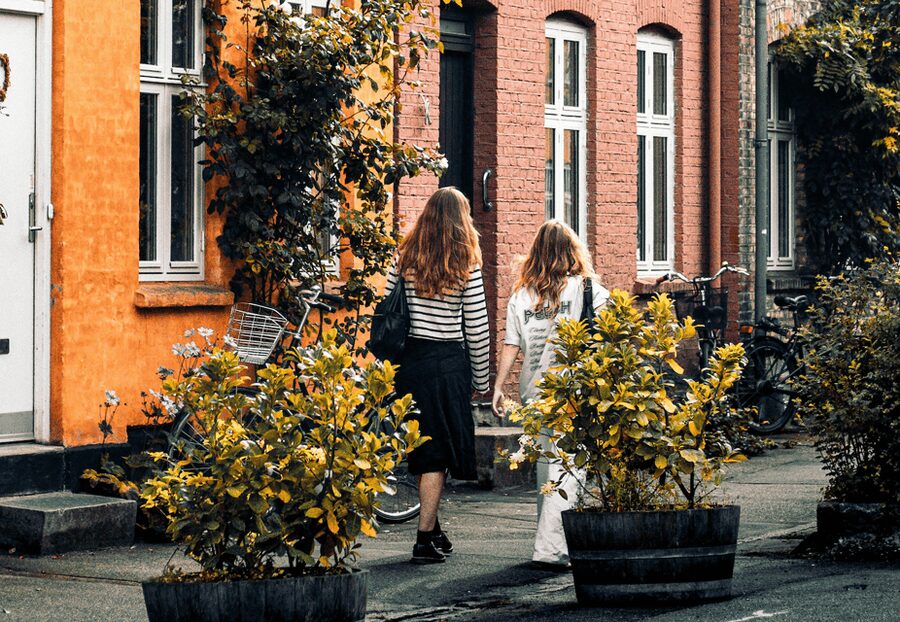
Nyboder was built in the 17th century to house Danish naval personnel. Its rows of yellow homes reflect King Christian IV’s plan to create a stable community for the people who served the fleet. This is a useful opening stop because it introduces Copenhagen through ordinary housing, not only grand palaces.
The guide spends about 10 minutes here. That is enough time to explain why the district was built and how its residents fit into Denmark’s naval life, without turning the opening into a long lecture. You will see the outside of the buildings, so treat this as a streetside history lesson rather than a museum visit.
I like this beginning because Nyboder gives you a feel for how royal ambition affected daily life. It is also a good place to look around before the route shifts toward churches and palaces. Bring comfortable shoes from the start. Two and a half hours on Copenhagen pavement is manageable for most active walkers, but it is not a casual five-minute stroll.
Other slow, hygge-shaped afternoons:
- Copenhagen: Hygge and Happiness Culture Walking Tour
★ 4.9 · 539 reviews - Good Morning, Copenhagen: Feel The Danish Hygge & Happiness
★ 5.0 · 503 reviews - Copenhagen Walking Tour: Highlights and Hygge w/Lunch
★ 5.0 · 272 reviews
Frederik’s Church and the royal quarter
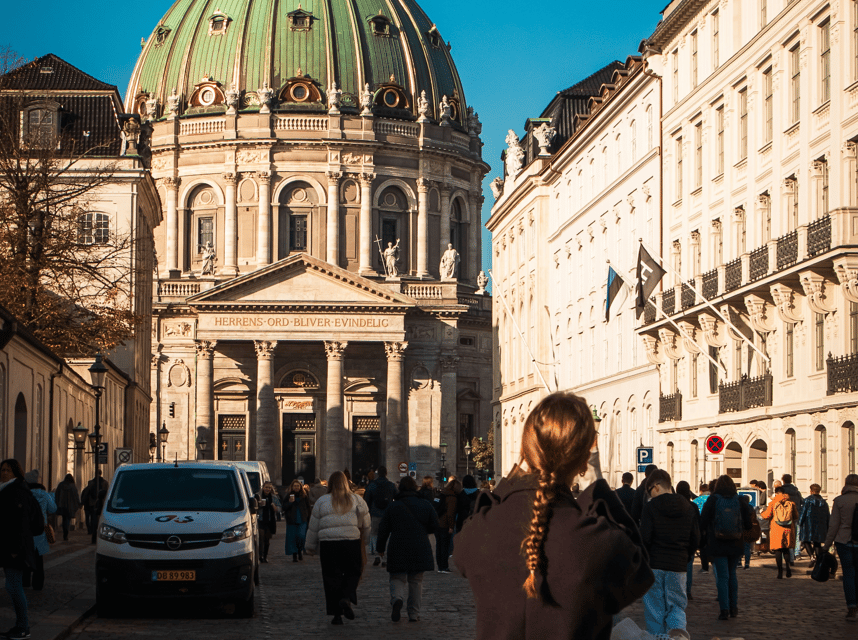
The next stop is Frederik’s Church, usually called the Marble Church. Its large dome was inspired by St. Peter’s Basilica in Rome, giving the building an outsized presence in the surrounding streets.
The guided visit here lasts about five minutes. You may step inside to admire the architecture, but the experience is still primarily a walking tour, and no entrance fees are included. The guide explains the church’s unusually long construction story, which stretched over nearly 150 years.
That short stop works best as visual context. You get the basic story and a chance to appreciate the scale of the dome, then continue into the royal district. If you are keen to study the church interior, take note of it and return later with more time.
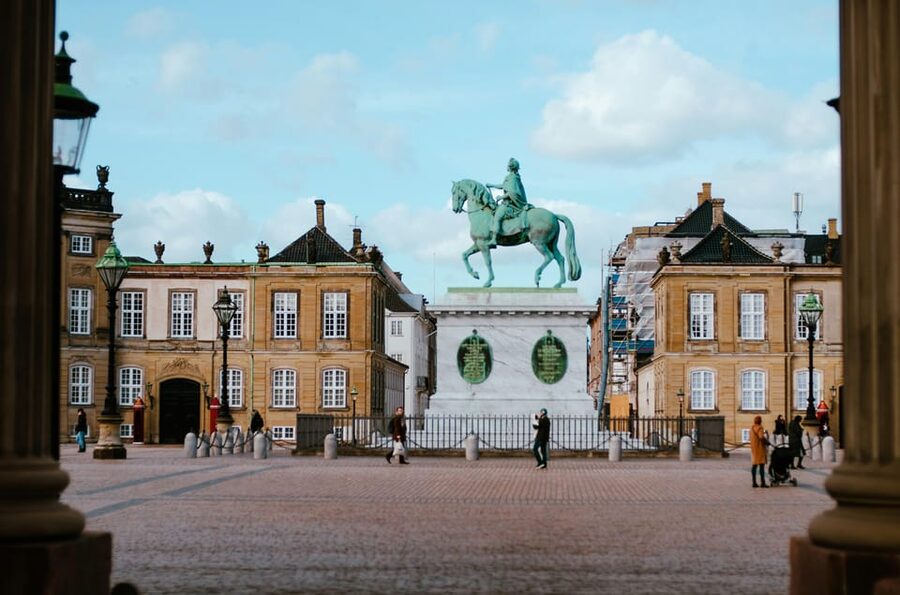
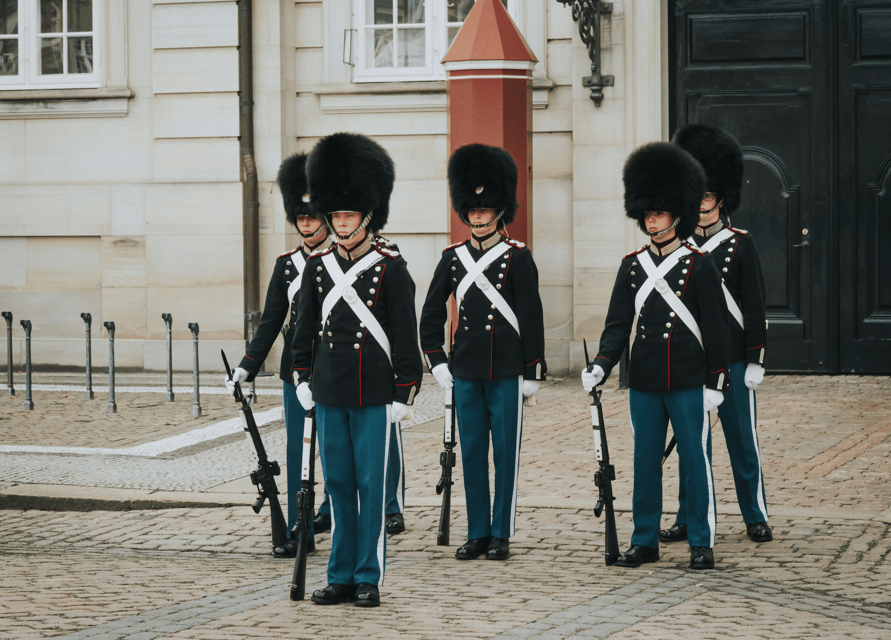
Amalienborg follows, with around 15 minutes of explanation. This is the residence of Denmark’s royal family, arranged around a central square. The setting helps make the monarchy feel like part of the city rather than a distant institution behind a single palace gate.
There may also be a chance to see the Changing of the Guard. That depends on timing and what is happening on the day, so do not treat it as guaranteed. The guide covers the Danish monarchy and notable royal figures, adding useful background before you decide if you want a separate palace visit.
This part of the route is one of the tour’s strongest stretches. In a short distance, you see a major church, a royal residence, and the formal spaces that connect them. I would pay close attention to the guide here, then return later if one building catches your eye.
Ten minutes at Nyhavn
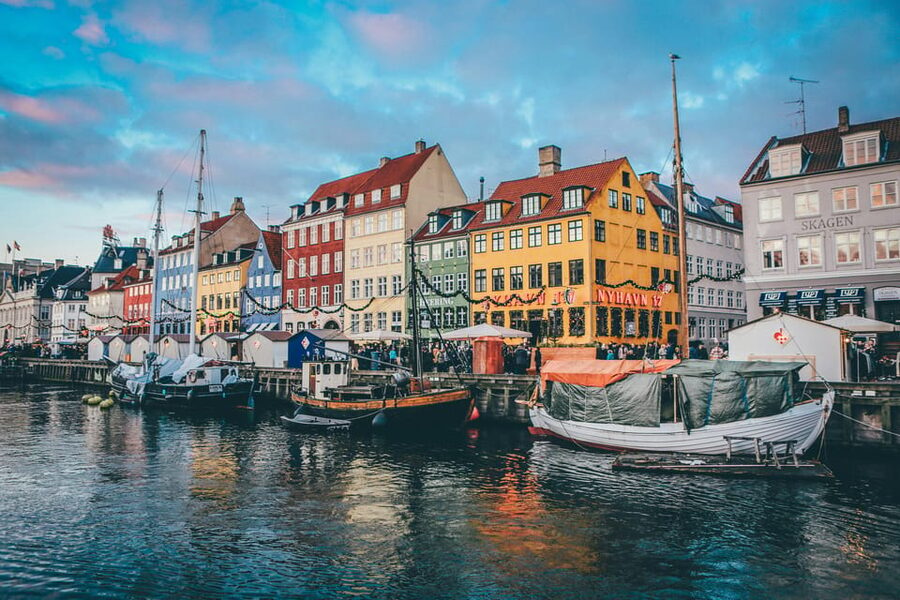
Nyhavn is Copenhagen’s famous harbor, lined with colorful 17th-century buildings and wooden ships. It is also the tour’s planned 10-minute break, giving you a chance to pause after the first section.
The harbor has an easy visual appeal, but the guide adds more than photo stops. You hear about sailors, merchants, and Hans Christian Andersen, who once lived here. That detail gives the colorful façades a human story instead of leaving them as a postcard backdrop.
Ten minutes is enough for a breather and a quick look around. It is not enough for a full meal, a museum visit, or a slow harbor-side drink. Plan accordingly. If you want time at Nyhavn’s restaurants or boats, return on your own after the tour.
I like the way this stop breaks up the walk. The tour does not ask you to hurry from one explanation to the next for the full 150 minutes. You get a short pause, then continue toward the city’s main square and shopping street.
Kongens Nytorv and the story of central Copenhagen
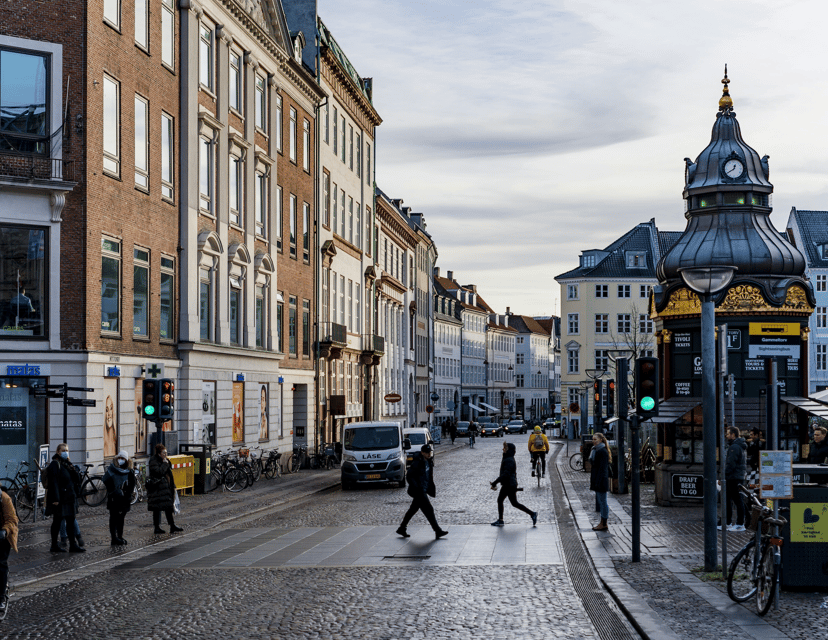
From Nyhavn, the route heads to Kongens Nytorv, the largest square in Copenhagen. The square is surrounded by major buildings, including the Royal Danish Theatre and Hotel d’Angleterre.
The guided explanation here takes about five minutes. That may sound brief, but the point is to help you read the square as a historic meeting place and central urban hub. It is not a full architectural tour of every façade.
This is a useful orientation stop. Copenhagen can feel like a series of attractive streets until someone explains how its squares connect the royal area, harbor, theaters, shopping streets, and older lanes. You will understand the city’s layout better after this part of the walk.
Next comes Strøget, Europe’s longest pedestrian street. Shops, cafés, and street performers make it one of the liveliest parts of central Copenhagen. The tour spends about five minutes here, so you will not have time to browse properly.
That is actually a benefit for many people. You get the location and atmosphere, then avoid losing half the tour inside shops. If you want Danish design, clothing, souvenirs, or café time, Strøget is an obvious place to revisit later.
Other guided walks in Copenhagen:
- Private Walking Grand Tour of Copenhagen
★ 5.0 · 3,953 reviews - Copenhagen Highlights Walking Tour
★ 5.0 · 2,324 reviews - Politically Incorrect Private Highlights Walking Tour
★ 5.0 · 1,244 reviews - Copenhagen: Group Walking Tour – City Highlights – 2 Hours
★ 4.7 · 1,088 reviews
Pistolstræde: the quieter turn
The route then leaves the broad shopping street for Pistolstræde, a narrow cobbled alley with colorful courtyards and an older, quieter feel.
This is the sort of place that is easy to miss when you follow only the main attractions. It offers a change in scale: instead of grand squares and royal buildings, you get a close look at Copenhagen’s smaller passages and residential character.
The tour description promises time for less familiar corners, and Pistolstræde is where that promise becomes clearest. A local guide matters here because the value is not just seeing the lane. It is learning why this sort of overlooked space belongs in your picture of Copenhagen.
Do not expect a major monument at every stop. This part is about atmosphere, texture, and the pleasure of turning away from the obvious route. It may be one of your favorite sections if you like old streets more than formal interiors.
King’s Garden and Rosenborg Castle
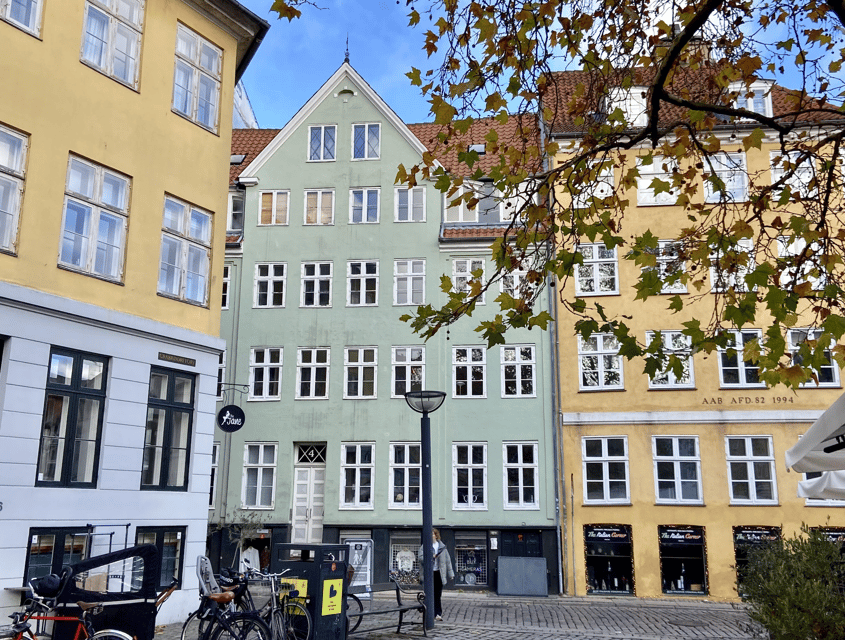
The walk continues through King’s Garden, also known as Kongens Have, toward Rosenborg Castle. The garden provides a greener section of the route and a welcome visual break from paved streets and city squares.
Rosenborg is a 17th-century Renaissance castle. The guide spends about 10 minutes explaining the castle and its place in Copenhagen’s royal story. Again, this is an outdoor visit, so the tour does not include entry or access to the castle collections.
That distinction matters. Rosenborg’s exterior and setting are worth seeing, but anyone interested in royal objects or the castle interior should plan a separate visit. The walking tour gives you the framework, then lets you choose how much more time to invest.
I like the pairing of King’s Garden and Rosenborg because it slows the route down without adding a formal break. You get a sense of how the castle relates to its grounds, rather than seeing it only as an isolated façade.
The Round Tower and a finish at Gråbrødretorv
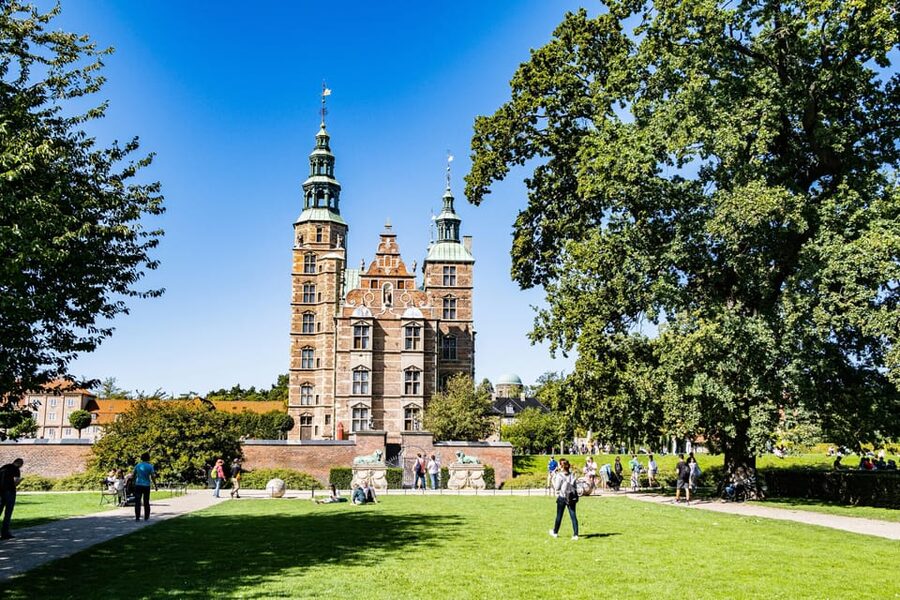
The next stop is the Round Tower, described as Europe’s oldest functioning observatory. It was originally used as an observatory and library for scholars in the 17th century.
The guide spends about 10 minutes here. You will learn about its academic purpose and see the building from outside, but admission is not part of the tour. If you want to go up, you will need to return separately and pay the entrance fee.
The Round Tower is a fine example of how this walk adds purpose to buildings you might otherwise photograph and forget. It is not simply an unusual tower in the center of town. Its story connects Copenhagen to astronomy, scholarship, and the practical needs of 17th-century researchers.
The tour ends at Gråbrødretorv, a picturesque square surrounded by colorful houses. Locals use it as a relaxed meeting place, and its quieter mood makes a pleasant ending after the larger sights.
This is a smart finish. You are left in the heart of Copenhagen, close to cafés and central streets, with several choices for continuing your day. You can stop for a drink, return to a favorite sight, or use the guide’s suggestions to plan the next part of your visit.
What $61 buys you
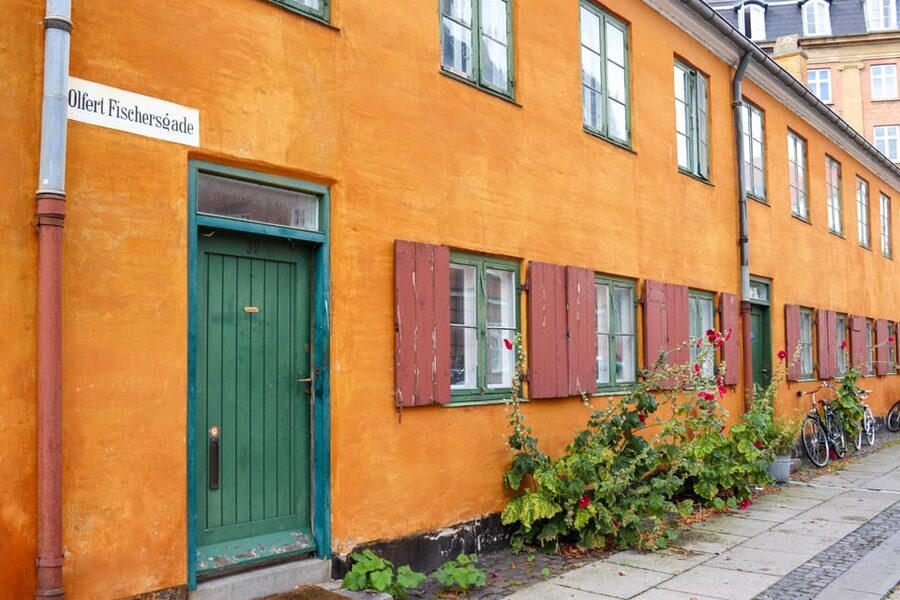
The price is $61 per person. That is not the cheapest way to see Copenhagen’s streets, but the value depends on how you like to explore.
You are paying for a 150-minute guided walk, an English-speaking local guide, a small group limited to 10, and a route that combines major sights with quieter corners. You are not paying for palace, church, castle, or tower admission. There is also no meal or transport included.
I see the price as reasonable if you want useful background and a personal introduction on your first day. A guide can help you make sense of the royal quarter, point out places you might miss alone, and offer ideas for the rest of your stay. The smaller group is important here. It makes questions easier and reduces the chance of being lost in a large crowd.
The value is weaker if your main goal is to enter every landmark. In that case, you will need extra time and admission fees after the walk. Think of this as a city orientation with stories, not a ticketed sightseeing package.
Pace, group size, and practical comfort
The stated duration is 150 minutes, or two and a half hours. The planned stops range from five minutes at Frederik’s Church, Kongens Nytorv, and Strøget to 15 minutes at Amalienborg, with a 10-minute break at Nyhavn.
That rhythm gives you variety. You will not spend the whole tour standing in one square, but you also will not receive a long interior visit. The pace should suit you if you enjoy steady walking with frequent stops for explanation and photographs.
The group limit of 10 is one of the tour’s most valuable details. A small group makes it easier to hear, ask follow-up questions, and get recommendations that fit your interests. The strongest feedback focuses on this personal feel, along with guides who explain both cultural and social aspects of Denmark.
Laura is praised for being friendly, well organized, and good at bringing Copenhagen’s past to life through stories. Hamid is praised for explaining Danish history and society clearly. Your assigned guide may be different, but these comments give you a useful sense of the guiding style to expect.
Wear comfortable shoes and bring water. The tour runs in all weather, so you need clothing suited to the forecast. This is not a good choice for people with mobility impairments, and the long outdoor route may be tiring if walking for two and a half hours is difficult.
Free cancellation is available up to 24 hours before the start for a full refund. You can also reserve now and pay later, which helps if your Copenhagen plans are still moving around.
Who will enjoy this tour most?
I would choose this walk for a first visit, especially if you want a clear sense of central Copenhagen before tackling museums and paid attractions. It is also a good fit for solo visitors and couples who prefer conversation and questions over a large group presentation.
History fans will appreciate the range: naval housing, royal buildings, a church with a long construction story, a former scholarly observatory, and a Renaissance castle. People who prefer street life will enjoy Nyhavn, Strøget, Pistolstræde, and Gråbrødretorv.
Families with older children may find the variety helpful, though the tour is not designed around children. The outdoor format can also work well for people who do not want to spend their first hours inside museums.
I would think twice if you dislike walking, need step-free access, or want extensive time inside buildings. You should also skip it if you prefer to explore at your own pace with long café stops. The schedule keeps moving, even though the mood is relaxed.
Should you book the Hygge & Highlights walk?
Book it if you want a friendly, efficient introduction to Copenhagen with both headline sights and small lanes. The strongest reasons are the 10-person limit, the range of stops, the local recommendations, and the guides’ praised ability to answer questions and tell useful stories.
Do not book it expecting entrance tickets or lengthy visits inside the Marble Church, Rosenborg Castle, or the Round Tower. Those require separate planning.
For the best use of your time, take the tour early in your stay, wear weather-ready shoes, and keep the rest of the day flexible. Then you can return to Nyhavn, Rosenborg, or the Round Tower if one of them deserves a closer look. At $61, it is a sound choice for context and orientation, especially if you value a small group more than included admissions.
FAQ
How long is the Copenhagen Hygge & Highlights Walking Tour?
The tour lasts 150 minutes, or two and a half hours.
Where does the tour begin?
It begins in front of Sankt Pauls Kirke at Gernersgade 33.
Where does the tour finish?
The walk finishes at Gråbrødretorv in central Copenhagen.
What language is the tour offered in?
The live tour guide speaks English.
How large is the group?
The group is limited to 10 participants.
Are entrance fees included?
No. The tour is outdoor-only, and entrance fees are not included.
Can I see the Changing of the Guard at Amalienborg?
There is a chance to see it, depending on the timing and conditions on the day.
What should I bring?
Bring comfortable shoes, water, and clothing suitable for the weather.
Is the tour suitable for people with mobility impairments?
No. The tour is listed as unsuitable for people with mobility impairments.
Can I cancel the booking?
Yes. You can cancel up to 24 hours in advance for a full refund. You can also reserve now and pay later.
Newest around Copenhagen
- WWII Copenhagen Nyhavn and War Museum Private Walking Tour★ 5.0 · 2 reviews
- Half Day Exploration of Helsingør and Kronborg★ 3.5 · 3 reviews
- Helsingør Castle and Historic City Self-Guided Walking Tour★ 4.0 · 4 reviews
- Full-Day Tour; Castle, Palace & Cathedral, Winter(JAN-MAR)★ 5.0 · 11 reviews
- walking tour – Copenhagen and Christiansborg 3 hours★ 4.0 · 7 reviews
- Copenhagen Walking Tour with Food Testing (smorrebrod dish & snap)★ 4.5 · 10 reviews
- The Philosopher’s Last Walk: An audio tour on the life of Søren Kierkegaard★ 4.5 · 5 reviews
- The Forgotten Giants Private Tour★ 5.0 · 3 reviews
Hygge Experiences, compared.
Good Morning, Copenhagen: Feel The Danish Hygge & Happiness
Read our review →
Copenhagen Walking Tour: Highlights and Hygge w/Lunch
Read our review →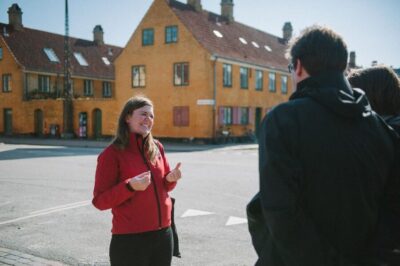
Highlights & Hygge Guided Walking Tour w/ Lunch
Read our review →
Private 90-Min Ultimate Christmas: Tivoli & Hygge
Read our review →Browse the lists this tour appears in