
Review · MUSEUMS IN COPENHAGEN
Danish National Museum Copenhagen Archeology History Tour
Copenhagen’s past fits neatly into one day. This private tour pairs the National Museum of Denmark with Christiansborg Palace, giving you archaeology, royal rooms, government history, and everyday Danish life in one guided outing. I like the clear two-part plan, and I like having a private guide who can explain the objects rather than leaving you to read every label alone.
The strongest feature is the chance to see two very different sides of Denmark: ancient tools, Viking-era material, and coins at the museum, followed by royal interiors and the working center of Danish government at Christiansborg. The main drawback is the walking. The museum meeting point is several blocks from the initial meeting place, and cobblestones can be hard going if you have a sore ankle or arthritis.
In This Review
- Key Points to Know Before Booking
- Starting Beneath Copenhagen’s Lur Blowers
- The National Museum and Denmark’s Long Story
- Walking From Ancient Objects to Christiansborg
- The Royal Reception Rooms and Great Hall
- The Royal Kitchen, Ruins, and Stables
- Choosing Between the 2-, 3-, 4-, and 5-Hour Options
- What the $289.67 Price Means
- Comfort, Pace, and Guide Fit
- Who Should Book This Copenhagen Tour?
- Should You Book It?
- FAQ
- Where does the tour begin?
- Does the tour include hotel pickup?
- Are Christiansborg Palace tickets included?
- Does the palace ticket let me skip all lines?
- What does admission to the National Museum cover?
- Which parts of Christiansborg Palace are included?
- When are the Royal Stables usually open?
- How many people can join a private group?
- Can I cancel for a full refund?
Key Points to Know Before Booking
- Two major sights in one private outing: Visit the National Museum of Denmark and selected areas of Christiansborg Palace with your own licensed guide.
- The museum begins at City Hall Square: Meet beneath the Lur Blowers column at Rådhuspladsen 57, then walk to the museum.
- The 2-hour option is limited: It does not include Christiansborg Palace tickets or hotel transfers.
- The 5-hour option offers the most convenience: It includes palace skip-the-line tickets and round-trip pickup and drop-off.
- The palace visit covers more than royal rooms: Depending on opening conditions, you can see the Royal Reception Rooms, Great Hall, Royal Kitchen, Ruins, Royal Stables, and Palace Chapel.
- Cobblestones matter: The route may be uncomfortable for anyone with limited mobility, a tender ankle, or arthritis.
Starting Beneath Copenhagen’s Lur Blowers
The meeting point is beneath the Lur Blowers column at City Hall Square, a central and easy-to-recognize spot opposite Copenhagen’s City Hall. The address is Rådhuspladsen 57, 1550 København.
This is a useful place to begin because you are already in central Copenhagen, close to public transportation and within reach of several major sights. You meet the guide here before walking toward the National Museum. The initial stop is brief, about 10 minutes, but it gives you a clear place to gather before the main visit.
The walk to the museum is not simply a short doorway-to-doorway transfer. One detailed account describes the museum as three or four blocks from the meeting point, with a route over cobblestones. That may be no issue for you, but it matters if you have arthritis, a recovering ankle, or trouble with uneven paving.
If walking is a concern, contact the provider before booking and ask exactly where the guide can meet you. The supplied details identify City Hall Square as the meeting point, so you should not assume the guide will meet you at the museum entrance.
Other museums worth the ticket in Copenhagen:
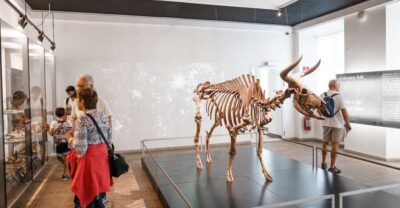
- Copenhagen: National Museum of Denmark Entry Ticket
★ 4.5 · 960 reviews - Exhibition – Home of Carlsberg
★ 4.5 · 281 reviews - Copenhagen: MACA Museum: Banksy & Street Art Entry Ticket
★ 4.5 · 142 reviews
The National Museum and Denmark’s Long Story
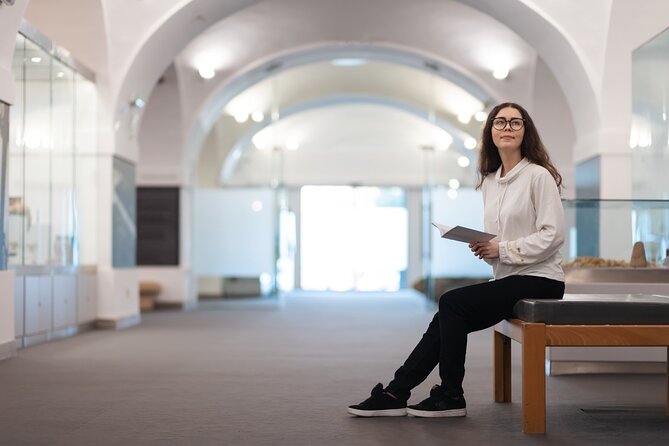
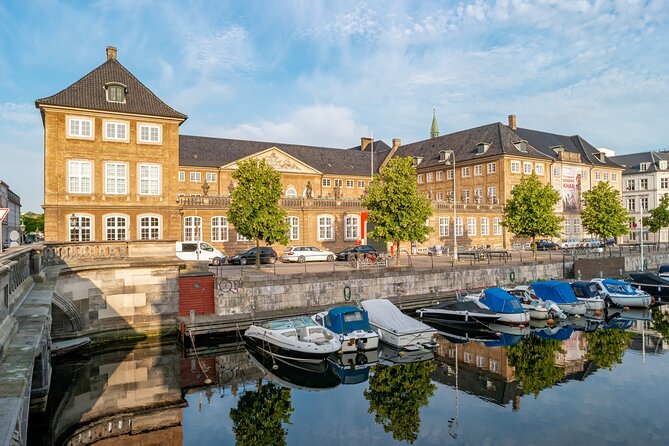
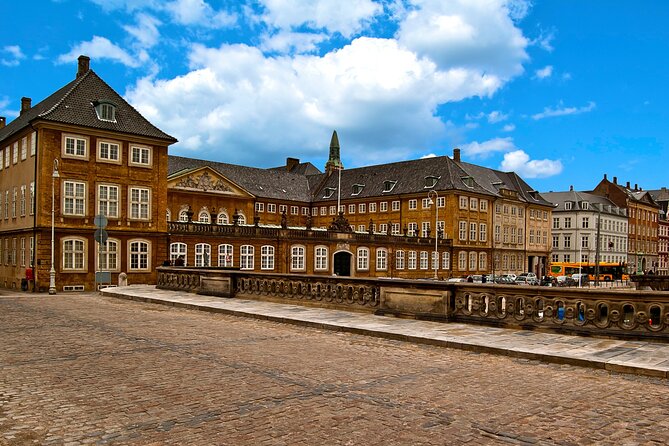
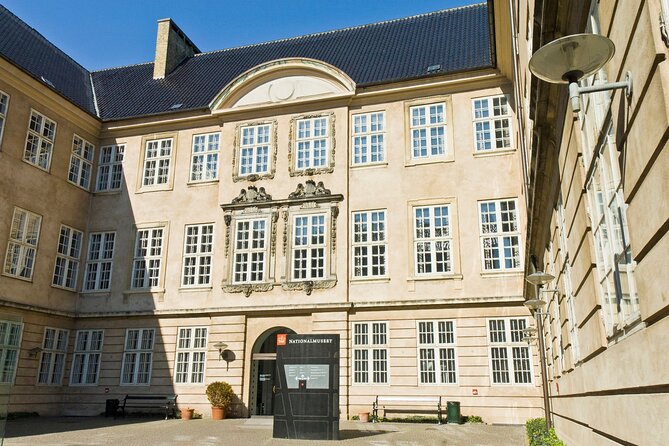
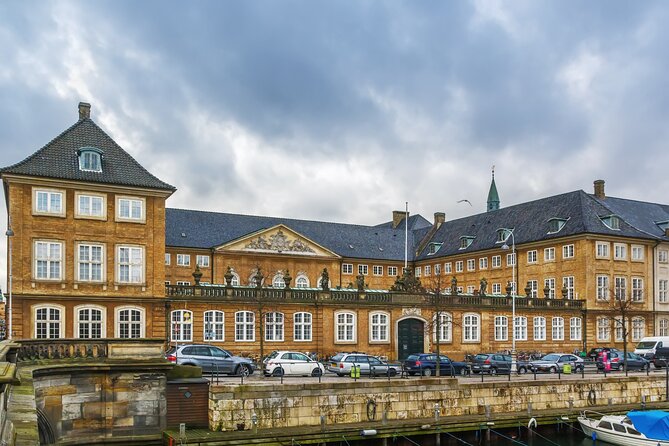
The National Museum of Denmark occupies the Prince’s Palace, where the museum opened in 1892. That setting adds a pleasing sense of place before you even reach the exhibits. You are not entering a modern display hall cut off from the city. You are visiting a former palace that now houses objects from Denmark and many other parts of the world.
The permanent exhibitions cover archaeology, ethnology, numismatics, ethnography, natural science, and more. In practical terms, that means the museum can take you from prehistoric tools and ancient objects to coins, cultural artifacts, and material from later Danish periods. The collection spans antiquity, the Middle Ages, the Renaissance, and later eras.
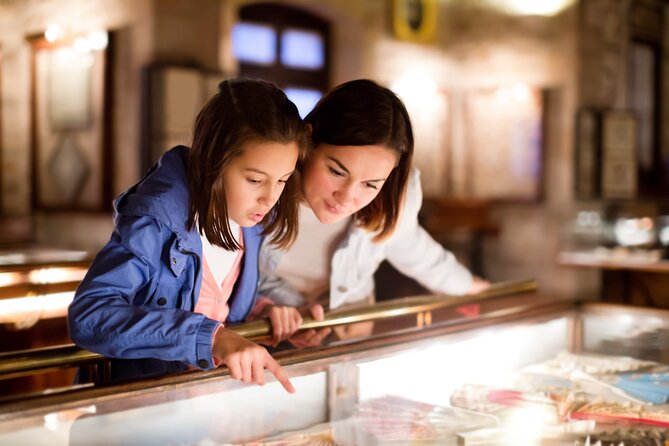
The planned museum visit lasts about one hour. That is enough time for a guided introduction to important sections, but it is not enough for a leisurely look at every gallery. If you already know a great deal about Neolithic Europe, the Bronze Age, or the Vikings, you may find the standard explanation too basic. One visitor with an advanced interest in these subjects felt the museum would have worked just as well without a guide.
That is useful advice, not a reason to dismiss the tour. A private guide can still save you from wandering through a large institution without a plan. The value depends on how well the guide adjusts the conversation to your interests. If you are new to Danish archaeology, ask for the essential objects and the stories that connect them. If you are already a serious history reader, say so at the start and request more specialized discussion.
I would also ask the guide to keep the museum portion focused. The National Museum contains enough material to fill several visits, so a one-hour route needs a clear plan. You will get more from the stop if you decide in advance whether you care most about archaeology, royal culture, coins, or objects from outside Denmark.
Walking From Ancient Objects to Christiansborg
The transfer between the museum and Christiansborg brings a useful change of pace. The National Museum is about evidence from the distant past. Christiansborg explains how Denmark’s monarchy, government, and public life developed through later centuries.
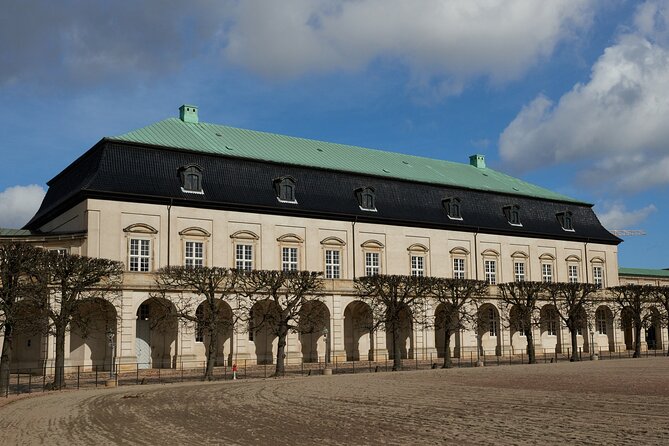
The palace once housed Danish kings and queens. Today it contains three branches of the Danish government. That gives the visit a particular character. You are not seeing a palace preserved only as a royal residence. You are also visiting a working political center, where ceremonial rooms and government functions share the same complex.
The palace portion can last about two hours, depending on the option selected and the pace of your group. The included areas are the Royal Representation Rooms, the Royal Kitchen, the Ruins, and the Royal Stables. The Palace Chapel is open on Sundays, and the Royal Stables are usually open after 1:30 p.m. Plan around those conditions if one of these areas is especially important to you.
The Royal Reception Rooms and Great Hall
The Royal Reception Rooms provide the grandest part of the palace visit. Here, your guide can explain how the monarchy is represented through rooms used for official occasions, receptions, and state ceremonies.
The Great Hall is especially important because it contains the palace tapestries. These large works help connect royal decoration with Danish history and national identity. A guide is useful here because the rooms can otherwise blur into a sequence of impressive interiors. Ask what each room was used for, who used it, and how the palace functions today.
The guide’s story should also help you understand the contrast between ceremony and government. Christiansborg is not merely a pretty royal building. Its importance comes from the way royal tradition and modern public administration occupy the same site.
A few more Copenhagen outings worth comparing
- Copenhagen’s Royal History: A Self-Guided Walking Tour
★ 4.5 · 7 reviews - Private E-Biking Copenhagen History and Nature Adventures
★ 5.0 · 5 reviews - Helsingør Castle and Historic City Self-Guided Walking Tour
★ 4.0 · 4 reviews - Copenhagen: Private City E-Bike History & Nature Tour
★ 5.0 · 2 reviews
The Royal Kitchen, Ruins, and Stables
The Royal Kitchen offers a more practical view of palace life. Instead of focusing only on grand halls, it shows the work required to feed a court and maintain royal routines. This is often the most relatable part of a palace visit because it shifts attention from portraits and chandeliers to daily operations.
The Ruins provide another layer of context. They connect the present palace with earlier structures on the site, allowing you to see that Copenhagen’s political center has a much longer story than the current building alone suggests. The details of the ruins are best understood with explanation, particularly if you want to know how earlier buildings relate to Christiansborg.
The Royal Stables add a working element of their own. They are usually open after 1:30 p.m., so a morning schedule may not suit you if the stables are a priority. Check the timing before you commit to a particular departure.
The Palace Chapel is open on Sundays. It is not guaranteed on other days, so do not treat it as part of every visit. The admission covers the Royal Representation Rooms, Royal Kitchen, Ruins, and Royal Stables, subject to opening conditions.
Choosing Between the 2-, 3-, 4-, and 5-Hour Options
The tour has several versions, and the differences are important. The shortest option is not simply a faster version of the full outing.
The 2-hour option includes admission to the National Museum’s permanent exhibition. It does not include Christiansborg Palace tickets or round-trip hotel transfers. This is best for a focused museum visit, not for seeing both major attractions.
The 3-hour option includes an estimated one-hour round-trip transfer from your accommodation, depending on distance and traffic. It does not include skip-the-line tickets for Christiansborg Palace, so check the exact palace admission arrangement before booking. The transfer time also leaves less time for the attractions than the headline duration might suggest.
The 4-hour option includes skip-the-line tickets to Christiansborg Palace but does not include hotel pickup and drop-off. You meet in the city center and make your own way to and from the tour. This can be a good middle ground if you are staying centrally and want the palace included.
The 5-hour option combines both major conveniences: skip-the-line palace tickets and round-trip accommodation transfers. The transfer takes an estimated hour in total, depending on traffic and distance, so this is the least rushed choice if you want both attractions and door-to-door transport.
The wording around duration deserves attention. A five-hour booking with one hour spent in the car does not provide five full hours inside museums and palace rooms. The transfer is part of the total time. For a first visit to Copenhagen, I would favor the 5-hour version if the price difference fits your budget and you value convenience.
What the $289.67 Price Means
At $289.67 per person, this is not a low-cost museum visit. You are paying for a private experience, a licensed guide fluent in your selected booking language, and, on the longer options, palace admission and possibly transport.
The price makes more sense for a small group. Since the activity is private, your party does not share the guide with unrelated people. The stated group range is 1 to 23 people per guide, with additional guides arranged for larger groups. A group discount is also offered, so the per-person cost may be easier to justify when several people share the experience.
For one or two people, the value depends on your interest in guided interpretation. If you are comfortable reading museum labels and organizing your own route, independent admission will cost less. If you want a private guide to connect archaeology, monarchy, politics, and daily life, the price buys structure and personal attention.
Hotel pickup changes the calculation. Copenhagen is easy to navigate in many areas, but the transfer can remove the need to arrange transport between your accommodation and the center. On the other hand, the 4-hour version includes palace skip-the-line tickets without hotel transfers, which may suit you if you prefer to handle your own transportation.
Pre-booked palace tickets let you skip the ticket-office line, not the entrance and ticket-control line. That is still useful, but it is not a guarantee of instant entry. Keep your expectations realistic during busy periods.
Comfort, Pace, and Guide Fit
This is a private tour, but private does not automatically mean perfectly tailored. Tell the guide at the beginning how much walking you can manage and what level of historical detail you want.
The accessibility concern is real. The route includes city walking and cobblestones, and one visitor with a tender ankle found the journey difficult enough that he had to rest in the museum atrium while his companion continued the visit. If you use a walking aid or have joint pain, ask about the route before booking.
The tour may suit most participants, but the standard pace and content will not suit every person equally. Someone new to Danish history may appreciate a guide who explains the basics. A specialist in Viking or prehistoric Europe may want a more advanced conversation and should make that clear at the outset.
The guide is described as a 5-star licensed professional, but no individual guide name is provided. You can request discussion of specific subjects, such as Bronze Age Denmark, Viking material, Danish coins, royal ceremony, or the role of Christiansborg in modern government.
Who Should Book This Copenhagen Tour?
I would recommend it to you if you want two major sights handled in one private outing and prefer explanation over independent browsing. It is also a practical choice for a family or group that wants a flexible guide rather than a large scheduled tour.
It works especially well for first-time visitors who want a broad introduction to Denmark. The museum supplies the long view, while Christiansborg gives you a direct look at monarchy and government. Together, they create a useful framework for the rest of your time in Copenhagen.
I would hesitate if you already have advanced knowledge of Danish archaeology and mainly want quiet time with individual objects. The one-hour museum visit may feel too brief, and a standard introduction may repeat material you already know.
I would also hesitate if uneven walking is difficult for you. The tour provider should be asked about a closer meeting point or route adjustment before you pay, rather than after you arrive.
Should You Book It?
Book this tour if you value a private guide, want the National Museum and Christiansborg in one organized plan, and can handle city walking. The 5-hour option offers the clearest value for convenience because it includes both palace skip-the-line tickets and accommodation transfers.
Choose the 4-hour version if you are staying centrally and can reach City Hall Square on your own. Choose the 2-hour version only if the National Museum is your main goal. For experienced history buffs, independent visits may offer more freedom, but asking the guide for advanced subjects can make the private format worthwhile.
Free cancellation is available up to 24 hours before the start time. After that, the amount paid is not refunded, and changes are not accepted within 24 hours.
FAQ
Where does the tour begin?
The meeting point is beneath the Lur Blowers column at Rådhuspladsen 57, 1550 København, opposite Copenhagen City Hall.
Does the tour include hotel pickup?
Round-trip pickup and drop-off are included with the 3-hour and 5-hour options. They are not included with the 2-hour and 4-hour options.
Are Christiansborg Palace tickets included?
Skip-the-line tickets to Christiansborg Palace are included with the 4-hour and 5-hour options. They are not included with the 2-hour and 3-hour options.
Does the palace ticket let me skip all lines?
The pre-booked ticket lets you skip the ticket-office line. It does not let you skip the entrance and ticket-control line.
What does admission to the National Museum cover?
Admission covers the museum’s permanent exhibition. The museum includes sections on archaeology, ethnology, numismatics, ethnography, natural science, and other subjects.
Which parts of Christiansborg Palace are included?
Admission covers the Royal Representation Rooms, Royal Kitchen, Ruins, and Royal Stables. The Palace Chapel is open on Sundays.
When are the Royal Stables usually open?
The Royal Stables are usually open after 1:30 p.m. Opening conditions can affect what you see, so check the timing before booking.
How many people can join a private group?
The experience is private, with 1 to 23 people per guide. Additional guides can be arranged for larger groups.
Can I cancel for a full refund?
Yes. You can cancel at least 24 hours before the start time for a full refund. Cancellations or changes made within 24 hours are not refunded or accepted.
Newest around Copenhagen
- WWII Copenhagen Nyhavn and War Museum Private Walking Tour★ 5.0 · 2 reviews
- Half Day Exploration of Helsingør and Kronborg★ 3.5 · 3 reviews
- Helsingør Castle and Historic City Self-Guided Walking Tour★ 4.0 · 4 reviews
- Full-Day Tour; Castle, Palace & Cathedral, Winter(JAN-MAR)★ 5.0 · 11 reviews
- walking tour – Copenhagen and Christiansborg 3 hours★ 4.0 · 7 reviews
- Copenhagen Walking Tour with Food Testing (smorrebrod dish & snap)★ 4.5 · 10 reviews
- The Philosopher’s Last Walk: An audio tour on the life of Søren Kierkegaard★ 4.5 · 5 reviews
- The Forgotten Giants Private Tour★ 5.0 · 3 reviews
Museums, compared.

MACA Museum ‘Banksy & Street Art: The Early Years’ Art Exhibition
Read our review →
Browse the lists this tour appears in