
Review · MUSEUMS IN COPENHAGEN
Copenhagen: Danish Jewish Museum Entry Ticket
History feels close here. The Danish Jewish Museum offers a thoughtful look at 400 years of Jewish life in Denmark, with objects, stories, and exhibitions that connect past events to antisemitism today. I especially like the striking Daniel Libeskind design and the clear English and Danish translations throughout the museum. I also appreciate that the museum handles the wartime story with care, including how many Danish Jews escaped to Sweden in 1943.
The main drawback is size. You can see the museum in about 45 minutes to one hour, so it is not an all-day attraction. The $15 admission is fair if you want focused historical context, but less appealing if you expect a large collection or a long program of activities.
In This Review
- Key Points Before You Go
- Why This Small Museum Matters
- Entering Daniel Libeskind’s Mitzvah Design
- The Gate to Denmark and the Beginning of Jewish Life
- Flight and Persecution from 1943 to 1945
- Objects, Illustrations, and the Human Scale
- How Long to Allow for the Visit
- Is the $15 Ticket Good Value?
- Who Will Appreciate This Museum Most?
- Practical Advice for a Smooth Visit
- Should You Book the Danish Jewish Museum?
- FAQ
- Where is the Danish Jewish Museum located?
- How much does admission cost?
- How long does a visit usually take?
- What does the museum cover?
- Which exhibitions can I see?
- Does the museum discuss the Second World War?
- Is the museum available in English?
- Is a guided tour included?
- Is the museum wheelchair accessible?
- How long is the ticket valid?
Key Points Before You Go
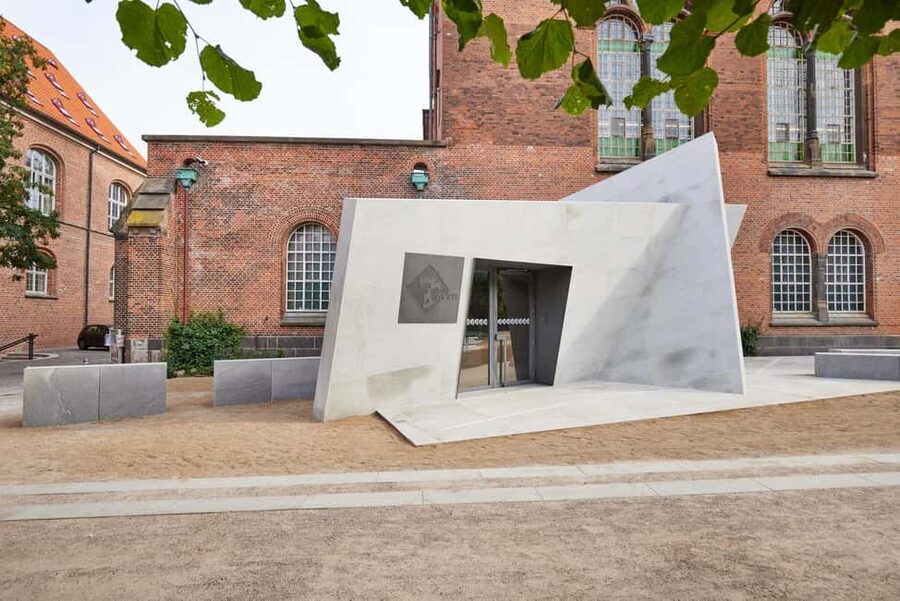
- Daniel Libeskind’s architecture: Sloping floors and light wood panels turn the building itself into part of the story.
- 400 years of Danish Jewish life: The exhibitions explain how Jewish life developed in Denmark from the 17th and 18th centuries onward.
- Two main exhibitions: See The Gate to Denmark and Flight and Persecution in the 20th Century.
- A compact visit: Plan on roughly 45 minutes to one hour, depending on how carefully you read.
- English and Danish information: The museum’s content is available in both languages.
- Flexible admission: Your ticket remains valid for 365 days, with free cancellation up to 24 hours before the visit.
Why This Small Museum Matters
The Danish Jewish Museum is a state-recognized cultural history museum devoted to Jewish life in Denmark. Its subject is specific, but the questions it raises are wide: How does a minority community become part of a national story? What does safety mean during wartime? How do objects help us understand people whose lives were interrupted or threatened?
I find the museum most useful as a focused stop between larger Copenhagen sights. You are not being asked to race through room after room of displays. Instead, the museum gives you a compact account of Jewish life in Denmark, then places the Second World War and the continuing problem of antisemitism within that story.
The museum’s short length is both its strength and its limit. You can fit it into a busy day without much planning. At the same time, you should arrive with the right expectations. This is not a huge institution with hours of galleries. It is a carefully shaped visit that rewards attention.
The current admission price is $15 per person. That is reasonable for a museum with bilingual interpretation, two exhibitions, and distinctive architecture, especially if you value historical context. If you prefer large collections, interactive displays, or a full afternoon indoors, the price may feel less attractive.
Other museums worth the ticket in Copenhagen:
- Copenhagen: National Museum of Denmark Entry Ticket
★ 4.5 · 960 reviews - Exhibition – Home of Carlsberg
★ 4.5 · 281 reviews - Copenhagen: MACA Museum: Banksy & Street Art Entry Ticket
★ 4.5 · 142 reviews
Entering Daniel Libeskind’s Mitzvah Design
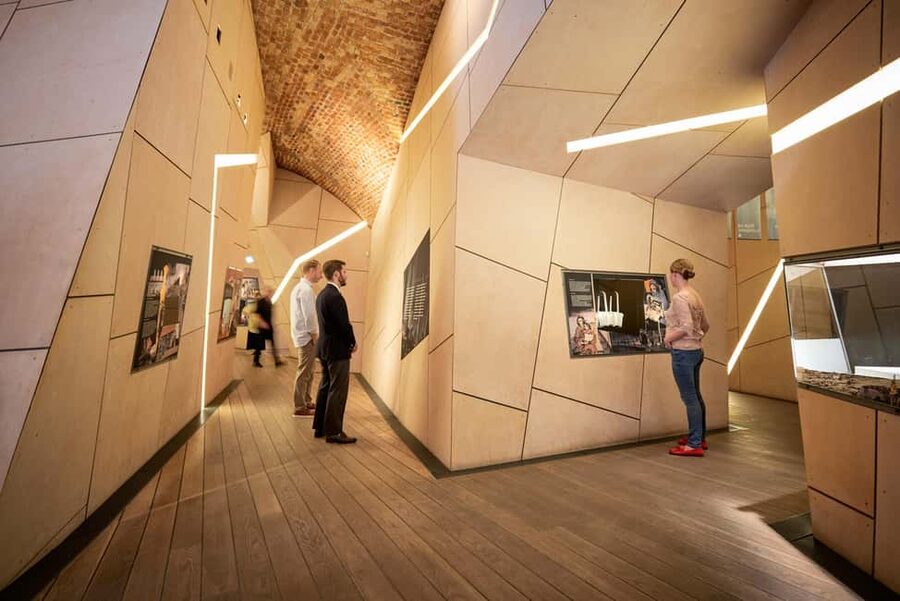
Before you read a single label, the building begins telling its story. Architect Daniel Libeskind based the layout on the Hebrew word Mitzvah, which means a good deed. Here, that idea refers in part to the fact that many Danish Jews survived the Second World War by fleeing across the water to Sweden.
The architecture uses light wood paneling that points toward the Nordic setting. Sloping floors create an uneasy feeling, almost as if the ground is moving beneath you or you are aboard a ship. That sensation is not an accidental decoration. It connects the building to escape by sea and to the uncertainty surrounding the wartime experience.
I like this approach because the design does not simply frame the exhibits. It adds an emotional layer without replacing the history. The light-filled wood creates a contrast with the darkness of persecution across much of Europe during the war. You may find yourself slowing down before you reach the first display.
The angled surfaces can also make the visit feel less straightforward than a standard museum layout. That is part of the point, but visitors who prefer level floors and a simple gallery plan may find the design slightly challenging. The museum is wheelchair accessible, which is important, though the unusual architecture remains a noticeable part of moving through the space.
The Gate to Denmark and the Beginning of Jewish Life
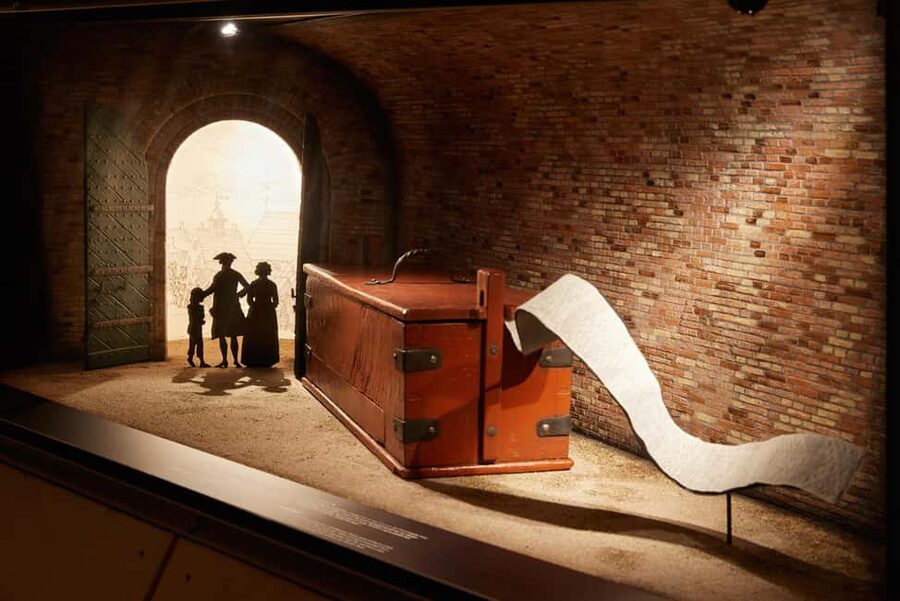
The Gate to Denmark introduces the first part of the museum’s larger story. It focuses on the establishment of Jewish life in Denmark during the 18th century and helps explain how a Jewish community took root within Danish society.
This exhibition is useful because it provides a starting point instead of dropping you directly into the Holocaust years. You first learn about community life, identity, and the place of Jewish people in Denmark. That order matters. It reminds you that Jewish history is not only a story of persecution. It is also a story of families, work, traditions, relationships, and daily life.
The exhibition was developed with the exhibition design studio at Moesgaard Museum. Its approach connects historical objects with a broader account of how communities form and change.
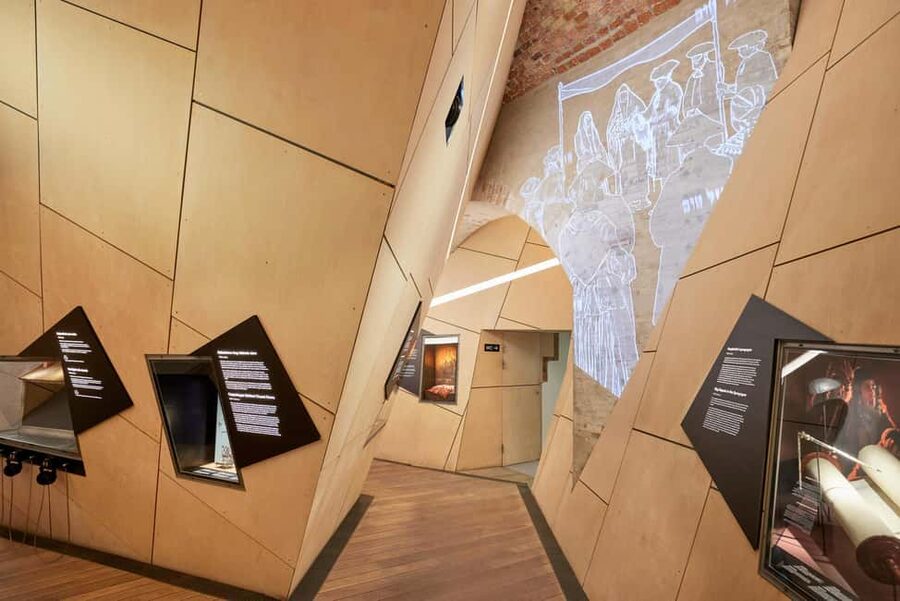
You will find artifacts connected to Jewish life in Denmark. These objects give the museum a human scale. A historical timeline can tell you when something happened, but an object can suggest how people practiced traditions, arranged their lives, or carried their identity through changing times.
Information is presented in English and Danish, so you can follow the main arguments without needing a guide. The translations make this a practical stop for international visitors, although you should still allow enough time to read if you want more than a quick overview.
Flight and Persecution from 1943 to 1945
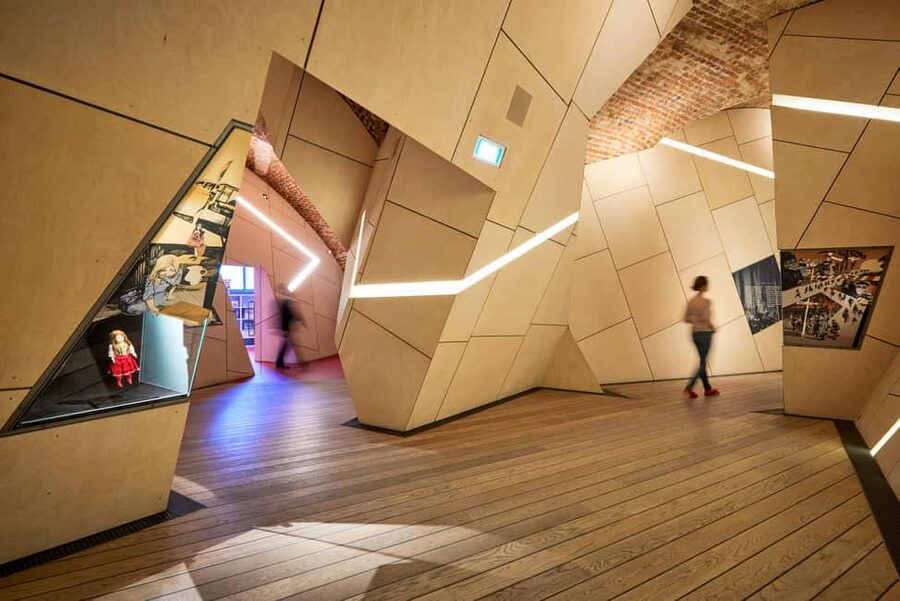
The second exhibition, Flight and Persecution in the 20th Century, turns to the war years and the experience of Danish Jews from 1943 to 1945. This is the emotional center of the museum.
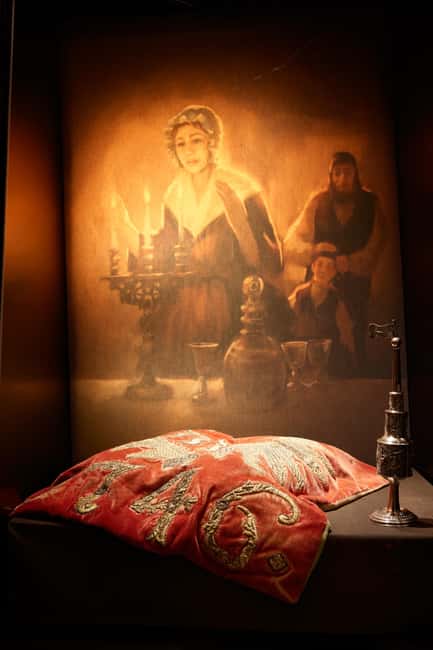
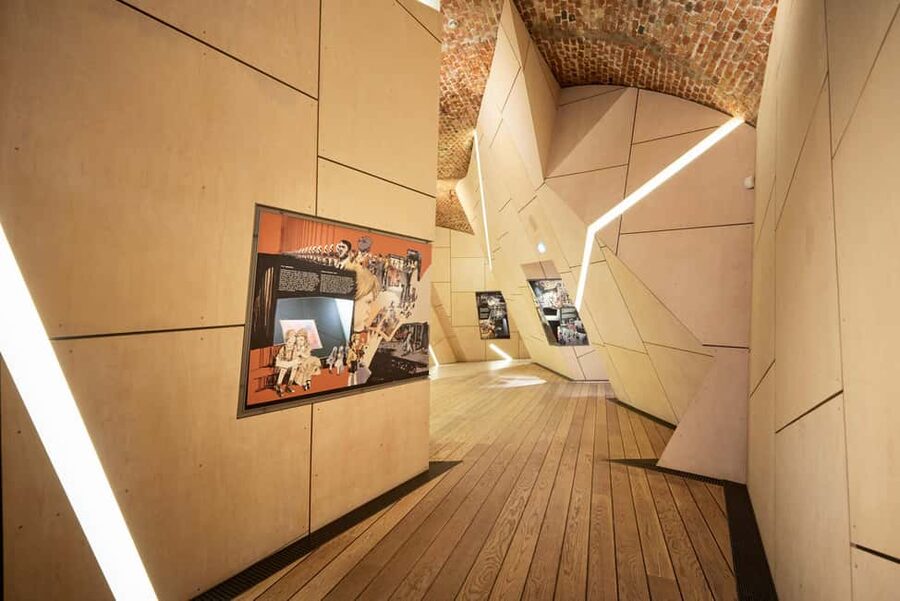
The exhibition includes carefully selected objects brought to life through illustrations by artist Kristian Bay Kirk. That combination gives the material a personal quality. You are not only looking at objects behind glass. The illustrations help connect them to the people, journeys, and dangers surrounding them.
A central fact is that the majority of Danish Jews survived the war by fleeing to Sweden. The sea crossing is echoed in the building’s sloping floors, giving the architecture a direct relationship with the historical material.
The museum does not present the war as a neatly finished chapter. The exhibition continues into the present, pointing out that antisemitism did not end in 1945. The museum addresses its continued presence and its growth in several countries, including Denmark.
I value that decision. It prevents the visit from becoming a simple story with a tragic middle and a tidy ending. You leave with the understanding that remembering the past is connected to recognizing prejudice in the present.
The subject matter is serious, and some parts may feel heavy. Families with older children may find the visit useful, but the museum’s wartime material should be approached with care. The available information does not specify a separate children’s program, so I would not choose this attraction solely as a family activity for young children.
A few more Copenhagen outings worth comparing
- Copenhagen Card-Discover: 80+ Attractions & Public Transport
★ 4.6 · 5,351 reviews - Copenhagen: Hop-On Hop-Off Bus Tour with Boat Tour Option
★ 3.9 · 4,122 reviews - Private Walking Grand Tour of Copenhagen
★ 5.0 · 3,953 reviews - From Copenhagen: Lund and Malmö 2-Country Tour
★ 4.7 · 3,807 reviews
Objects, Illustrations, and the Human Scale
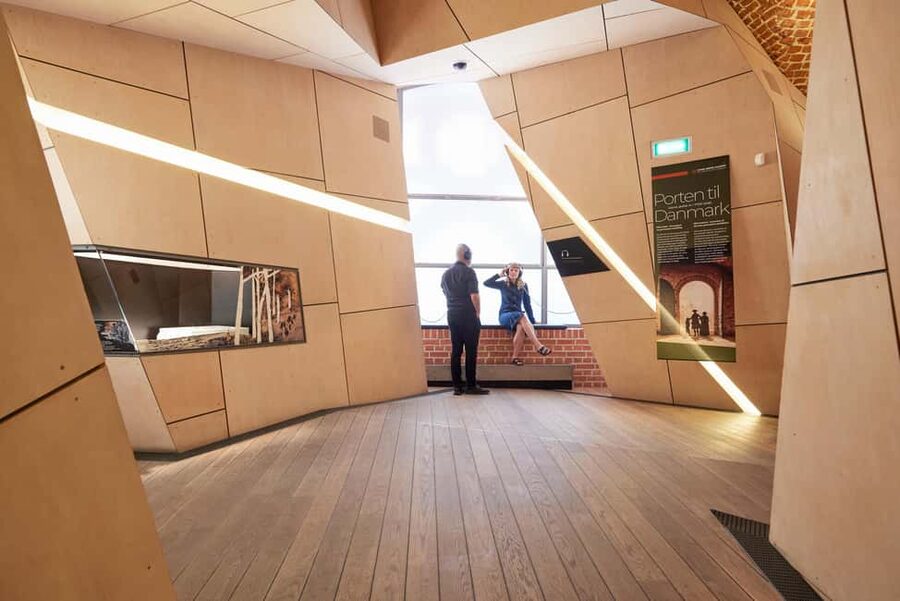
The Danish Jewish Museum’s collection is not presented as a random display of old items. The objects are used to explain Jewish life in Denmark and to give substance to events that can otherwise feel distant.
That is especially helpful in a museum of this size. With only 45 minutes to an hour, the displays need to make their point clearly. Carefully chosen objects can do that better than a crowded room of labels. You might find that one small item says more about ordinary life than a long paragraph of dates.
Kristian Bay Kirk’s illustrations add another way into the material. They help bring the selected objects into a wider visual setting, particularly in the exhibition about flight and persecution. I like this because the museum avoids presenting history as nothing more than a list of facts.
The experience still depends on reading. There is no indication of a guided tour being included, and guided tours are specifically not part of the ticket. If you want a more personal explanation, you would need to arrange that separately. For most visitors, the bilingual text and the layout provide enough structure for an independent visit.
The staff are described as kind and gentle, which suits the tone of the museum. You can ask for help if you need basic orientation, but you should think of this as a self-guided museum admission rather than a hosted tour.
How Long to Allow for the Visit
Plan on around 45 minutes if you read selectively. Give yourself about one hour if you want to take in the architecture, examine the objects, and read the main text in both exhibitions.
That short time makes the museum easy to add to a Copenhagen day. You could visit before or after another attraction in the city rather than setting aside a full morning. The ticket’s 365-day validity also gives you unusual flexibility. You can reserve ahead, check available starting times, and keep the admission available for another day within the validity period.
The stated duration is not a timed tour. It reflects how long most people may spend inside. Your pace will depend on how closely you read and how much time you give the architectural details.
I recommend resisting the temptation to rush because the museum is small. The building rewards a slower look, and the wartime exhibition deserves more than a quick pass. On the other hand, you do not need to fear losing half a day here.
Is the $15 Ticket Good Value?
At $15 per person, this is a moderate-priced museum visit. The value depends on what you want from it.
You are paying for access to a state-recognized museum, two exhibitions, the collection of Jewish-life artifacts, and a building designed by Daniel Libeskind. You also get bilingual presentation in English and Danish. For anyone interested in Danish history, Jewish heritage, architecture, or the Second World War, that is a solid package.
The value is weaker if you judge admission only by floor space or time inside. A visit of 45 minutes can make the ticket seem expensive beside a large museum that occupies several hours. I would think of the price as payment for a concentrated historical experience, not for the quantity of exhibits.
The flexible ticket terms improve the value. You can reserve now and pay later, and cancellation is free up to 24 hours before the visit. Since the ticket is valid for 365 days, you do not need to force the museum into a packed schedule.
Transportation is not included, so you will need to make your own way to the museum. The ticket covers entry only, and no guided tour is included.
Who Will Appreciate This Museum Most?
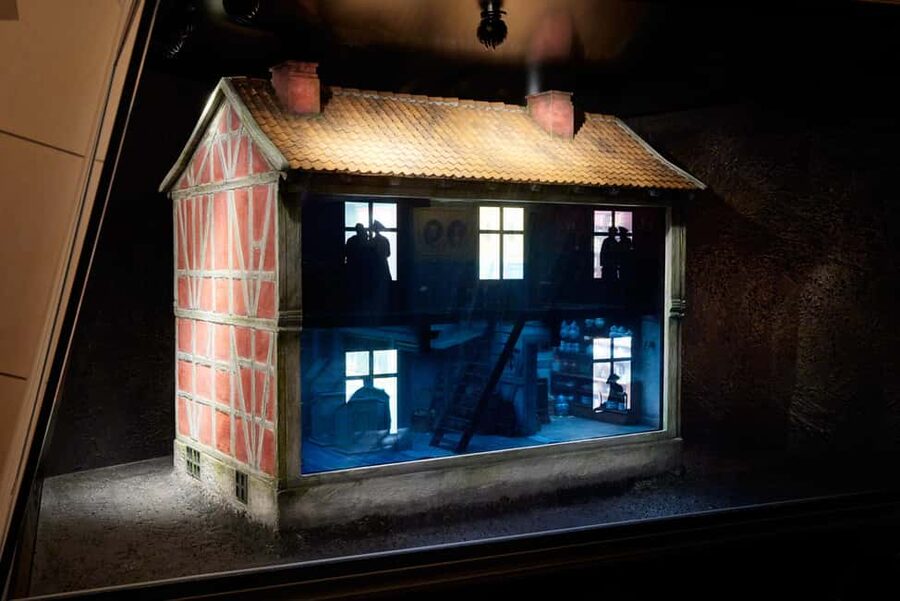
I recommend the Danish Jewish Museum to you if you enjoy museums that connect architecture with history. The Libeskind building is not a minor detail. It shapes the mood and gives the visit a physical link to the story of escape by sea.
It is also a good choice if you want to understand Denmark beyond the usual royal palaces, canals, and design shops. The museum shows a part of Danish society that deserves a place in your picture of the country.
History students, architecture fans, and visitors interested in Jewish heritage will get the most from the visit. It also suits anyone looking for a serious but manageable museum that can fit into a busy Copenhagen itinerary.
I would be more cautious if you want an entertainment-focused attraction, a large collection, or a long guided program. The museum is compact and self-guided. Its strength is focus, not scale.
The subject also calls for a thoughtful mood. This is not a place to dash through while chatting loudly or checking the next stop every few minutes. You do not need to spend all day, but you should give the displays your full attention while you are there.
Practical Advice for a Smooth Visit
Check the available starting times before you go, even though the ticket remains valid for a year. A little planning helps you fit the museum around other Copenhagen activities.
Allow extra time if you read every label. The exhibitions are available in English and Danish, but bilingual text can add to the amount you want to take in. If you are visiting with someone who reads at a different pace, agree on a meeting point or simply expect to move through the galleries separately for a few minutes.
Do not skip the architecture. Look at the wooden wall panels and notice how the sloping floors affect your movement. The building is one of the clearest reasons to visit even if you already know something about Danish Jewish history.
Remember that transportation is not part of the admission. You are buying access to the museum, not a transfer or a guided city tour.
The museum is wheelchair accessible. If accessibility is especially important for your visit, you can still confirm current arrangements before setting out, but the activity information identifies the venue as accessible.
Should You Book the Danish Jewish Museum?
Book it if you want a concise, serious account of Jewish life in Denmark, especially if architecture matters to you. The combination of Libeskind’s Mitzvah design, original objects, bilingual information, and the story of wartime flight to Sweden gives the visit real purpose.
Skip it if you are looking for a large museum that will fill several hours. At roughly 45 minutes to one hour, this is a focused stop, not a full-day attraction.
For most visitors with an interest in Copenhagen’s social history, I think the $15 price is fair. Add it to your plans when you want a quieter museum experience with something meaningful to say, and leave enough time to let the building and exhibitions work together.
FAQ
Where is the Danish Jewish Museum located?
The museum is in Copenhagen, in Denmark’s Zealand Region.
How much does admission cost?
Admission costs $15 per person.
How long does a visit usually take?
Plan for about 45 minutes to one hour. The museum is compact, but reading the exhibition material carefully may take longer.
What does the museum cover?
It tells the story of 400 years of Jewish life in Denmark, including Jewish cultural heritage, community life, wartime experiences, and continuing antisemitism.
Which exhibitions can I see?
The museum has The Gate to Denmark and Flight and Persecution in the 20th Century.
Does the museum discuss the Second World War?
Yes. The exhibitions cover the experiences of Danish Jews from 1943 to 1945, including the escape of many Danish Jews to Sweden.
Is the museum available in English?
Yes. The exhibition information is available in English and Danish.
Is a guided tour included?
No. Guided tours are not included with the admission ticket.
Is the museum wheelchair accessible?
Yes. The activity information states that the museum is wheelchair accessible.
How long is the ticket valid?
The ticket is valid for 365 days. Availability and starting times should be checked when planning your visit.
Newest around Copenhagen
- WWII Copenhagen Nyhavn and War Museum Private Walking Tour★ 5.0 · 2 reviews
- Half Day Exploration of Helsingør and Kronborg★ 3.5 · 3 reviews
- Helsingør Castle and Historic City Self-Guided Walking Tour★ 4.0 · 4 reviews
- Full-Day Tour; Castle, Palace & Cathedral, Winter(JAN-MAR)★ 5.0 · 11 reviews
- walking tour – Copenhagen and Christiansborg 3 hours★ 4.0 · 7 reviews
- Copenhagen Walking Tour with Food Testing (smorrebrod dish & snap)★ 4.5 · 10 reviews
- The Philosopher’s Last Walk: An audio tour on the life of Søren Kierkegaard★ 4.5 · 5 reviews
- Explore the Instaworthy Spots of Copenhagen with a Local★ 3.5 · 3 reviews
Museums, compared.



MACA Museum ‘Banksy & Street Art: The Early Years’ Art Exhibition
Read our review →
Danish National Museum Copenhagen Archeology History Tour
Read our review →
Browse the lists this tour appears in