
Review · ODENSE & HANS CHRISTIAN ANDERSEN IN ODENSE
Two hour city tour through the new Odense
Odense is changing fast. This two-hour walk shows you how the Danish city moved from heavy traffic and shipyard work toward bicycles, new housing, cultural spaces, and a greener future. I like that the tour looks beyond famous sights, and I like the small-group format, limited to 12 people, which should leave room for questions and conversation. The main consideration is the walking: you cover about 4 kilometers, or roughly 5,500 steps, and some of the city’s best examples are discussed from the outside rather than entered.
The tour is especially useful if you have already seen the classic old town and want to understand present-day Odense. Guide Jan is praised for explaining the city’s recent changes, while Jørn brings clear enthusiasm and a strong sense of Danish culture. At $32.28 per person, the price is fair for two hours of focused guiding, though it is less useful if you want a traditional sightseeing walk built around major interiors.
In This Review
- Key points to know before booking
- Why this Odense walk feels different
- Starting at Ruinen on Overgade
- Fifteen stops built around a citywide change
- The harbor pool, seen from outside
- North Atlantic House and new cultural life
- H.C. Andersen House and a modern design choice
- What the guides add to the walk
- Is $32.28 a fair price?
- Who will enjoy this city tour most?
- Timing, group size, and cancellation details
- Should you book the New Odense tour?
- FAQ
- Where does the tour start?
- Where does the tour end?
- How long is the walking tour?
- How far do I walk?
- How many stops are included?
- Is the harbor pool visited from inside?
- What is the cancellation policy?
Key points to know before booking
- Fifteen stops in two hours: You move at a steady pace through Odense, with the city’s redevelopment as the central story.
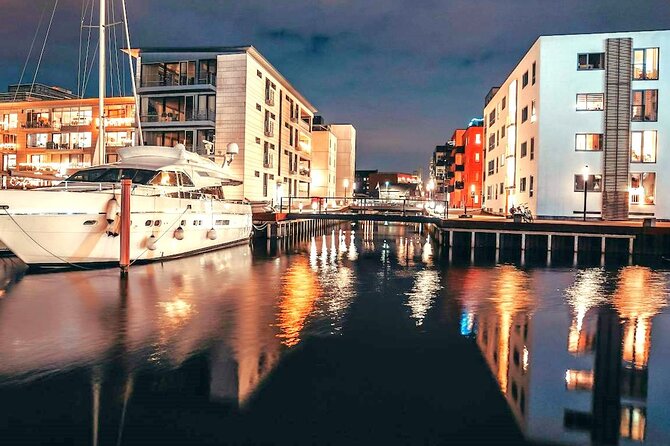
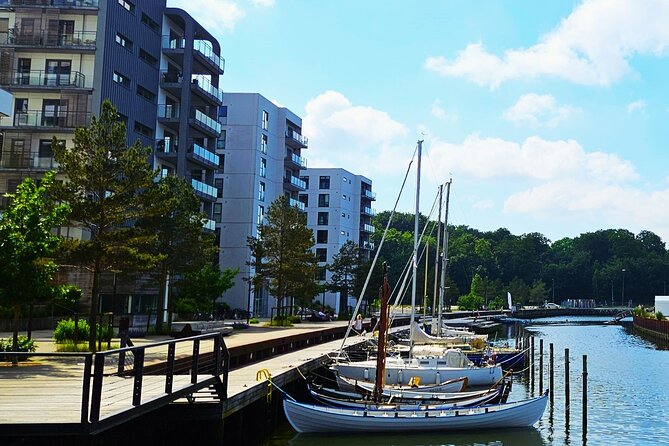
- A look at the new harbor: The harbor pool, North Atlantic House, and other waterside changes show how former working areas now serve public life.
- Odense beyond H.C. Andersen: The route includes the new H.C. Andersen House, designed by Japanese architect Kengo Kuma.
- A small group capped at 12: This is a better setting for questions than a large coach-style tour.
- A practical urban story: You learn about affordable housing, bicycle-friendly streets, and new work created after the shipyard closed.
- Four kilometers on foot: Wear comfortable shoes and expect a moderate walk with no indoor access to the harbor pool.
Why this Odense walk feels different
Many city tours explain what a building is. This one asks what the city is trying to become.
Odense was once shaped by industry, shipyard jobs, traffic, and noisy streets through the center. The tour follows the shift toward a city with more space for bicycles, public areas, cultural activity, and housing for younger residents. That gives you a useful lens for places that might otherwise seem like ordinary streets or recently rebuilt districts.
I appreciate this kind of guiding because redevelopment can be hard to understand on your own. A new harbor building is easy to photograph, but a guide can explain why it was built, what it replaced, and how it fits into the city’s plans. Here, the point is not just to admire new construction. You are invited to think about work, housing, transport, and daily life.
The focus also gives Odense a human scale. The story includes former shipyard employees whose skills were transferred into newer types of work. That detail helps you see the transition as more than a construction project. It is also about how a city supports people when an old source of employment disappears.
Other Odense and Andersen trips:
- Odense: City walk – The new green Odense – City development
★ 5.0 · 16 reviews - Self-Guided Tour of Hans Christian Andersen’s Copenhagen
★ 4.5 · 6 reviews - Odense: Craft Beer Walking Tour
★ 4.8 · 5 reviews
Starting at Ruinen on Overgade
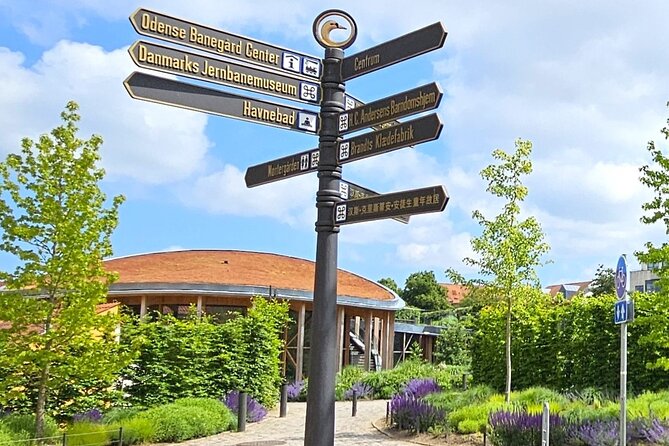
The walk begins at Ruinen, a two-story Gothic house from the Middle Ages at Overgade 3, 5000 Odense. This is a fitting starting point because the tour connects old Odense with the city being built around it.
From the meeting point, you can expect the guide to frame the city’s broader change before the walk gathers momentum. The contrast matters. Odense is not replacing its past with a blank slate. The route shows how older streets and buildings sit beside newer projects and changing patterns of movement.
The city tour makes 15 stops in about two hours. That works out to a brisk rhythm, with time at each place for explanation but not long pauses for detailed architectural study. If you prefer to wander slowly or stop often for photographs, you may find the pace a little tight.
The meeting point is near public transportation, and the activity ends back where it starts. That return makes it easier to plan the rest of your day, especially if you want to continue exploring central Odense afterward.
Fifteen stops built around a citywide change
The exact appeal of this route lies in the connections between stops. You are not simply ticking off monuments. You are following a story about how Odense moved from an industrial hub with heavy traffic in the center toward a city designed with bicycles and public use in mind.
That shift is best understood on foot. You can notice how streets function, where people have room to move, and how older urban areas meet new development. The tour presents these changes as ongoing work, not a finished project. That is valuable because city planning often looks tidy in brochures, while real cities are always in the middle of adjustments.
The guide also discusses affordable housing for young people. This is one of the more useful subjects on the walk, since it brings redevelopment down to a practical question: who gets to live in the new city? You are not only hearing about attractive public spaces. You are also learning how Odense is trying to keep housing within reach for younger residents.
The labor-market discussion adds another layer. When the old shipyard closed, not every worker had to leave the city or abandon an established career. The tour explains how old industrial jobs were converted into newer, future-focused work, often with the same employees. That makes the city’s transformation easier to understand and gives the walk more social weight.
The harbor pool, seen from outside
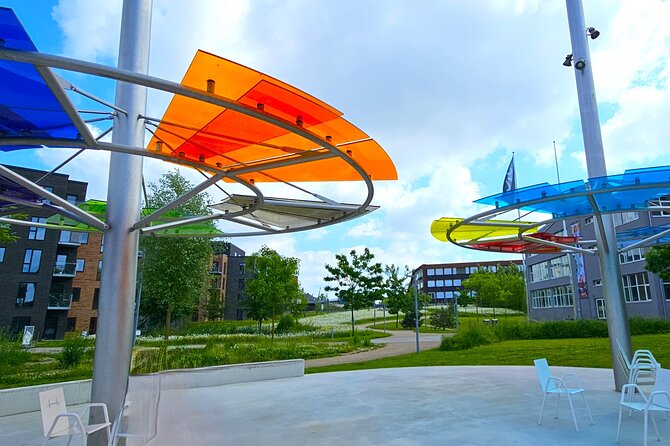
Several stops take place around the harbor, including the harbor pool. You do not go inside, but you look at it from outside while the guide explains its role.
That limitation is worth knowing before you book. This is an observation and interpretation stop, not a swimming visit or an indoor tour. If you want to use the pool, you will need to make separate plans.
Still, the harbor pool works well as an example of changing waterfront priorities. A harbor once associated mainly with work, storage, and industry can become a place for public recreation. The tour uses the pool as a symbol of that wider transition.
I find this sort of stop more useful than it may sound. The pool is not presented as an isolated attraction. It helps you see how public access and everyday leisure have become part of the harbor’s new purpose. You get a brief look at how a city can reclaim waterside space for ordinary residents.
A few more Denmark outings worth comparing
- Copenhagen: Group Walking Tour – City Highlights – 2 Hours
★ 4.7 · 1,088 reviews - Copenhagen: 2-hour City Highlights Bike Tour
★ 4.7 · 632 reviews - Segway Tours Copenhagen w. Guide & Concierge Service. 2 Hours+
★ 5.0 · 550 reviews - 2 Hour Copenhagen Segway Tour
★ 5.0 · 404 reviews
North Atlantic House and new cultural life
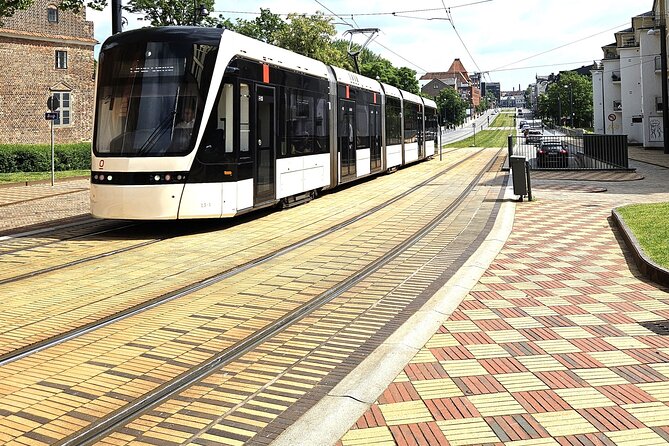
The North Atlantic House is another harbor stop. It represents the growing cultural offer in the area and promotes cooperation among the Nordic countries, Greenland, and the Faroe Islands.
For you, the value here is the regional perspective. The harbor is not only being used for housing or recreation. It is also becoming a place for cultural exchange and shared Nordic, Greenlandic, and Faroese connections.
The tour treats the building as part of a larger change in how Odense uses its waterfront. You learn to look at the harbor as a public and cultural district, not simply as a former industrial zone. Because the stop is included in a wider route, you can compare it with the harbor pool and other redevelopment projects rather than seeing it in isolation.
The practical drawback is that the tour description does not promise a visit inside the North Atlantic House. Plan to hear about its purpose and role from the outside unless your guide says otherwise. This experience is primarily a walking and interpretation tour, not a sequence of museum admissions.
H.C. Andersen House and a modern design choice
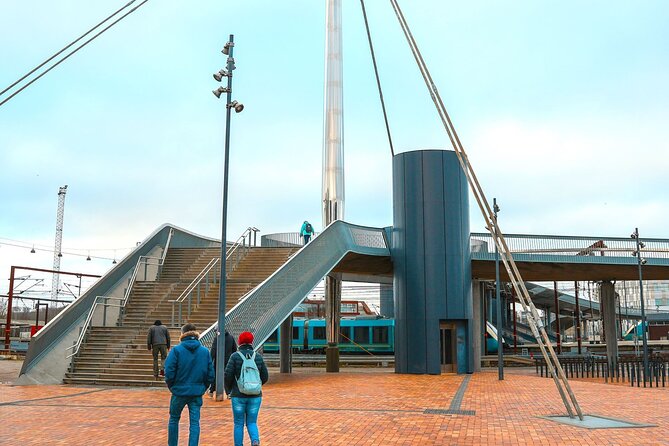
The route also includes H.C. Andersen’s House, which opened in summer 2021. The museum was designed by Japanese architect Kengo Kuma and combines Danish half-timbered traditions with ideas connected to Andersen’s fairy tales.
This is one of the tour’s strongest links between old and new Odense. H.C. Andersen is the city’s best-known cultural figure, but the museum’s design shows that the city is willing to present that heritage in a contemporary way. The building can help you understand how Odense uses its famous son while still looking forward.
The stop also gives the tour a useful balance. Without it, the route might feel focused only on planning, jobs, and construction. H.C. Andersen’s House reminds you that culture and storytelling are part of the city’s future too.
You should not assume this walking tour includes admission to the museum. The supplied details identify the house as a stop, but they do not state that you enter or receive a museum ticket. If the interior is a priority, check separately and allow extra time.
What the guides add to the walk
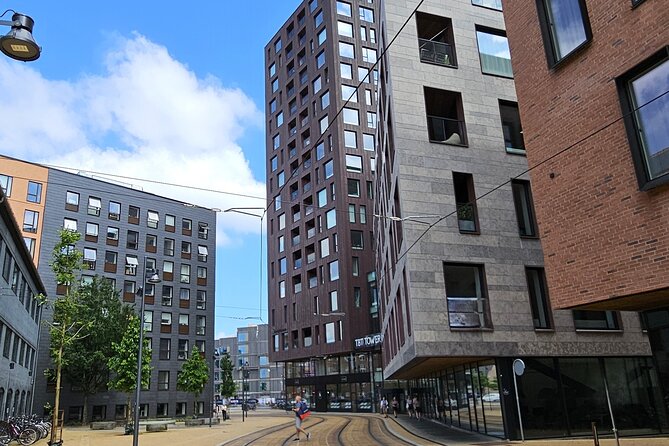
Guide names matter here. Jan is praised for walking people through Odense’s recent transition and the city’s positive changes, including Danish cooperation and ongoing projects focused on the future. Jørn is also singled out for sharing his knowledge with obvious enjoyment and for explaining Danish culture.
That emphasis on personality is important for a tour about urban change. The material could easily become a list of projects and policies. A good guide turns it into a conversation about how people live, work, and use the city.
The small group should help. With a maximum of 12 participants, you are more likely to hear the explanation clearly and ask about a specific building or street. It also suits a subject that benefits from questions, since redevelopment can raise practical issues about traffic, housing, jobs, and public space.
The experience is not built around theatrical storytelling or a rapid list of dates. Its strength is direct explanation. If you like learning how a place works, you should get more from it than from a standard highlights walk.
Is $32.28 a fair price?
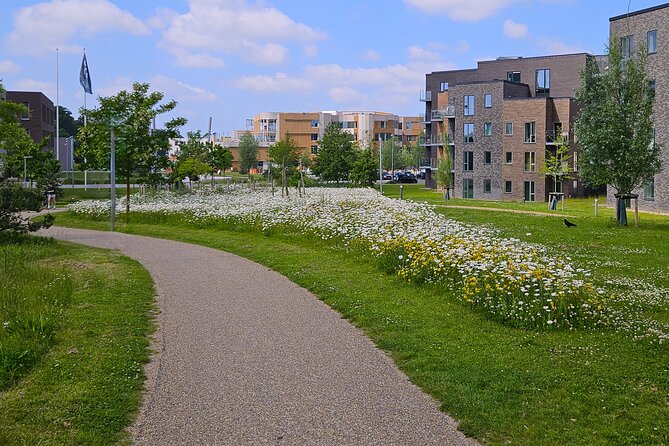
At $32.28 per person, I see this as a reasonable price for a two-hour guided walk, especially if the group reaches its 12-person limit. You are paying for a focused local perspective on subjects that are difficult to pick up from a map or standard guidebook.
The value depends on what you want from Odense. If you want entry to several attractions, the price may feel less attractive because the tour does not list admission to the harbor pool or H.C. Andersen’s House. If you want context about the city’s current direction, the cost is easier to justify.
The tour also gives you a way to use your time well. In two hours, you cover 15 stops and see several parts of the city connected by one theme. You leave with a clearer sense of why Odense looks the way it does, rather than only a collection of photographs.
Group discounts are available, which can improve the value if you are booking with family or friends. A mobile ticket is also offered, so you do not need to carry a printed voucher.
Who will enjoy this city tour most?
I would choose this walk if you have an interest in:
- City planning and public transport
- Bicycle-friendly urban design
- The future of former industrial cities
- Affordable housing and local work
- Harbor redevelopment
- Danish culture beyond the usual tourist sights
- H.C. Andersen’s place in modern Odense
It is also a good fit if you have already seen the central attractions and want a second layer of understanding. The tour offers information that may not appear in a typical tourist brochure, particularly around housing and employment.
You should think twice if you dislike walking, prefer a slow café-and-photo pace, or want a tour made up mainly of indoor attractions. The route covers about 4 kilometers and includes roughly 5,500 steps. Most people can take part, service animals are allowed, and the route is near public transportation, but comfortable shoes still make sense.
The advertised location is Aeroskobing, while the meeting point and all named stops are in Odense. Because of that mismatch, I would pay close attention to the exact meeting details when booking and make sure your plans are centered on Overgade 3 in Odense.
Timing, group size, and cancellation details
The walk lasts approximately two hours and ends back at the starting point. It is usually booked about nine days ahead, so booking earlier is sensible if your schedule is fixed or you want a particular date.
The group size is capped at 12. That is small enough for a personal feel without making the experience dependent on a private booking. Confirmation arrives when you book, and free cancellation is available up to 24 hours before the local start time. Cancellations or changes made inside that 24-hour window are not accepted for a refund.
Should you book the New Odense tour?
Book it if you want to understand the city’s present and near future, not just its medieval streets or H.C. Andersen connections. I especially recommend it to curious walkers who want practical stories about bicycles, housing, harbor use, cultural cooperation, and jobs after the shipyard era.
Skip it if your priority is going inside attractions or covering Odense at a leisurely pace. For the right visitor, though, this is a thoughtful two-hour introduction to a city in transition, with enough local detail to make the streets look different after the guide has finished.
FAQ
Where does the tour start?
It starts at Ruinen, a two-story Gothic house from the Middle Ages, at Overgade 3, 5000 Odense, Denmark.
Where does the tour end?
The activity ends back at the meeting point.
How long is the walking tour?
The tour lasts approximately two hours.
How far do I walk?
You should be comfortable walking about 4 kilometers, or approximately 5,500 steps.
How many stops are included?
The tour makes a total of 15 stops during the walk.
Is the harbor pool visited from inside?
No. You look at the harbor pool from outside and hear about it, but the tour does not go inside.
What is the cancellation policy?
You can cancel up to 24 hours before the experience start time for a full refund. Cancellations or changes made less than 24 hours before the start are not accepted for a refund.
Newest around Denmark
- Understanding Klaksvík: A Self-guided city tour in KlaksvÍk★ 5.0 · 3 reviews
- WWII Copenhagen Nyhavn and War Museum Private Walking Tour★ 5.0 · 2 reviews
- Mykines Private Hike and Tour Adventure★ 5.0 · 2 reviews
- Súðuroy Island Day Tour, Faroe Islands★ 4.5 · 3 reviews
- Half Day Exploration of Helsingør and Kronborg★ 3.5 · 3 reviews
- Helsingør Castle and Historic City Self-Guided Walking Tour★ 4.0 · 4 reviews
- Full-Day Tour; Castle, Palace & Cathedral, Winter(JAN-MAR)★ 5.0 · 11 reviews
- Denmark Data eSIM 0.5GB daily to 50GB 30 Days★ 4.0 · 2 reviews
Odense & Hans Christian Andersen, compared.
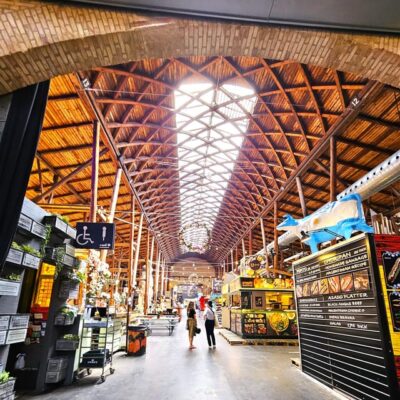
City walk – The new green Odense – City development
Read our review →
Self-Guided Tour of Hans Christian Andersen’s Copenhagen
Read our review →

Browse the lists this tour appears in