
Review · AARHUS TOURS
Street Art and Rooftops of Aarhus, Denmark
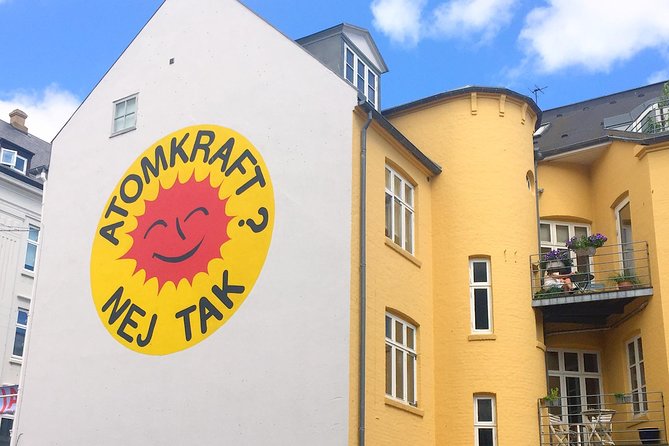
Street art changes how you see a city. This small-group Aarhus walk links murals, sculptures, old streets, rooftops, and harbor views, with local stories tying the pieces together. I like the way it treats art as part of daily life rather than as something locked inside a museum.
I also like the route’s variety: you move from the seaside and Latin Quarter to a creative rooftop, a converted industrial art space, City Hall, and a high lookout. The main consideration is the two-hour timing, which may feel brisk if you want long stops at every artwork, and some descriptions of the experience suggest the walk can sometimes run closer to three hours.
In This Review
- Key points to know before you book
- Why this Aarhus walk is different
- From the harbor to the old Latin Quarter
- A rooftop stop among Aarhus creatives
- The converted industrial site and modern art
- Sculptures, graffiti, murals, and installations
- City Hall and Aarhus’s official center
- The high viewpoint before returning to the harbor
- Price, group size, and practical value
- Who will enjoy this walk most
- Should you book Street Art and Rooftops of Aarhus?
- FAQ
- Where does the tour start?
- What time does the tour begin?
- How long does the experience last?
- How many people can join?
- Is the tour offered in English?
- Are attraction admission tickets included?
- Are food and drinks included?
- Does the tour take place entirely outdoors?
- What is the cancellation policy?
Key points to know before you book

- Art with a city story: See graffiti, murals, installations, and sculptures while learning how they connect to Aarhus and its public spaces.
- A varied central Aarhus route: The walk covers the seaside, Latin Quarter, creative districts, City Hall, harbor, and a popular viewpoint.
- Small groups of up to 10: You get a more personal setting and a better chance to ask questions.
- A guide with artistic expertise: Marina is praised for explaining styles, artists, details, and the stories behind public works.
- No attraction tickets required: The experience includes the guide, but food and drinks are extra.
- Useful for first-time orientation: The route gives you a broad look at central Aarhus while leading you to places you might otherwise pass by.
Why this Aarhus walk is different

Aarhus is easy to explore on foot, but it does not reveal itself all at once. The old center, harbor, student culture, public sculpture, and newer art spaces sit close together, yet they can feel like separate parts of town. This tour connects them.
The focus is not simply on finding colorful walls. You hear why a work was placed where it is, how the local community responds to public art, and what details to look for in a mural or installation. That makes the walk useful even after the tour ends. You start noticing small artistic choices on your own.
The maximum group size is 10 people. That matters here because street art is often found in narrow streets, courtyards, building edges, or busy public areas. A large group would make it harder to hear the guide and slower to move between stops. With a smaller group, you can ask about an artist, a building, or a local custom without turning the tour into a formal lecture.
The tour is offered in English, though the guide may be multilingual. Marina receives especially warm praise for her enthusiasm, artistic background, and ability to add amusing facts about Aarhus buildings and public spaces. She is also described as keeping a comfortable pace, which is welcome on a two-hour city walk.
A few more Aarhus outings worth comparing
- Copenhagen: MACA Museum: Banksy & Street Art Entry Ticket
★ 4.5 · 142 reviews - 3-Hours Street Art Tour in Aalborg
★ 5.0 · 49 reviews - MACA Museum ‘Banksy & Street Art: The Early Years’ Art Exhibition
★ 4.5 · 32 reviews
From the harbor to the old Latin Quarter
The route begins near the waterfront, with the meeting information giving Europaplads 3 in Aarhus. The tour description also names Dokk 1, the city’s multimedia center, at Hack Kampmanns Plads 2, so I would confirm the exact meeting point before setting off. Both locations are central, but you do not want to spend your first few minutes searching for the group.
Starting by the sea gives the walk a useful sense of place. Aarhus is not only an old Danish city with historic streets. It is also a harbor city, and the waterfront helps explain how the city has grown and changed.
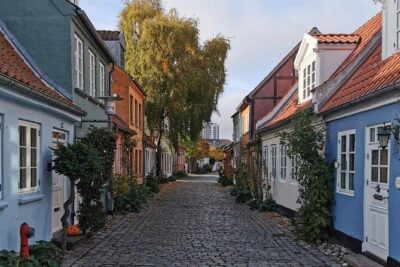
From there, you head toward the Latin Quarter. This is one of the most atmospheric parts of central Aarhus, with old houses, narrow streets, and a more intimate scale than the broad civic areas near City Hall. The contrast is important. Street art looks different against old brick, plaster, and traditional facades than it does on a modern industrial wall.
I like this part of the route because it gives you both architecture and art. You are not simply stopping at designated pieces. You are learning to look at how a work interacts with its surroundings. A guide can point out a detail that would be easy to miss, then explain how the neighborhood’s character affects the way the art is seen.
You should wear comfortable shoes. The tour is a walking experience, and the stated fitness level is moderate. The route does not require an extreme level of fitness, but it is not a seated sightseeing activity either.
A rooftop stop among Aarhus creatives
The route continues to a rooftop hangout associated with freelancers and other creative workers. The setting adds a social side to the art theme. Instead of seeing creativity only on walls, you get a glimpse of the places where people meet, work, and spend time in the city.
The rooftop stop is one of the more distinctive elements of the experience. It gives you a chance to see Aarhus from a different height while learning about the city’s current creative culture. The stop may appeal most to people who enjoy cafés, independent workspaces, design, and urban life as much as they enjoy formal art.
Food and drinks are not included, so you should not book this expecting a café visit with refreshments covered in the price. The attraction is the setting and the conversation, not a meal.
The rooftop also breaks up the walking route. Two hours can feel like a lot of standing and moving through city streets, so a change in setting helps. At the same time, anyone hoping for a long relaxed coffee break should keep expectations modest. The experience is an art and city walk, not a food tour.
The converted industrial site and modern art
One of the route’s strongest transitions leads to an old industrial area that has been transformed into a modern art space. This stop shows how Aarhus has reused parts of its built environment rather than leaving them disconnected from the city’s cultural life.
The setting matters as much as the works themselves. Industrial buildings often carry traces of their earlier purpose, and contemporary art can use that rougher character to good effect. You may see a different kind of artistic expression here than in the older Latin Quarter: larger forms, bolder surfaces, or installations that depend on the surrounding space.
This section should appeal to you if you like art that feels connected to community projects and urban change. The tour presents the space as a place that draws art-minded people from around town, giving you a look at the city’s present-day cultural identity.
The benefit of having a guide is clear at this point. Modern art can be easy to dismiss if you do not know what you are looking at or why it was made. A good explanation does not tell you what to think. It gives you enough context to notice the artist’s choices and decide what you make of the work.
Marina is praised for helping people see details, understand styles, and consider the messages behind the art. That is a useful skill on a street art tour, where a quick glance may reveal only the most obvious colors and shapes.
Somewhere else in Denmark, for a completely different day:
- Aarhus Walking Tour: From Viking Village to Metropolis
★ 4.8 · 122 reviews - Aarhus: Harbour Cruises with local guide
★ 4.5 · 53 reviews - The Ancient Viking Stronghold of Aros: A Self-Guided Audio Tour in Aarhus
★ 4.0 · 36 reviews - Historical Walking Tour in Aarhus
★ 4.5 · 35 reviews
Sculptures, graffiti, murals, and installations
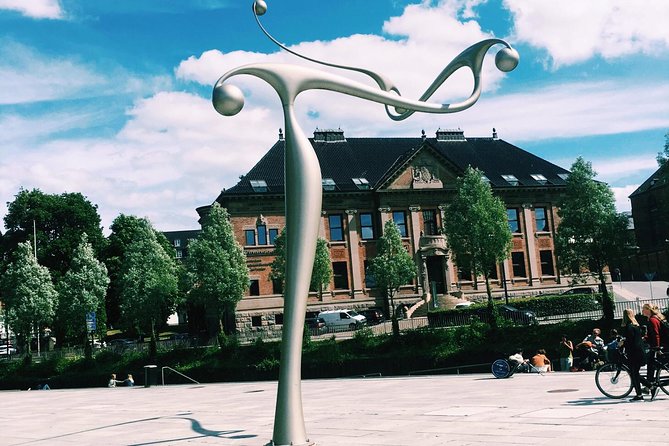
The walk includes several forms of public art rather than following one narrow style. You can expect sculptures, graffiti, murals, and installations, each with its own story.
That variety keeps the route from becoming repetitive. A sculpture asks you to consider shape and space. A mural changes the feel of a wall or street. Graffiti can bring questions about authorship, permission, and public response. An installation may make you pay attention to a place you would otherwise ignore.
The guide’s cultural commentary is a major part of the value. You hear about the artists and the city, but also about how the works came to exist in public spaces. The local community’s role is part of the story, which helps you understand that street art is not simply decoration added after the fact.
Several people who took the tour appreciated learning about works that had recently been completed. That is a reminder that public art changes. A mural you see today may be altered, covered, or replaced later. If you like contemporary art, this temporary quality is part of the appeal.
You should also be prepared for a tour that does not present every work as a masterpiece. Public art can be playful, strange, political, attractive, or puzzling. The pleasure comes from looking closely and hearing the background, not from expecting a polished gallery collection.
City Hall and Aarhus’s official center
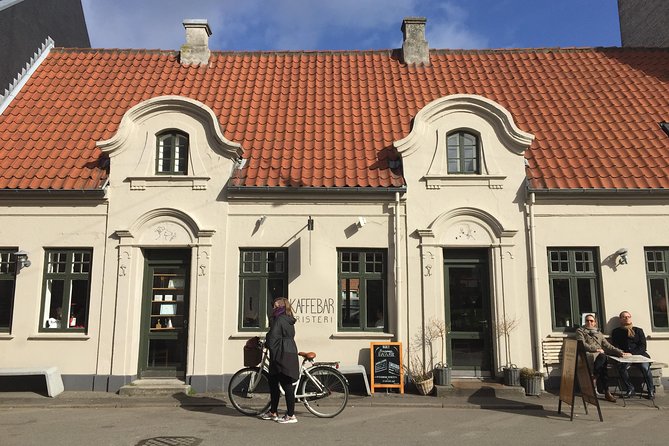
The route eventually reaches the official city center, around City Hall and its monuments. This section provides a useful counterpoint to the more informal art spaces and creative neighborhoods.
Here, the focus shifts toward civic architecture, public symbols, and the way a city presents itself. You learn about monuments and buildings while continuing to look for artistic details. The stop helps place Aarhus within a broader story of Danish urban life, rather than treating street art as an isolated subject.
I like this change of tone because it makes the tour feel like a city orientation as well as an art walk. If you are new to Aarhus, you gain a sense of where the main civic landmarks fit. If you have already seen City Hall, the guide may help you notice features you missed on a quick independent visit.
The tour is not a museum substitute. You will not receive a long, formal architectural lecture, and there are no entry tickets for the attractions visited. Instead, you get a moving introduction to the city’s public face, with art used as the thread connecting each part.
The high viewpoint before returning to the harbor
Near the end, the walk heads back toward the harbor and rises to one of Aarhus’s most attractive viewpoints. The viewpoint opened in 2017 and has already drawn millions of visitors, according to the tour information.
This is a strong finale because it lets you see the city from above after spending the morning at street level. You have been looking at walls, doorways, sculptures, and buildings. From the viewpoint, the city becomes a larger pattern, with the harbor and central streets placed in context.
The exact quality of the view will depend on the weather, and the tour does not promise a particular sky or visibility. Still, the stop gives the route a clear finish and a memorable change of perspective.
One German-language review praised ending high above the city. That makes sense. A viewpoint is more meaningful after you have walked through the areas below it and learned how the streets fit together.
The tour ends back at the meeting point. That is convenient if you have another activity planned nearby, though the final timing may vary. The advertised duration is about two hours, while one account describes a three-hour walk. I would avoid scheduling a tight connection immediately afterward, especially if you are visiting from a cruise ship.
Price, group size, and practical value
The listed price is $63.20 per person. That is not the cheapest way to see Aarhus, but the price includes a professional guide, a small group, and a route that combines several types of sightseeing.
The value is strongest if you want interpretation rather than simple directions. You could walk through the Latin Quarter, harbor, City Hall area, and other central streets on your own. What you would miss is the connection between the art, the buildings, the creative community, and the city’s development.
The tour does not include food or drinks. No entry tickets are required for the attractions visited, so you are unlikely to face many extra admission costs during the walk. You are paying mainly for the guide’s time, route planning, and explanations.
The 10-person limit is another reason the cost may feel fair. A private tour would offer more flexibility, but this small-group format should still allow conversation and questions. It is especially useful if you want to ask about artists, local customs, or places to visit later.
The experience is booked an average of 34 days in advance, so early planning is sensible if your schedule is fixed. Confirmation is provided when you book, and free cancellation is available up to 24 hours before the start time. Changes or cancellations inside that window are not accepted for a refund.
Cruise ship passengers need to provide the ship name, docking time, disembarkation time, and re-boarding time when booking. That information helps the operator judge whether the timing works, but you should still allow room for delays in getting off the ship and returning to the port area.
Who will enjoy this walk most
I would recommend this tour to you if you like public art, urban design, local stories, and walking at a moderate pace. It is also a smart first activity in Aarhus because it gives you a broad sense of the center and may help you choose where to return later.
Art lovers will get the most from the route, particularly if you enjoy graffiti, murals, sculptures, and installations rather than only traditional painting. The tour also suits people who like seeing how old buildings and newer creative spaces exist side by side.
It may be less suitable if you want a slow museum visit, a food-focused outing, or a fully outdoor experience. The walk is not entirely outdoors, and food and drinks are not included. You should also consider the weather, since much of the experience takes place on city streets.
Families with older children may enjoy the changing format and visual subject. Very young children may find two hours of walking and explanation less engaging, though the small group allows some flexibility.
Should you book Street Art and Rooftops of Aarhus?
Book it if you want Aarhus explained through the art you might otherwise walk past. The strongest reasons are the small group, the broad route, the rooftop and industrial-art stops, and Marina’s warm, art-focused guiding style.
Skip it if you would rather explore at your own pace, spend longer at each artwork, or focus on museums and food. For most visitors with an interest in contemporary culture, though, the $63.20 price buys more than a list of sights. It gives you a way to read the city, from its old Latin Quarter houses to its harbor, civic center, and creative public spaces.
FAQ
Where does the tour start?
The meeting information gives Europaplads 3, 8000 Aarhus, Denmark as the start point. The tour description also names Dokk 1 at Hack Kampmanns Plads 2, so confirm the exact meeting location before departure.
What time does the tour begin?
The tour starts at 10:00 am.
How long does the experience last?
The stated duration is approximately two hours. One description of the experience lasted three hours, so allow some extra time if your schedule is tight.
How many people can join?
The tour has a maximum of 10 travelers.
Is the tour offered in English?
Yes. The tour is offered in English, though it may be operated by a multilingual guide.
Are attraction admission tickets included?
No entry tickets are required for the attractions visited on the route.
Are food and drinks included?
No. Food and drinks are not included in the price.
Does the tour take place entirely outdoors?
No. The experience will not take place entirely outdoors.
What is the cancellation policy?
You can cancel up to 24 hours before the experience starts for a full refund. Cancellations or changes made less than 24 hours before the start time are not accepted for a refund.
Newest around Aarhus
- Surprise Walk of Aarhus with a Local★ 4.5 · 4 reviews
- Aarhus Walking Tour: From Viking Village to Metropolis★ 5.0 · 7 reviews
- Aarhus Private Custom Walking Tour With A Guide★ 5.0 · 11 reviews
- Self-guided Mystery Tour by Aarhus River★ 3.5 · 4 reviews
- Culture capital tour★ 5.0 · 4 reviews
- Aarhus Private Transfer from Aarhus (AAR) Airport to City centre★ 5.0 · 2 reviews
- Aarhus: Surprise City Walking Tour with Local Guide★ 4.2 · 9 reviews
- Aarhus: Express Walk with a Local in 60 minutes★ 4.8 · 3 reviews
Aarhus Tours, compared.

Aarhus Walking Tour: From Viking Village to Metropolis
Read our review →
The Ancient Viking Stronghold of Aros: A Self-Guided Audio Tour in Aarhus
Read our review →
Aarhus Walking Tour: Explore Top Sights & Hidden Gems
Read our review →
Guided Harbor Cruise with Iconic Landmarks & Aarhus
Read our review →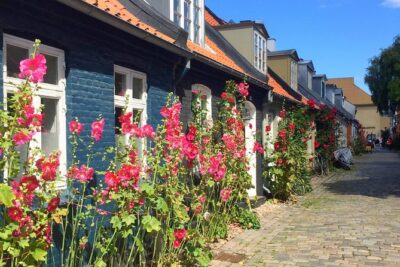
Browse the lists this tour appears in