
Review · AARHUS TOURS
Aarhus: Harbour Cruises with local guide
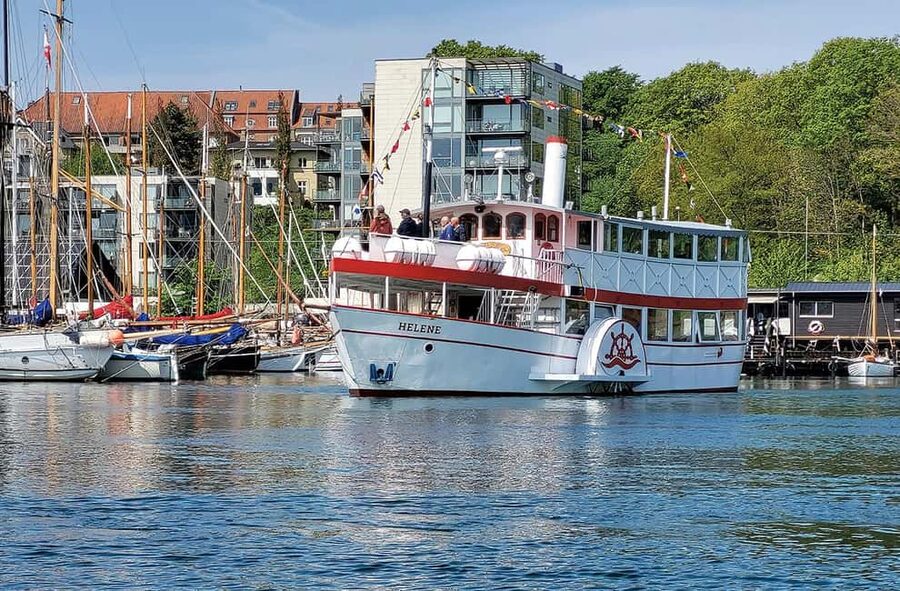
Aarhus looks different from the water. This 75-minute harbour cruise links Viking stories, bold new buildings, working boats, and local oddities in one easy trip around Denmark’s second city. I like the mix of cultural facts and playful details, especially the chance for children to help steer the boat and receive a certificate afterward. I also like the comfortable ship, onboard bar, snacks, and wheelchair-friendly facilities.
The main consideration is the weather. Much of the appeal comes from seeing Aarhus from outside, so a cold or rainy day could soften the experience. The tour also covers a broad slice of the harbour rather than giving you a long stop at any one sight. Its overall rating is 4.5 out of 5 from 53 ratings, with the warm crew, city views, and family activities receiving the strongest praise.
In This Review
- Key points to know before boarding
- Meeting the boat beside the Endless Connection
- The Customs House, DOKK1, and the bell for new Aarhus residents
- Aros, Viking warnings, and the tugboat Jacob
- Wall art and the city’s public message
- Bjarke Ingels’s bathhouses, Aarhus, and the Campanile
- Aarhus Ø and Denmark’s tallest building
- Brave bathers and Danish sailing
- The Wooden Ship Harbour and Klintegården
- Fishing boats, houseboats, and the working harbour
- What the family activities add
- Comfort, access, language, and value at $25
- Who should book the Aarhus harbour cruise?
- Should you book this 75-minute cruise?
- FAQ
- How long is the Aarhus Harbour Cruise?
- Where does the boat depart?
- Which languages are available?
- Is the cruise wheelchair accessible?
- Are drinks and snacks available onboard?
- Can I cancel the booking for a refund?
Key points to know before boarding
- The ship leaves behind the Endless Connection fountain, making the meeting point easy to find in central Aarhus.
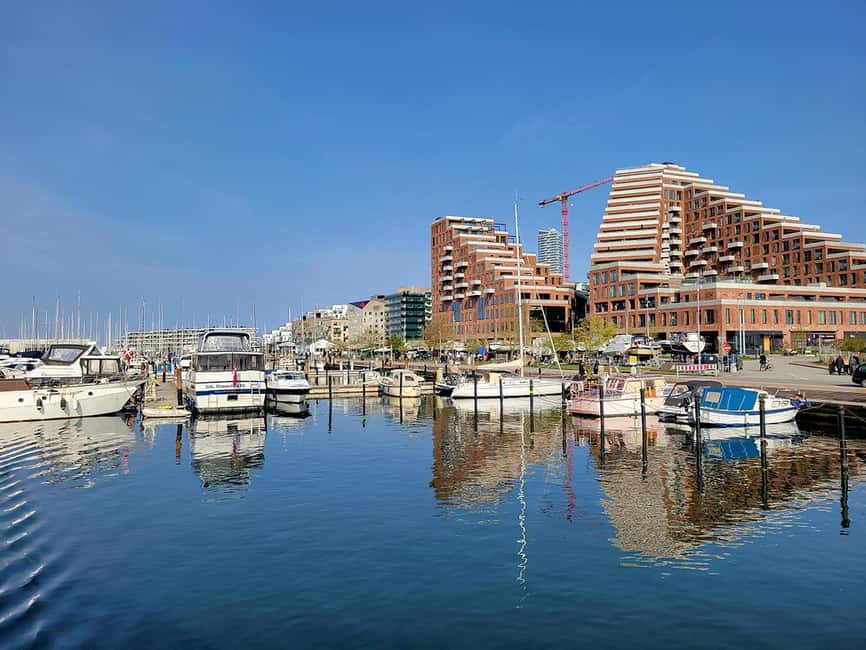
- The route combines old and new Aarhus, from the 1897 Customs House and Viking-era Aros to DOKK1, Aarhus Ø, and Denmark’s tallest building.
- Children get more than a window seat, with steering activities and a certificate at the end of the trip.
- The old tugboat Jacob has a surprising past, including service during the D-Day landings in Normandy.
- The cruise is practical for mixed-age groups, with a bar, hot and cold drinks, snacks, accessible boarding, and accessible toilets.
- English, German, and Danish are offered, so check the available language when choosing your departure.
Meeting the boat beside the Endless Connection
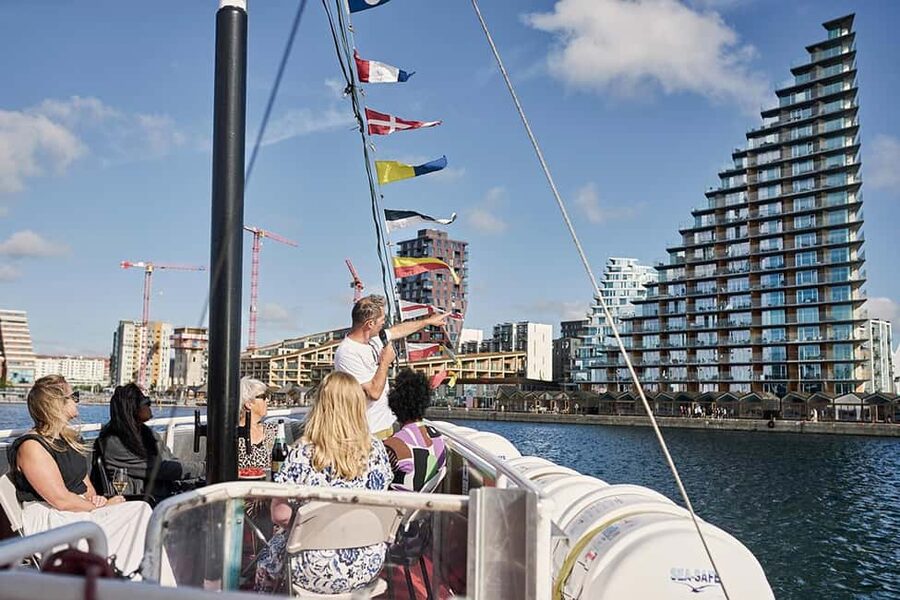
The ship lies behind the Endless Connection fountain, close to several of Aarhus’s most recognizable waterfront sights. This is a useful starting point because the tour begins with the city already telling stories before you even board.
The nearby Sirene sculpture was created by Prince Henrik of Denmark. Its rounded, organic shape fits the playful character of the waterfront, while the Endless Connection fountain provides a lively point of reference. In summer, children can run through its maze of water channels, making this a handy area to reach a little early if you are traveling with a family.
The staff introduce the tour before departure, and the storytelling begins around the boarding area. That small detail matters. You are not simply being moved from one dock to another. The surroundings become the first chapter of the trip.
The ship is described as comfortable and cozy, with a bar serving hot and cold drinks and snacks. That makes the cruise easier to enjoy in cooler weather, though you should still dress for an outing on the water. The tour lasts 1 hour and 15 minutes, long enough to cover the harbour district without taking up your whole day.
A few more Aarhus outings worth comparing
- Aarhus Walking Tour: From Viking Village to Metropolis
★ 4.8 · 122 reviews - Street Art and Rooftops of Aarhus, Denmark
★ 5.0 · 62 reviews - The Ancient Viking Stronghold of Aros: A Self-Guided Audio Tour in Aarhus
★ 4.0 · 36 reviews
The Customs House, DOKK1, and the bell for new Aarhus residents
One of the first major sights is the old Customs House, built in 1897 by Hack Kampmann, one of Aarhus’s most important architects. Kampmann’s interest in fairy tales and mythology appears in his work, and the guide uses the building to connect the city’s architecture with its storytelling traditions.
That is one of the better features of this cruise. Instead of giving you a plain list of construction dates, the guide explains how buildings reflect the ideas and personalities of their creators. You get a reason to look at the details, not just a name to remember.
The route then reaches DOKK1, the large modern building that houses Aarhus’s main library and citizen service offices. In front of it is a giant bell. Local custom says the bell is rung when a new Aarhus resident is born. It is the kind of small civic detail that would be easy to miss from the street, yet it gives the modern waterfront a human touch.
From the boat, you can see how Aarhus has shifted its attention toward the harbour. Older commercial functions now sit beside public spaces, cultural buildings, and new residential areas. The cruise gives you a quick way to understand that change without needing a long walking route.
Aros, Viking warnings, and the tugboat Jacob
Aarhus was called Aros during the Viking Age, meaning the city at the mouth of the river. The name reflects the settlement’s position and its early role as a place where people, goods, and military forces came together.
The guide explains that smoke signals from Mols Bjerge warned the people of Aros when danger approached. At the sight of those signals, residents grabbed their weapons and rowed into battle. It is a short story, but it helps you picture the harbour as part of a defensive network rather than simply a place for modern ferries and pleasure boats.
The old tugboat Jacob adds another memorable chapter. It was built in Texas in 1943 and took part in the D-Day landings in Normandy. A tugboat can look like a minor harbour detail, but this background gives it real weight. You see a working vessel and also a surviving link to a major event in European history.
I especially like this kind of contrast. The tour can move from fairy tales and Viking warnings to twentieth-century military history without becoming a formal museum lecture. The guide keeps the focus on things you can actually see from the ship.
Wall art and the city’s public message
The cruise passes large murals, including work connected with the United Nations Sustainable Development Goals and A Miner from Novosibirsk, which presents the beauty of a life lived.
These pieces add a different layer to the waterfront. Aarhus is not presented only through old buildings and historic vessels. The city also uses public art to discuss social ideas, work, community, and the future. The murals are large enough to read as part of the harbour’s identity, not as small decorations tucked away on side streets.
This section is also a good reason to keep your camera ready. The views combine open water, painted walls, industrial details, and sharp modern architecture. If you prefer historic streets and church interiors, this part may feel less essential. If you want to see how Aarhus presents itself today, it is one of the more useful stretches of the route.
Somewhere else in Denmark, for a completely different day:
- Historical Walking Tour in Aarhus
★ 4.5 · 35 reviews - Aarhus Walking Tour: Explore Top Sights & Hidden Gems
★ 4.0 · 34 reviews - Aarhus Craft BeerWalk
★ 4.7 · 19 reviews - Aarhus: Guided Harbor Cruise with Iconic Landmarks & Aarhus
★ 4.7 · 19 reviews
Bjarke Ingels’s bathhouses, Aarhus, and the Campanile
The guide points out buildings connected with the Danish architect Bjarke Ingels, including the bathhouses, Aarhus, and the Campanile. These names may sound simple, but each building has a visual trick.
The small summer homes near the harbour measure only 21 square meters, yet each costs about DKK 2.8 million. Their size and price make them an amusing example of the pressure and prestige surrounding waterfront property. They also show how valuable a small piece of harbour living can become in a popular city.
Behind them is a building called Aarhus, shaped like two letter A forms. It contains 250 apartments, all with terraces or roof gardens. From the water, the overall shape is easier to appreciate than it may be from street level.
The Campanile contains 75 apartments and has a clock face larger than Big Ben’s. Its entire exterior is covered in copper, which changes color over time toward an iridescent green. The idea that the building itself changes as it ages is typical of the playful, experimental character of this part of Aarhus.
You do not need to be an architecture specialist to enjoy this section. The guide gives you simple points to watch for: unusual shapes, expensive small homes, gardens in the sky, and a clock tower that refuses to be modest.
Aarhus Ø and Denmark’s tallest building
Aarhus Ø, or Aarhus East, is the city’s new district on the sea. Its dramatic architecture is best understood from the harbour, where you can see the full shapes and how the buildings relate to the water.
The Iceberg contains 210 apartments and is designed to look like a floating or broken mass of ice. Its pointed forms give the district a strong silhouette. The Lighthouse is even more striking in practical terms. At 142 meters, it is Denmark’s tallest building.
This is probably the part of the cruise most likely to divide opinion. Some people will enjoy the daring designs and changing skyline. Others may prefer Aarhus’s older buildings and find the new district too polished or impersonal. I think the boat provides the right amount of time here. You can see the architecture clearly, hear why it was designed this way, and then continue without having to make the district the focus of your entire day.
The route also passes tiny summer homes and newer apartments, placing the price of waterfront living beside the scale of major development. That contrast gives the district more meaning than a simple parade of tall buildings.
Brave bathers and Danish sailing
Another stop in the story is the old bathing establishment, where men and women were first allowed to bathe together in 1933. The decision caused an outcry at the time. Today, the story feels funny, but it also shows how quickly social customs can change.
The harbour cruise then passes the Aarhus International Sailing Centre. It is another example of Danish design, as well as a training base for elite sailors such as Olympic gold medalist Anne-Marie Rindom.
This stretch gives you a useful sense of the harbour as a place for recreation and sport, not only housing and shipping. The stories also keep the journey moving. One minute you are hearing about public bathing rules, and the next you are looking at a serious sailing center linked to top-level competition.
The Wooden Ship Harbour and Klintegården
The Wooden Ship Harbour is the largest wooden ship harbour in the Nordic countries, with around 70 historic wooden vessels. These boats form a living part of Aarhus’s maritime culture. They are not just objects behind glass. They remain in the harbour, where their shapes, rigging, and weathered surfaces belong to the working waterfront.
The experience is strongest when the guide connects the boats to the people and trades that used them. You get a sense of a harbour that has not been completely replaced by apartments and restaurants.
The route also takes in the marina and Klintegården, a residential complex built in the 1930s by engineer Ove Christensen. His modernist designs drew on German ideas and were considered ahead of their time. From the water, the building helps show that experimental architecture did not begin with Aarhus Ø.
This historical layering is one of the cruise’s best qualities. You can compare 1930s modernism with today’s tall glass and copper buildings in a single outing. The waterfront becomes a record of changing ideas about homes, work, leisure, and public space.
Fishing boats, houseboats, and the working harbour
Near the end of the route, you see fishing boats and houseboats. The houseboats are moored permanently, but they must still have a working engine. That rule gives the boats a practical identity. They may look like homes, but they remain vessels.
The old fishing boats are now mostly used as hobbies, while former auction halls have become restaurants. This is a familiar harbour change, but the boat makes it easy to see how the old and new uses sit next to each other.
For me, this is a fitting final section because it avoids presenting Aarhus as only a design city. The harbour still carries traces of fishing, shipping, repair work, and working vessels. At the same time, restaurants and housing show how the waterfront has changed to serve a modern urban population.
What the family activities add
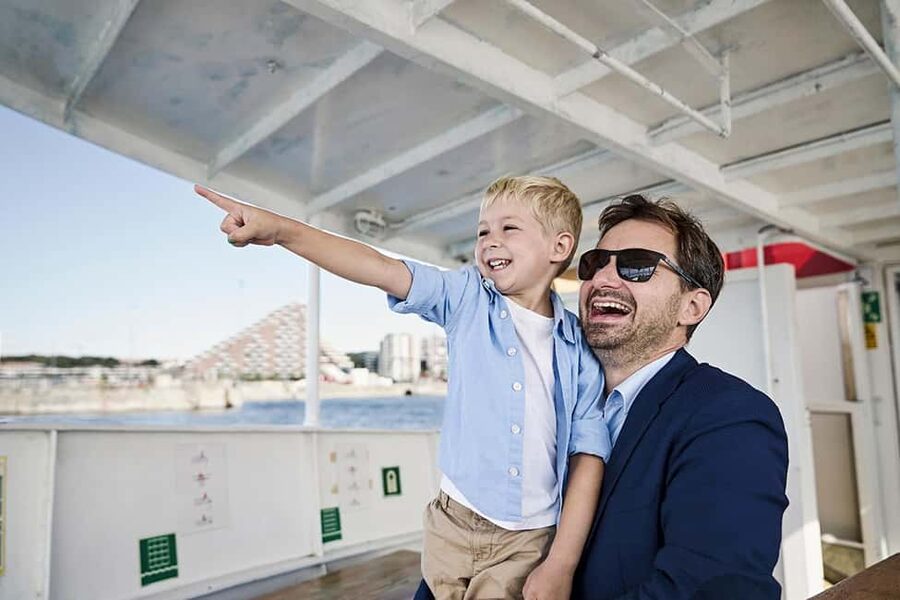
The cruise is especially appealing if you are traveling with children. The child activities give younger passengers a role beyond sitting quietly while an adult listens to architecture facts.
The strongest family feature is the chance for children to steer the boat, followed by a certificate at the end. A visit to the captain is also part of the experience for some departures or groups, and this was praised as a highlight. These details turn the trip into an event children can remember, rather than an hour spent looking over a railing.
The family focus does not mean adults are left with a thin tour. You still get Viking stories, architectural history, public art, and maritime facts. It simply gives younger passengers something active to anticipate.
Comfort, access, language, and value at $25
At $25 per person, the cruise is priced like a modest city activity rather than a full-day excursion. I consider it good value if you want a broad introduction to Aarhus’s harbour and new waterfront. You see many districts and hear stories that would take several separate walks to assemble.
The value is also helped by the 75-minute length. It is long enough to feel substantial, but short enough to fit before a museum, meal, or afternoon walk. If your time in Aarhus is limited, the cruise can help you decide which harbour areas deserve a closer look later.
The ship has a bar with hot and cold beverages and snacks. Those purchases are not listed as included, so plan to pay separately for them. The comfortable setting matters most on a cool day, when a warm drink can make the open-water portion easier to enjoy.
Wheelchair access and accessible toilets are provided. That makes the cruise a practical choice for mixed groups, though you should still check the departure details if you have specific mobility requirements.
Tours are offered in English, German, and Danish, with a live guide. The listed guide languages are useful for international groups, but check the language available at your chosen time before booking.
Aros Cruises ApS operates the experience. You can cancel up to 24 hours in advance for a full refund, and the reserve-now, pay-later option lets you keep your plans flexible. Those policies are helpful when weather or a changing city schedule could affect your day.
Who should book the Aarhus harbour cruise?
I would choose this cruise if you want a friendly introduction to Aarhus that mixes old stories with modern city planning. It works well for first-time visitors, families, architecture fans, and anyone who wants a seated activity with plenty to look at.
It is also a good choice for you if you enjoy local details: a bell rung for newborn residents, an expensive 21-square-meter summer home, a tugboat with wartime service, and a clock face larger than Big Ben’s. Those facts are far more memorable than a basic list of landmarks.
You may want to skip it if you dislike guided commentary or if your main goal is to explore Aarhus’s historic center on foot. The cruise focuses on the harbour and waterfront districts, not the city’s complete collection of museums, churches, and older streets.
Should you book this 75-minute cruise?
Yes, if you want a well-priced look at the many faces of Aarhus Harbour. The best reasons to book are the excellent mix of Viking tales, local customs, maritime history, bold architecture, and family activities. The child steering activity and certificate make it particularly useful for families, while the accessible facilities and onboard refreshments help mixed-age groups.
Book on a reasonably comfortable day if possible, and arrive ready to look both ways: toward the historic city and out across the water. At $25, this is an efficient way to understand why Aarhus is both an old harbour town and a fast-changing modern city.
FAQ
How long is the Aarhus Harbour Cruise?
The harbour tour lasts 1 hour and 15 minutes, or 75 minutes.
Where does the boat depart?
The ship lies behind the Endless Connection fountain in central Aarhus.
Which languages are available?
The live guide is available in English, German, and Danish. The specific language depends on the departure you choose.
Is the cruise wheelchair accessible?
Yes. The ship has wheelchair-friendly access and accessible toilets.
Are drinks and snacks available onboard?
Yes. The ship has a bar serving hot and cold beverages and snacks.
Can I cancel the booking for a refund?
Yes. You can cancel up to 24 hours in advance for a full refund. You can also reserve now and pay later.
Newest around Aarhus
- Surprise Walk of Aarhus with a Local★ 4.5 · 4 reviews
- Aarhus Walking Tour: From Viking Village to Metropolis★ 5.0 · 7 reviews
- Aarhus Private Custom Walking Tour With A Guide★ 5.0 · 11 reviews
- Self-guided Mystery Tour by Aarhus River★ 3.5 · 4 reviews
- Culture capital tour★ 5.0 · 4 reviews
- Aarhus Private Transfer from Aarhus (AAR) Airport to City centre★ 5.0 · 2 reviews
- Aarhus: Surprise City Walking Tour with Local Guide★ 4.2 · 9 reviews
- Aarhus: Express Walk with a Local in 60 minutes★ 4.8 · 3 reviews
Aarhus Tours, compared.

Aarhus Walking Tour: From Viking Village to Metropolis
Read our review →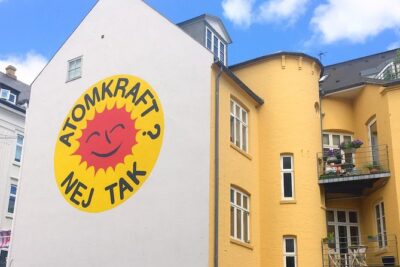
The Ancient Viking Stronghold of Aros: A Self-Guided Audio Tour in Aarhus
Read our review →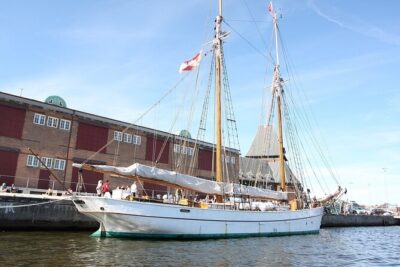
Aarhus Walking Tour: Explore Top Sights & Hidden Gems
Read our review →
Guided Harbor Cruise with Iconic Landmarks & Aarhus
Read our review →
Browse the lists this tour appears in