
Review · CHRISTIANSHAVN & CHRISTIANIA IN COPENHAGEN
Copenhagen Alternative Private Tour: Vesterbro & Christianshavn
Copenhagen has more than postcard views. This private walk links working-class Vesterbro with Christianshavn’s canals, churches, old warehouses, and Christiania. I like the personal format, and I like that guides such as Alessandro, Grazi, and Karolina have shaped the route around questions and interests rather than rushing through a fixed script. The main drawback is price: at $147.96 per person, it offers better value for a small group than for one or two people.
The route also carries real social weight. You’ll hear about overcrowded workers’ housing, wartime resistance, homelessness, prostitution, drug use, industry, and alternative communities. That makes this far more than a pretty-city stroll, but some stops are brief and the full experience can feel packed into four hours.
In This Review
- Key things to know before you book
- From Viktoriagade to Værnedamsvej, Copenhagen’s changing west side
- Saxogade and the hard truth about workers’ housing
- Istedgade, wartime courage, and a changing reputation
- Meatpacking District, Oksnehallen, and the old hay market
- Social care beside the city’s entertainment district
- Copenhagen Central Station and the crossing to Christianshavn
- Warehouses, naval buildings, and old Christianshavn streets
- Our Saviour’s Church and the edge of Christiania
- Price, pace, and the people this tour suits
- Should you book this Vesterbro and Christianshavn tour?
- FAQ
- How long does the tour last?
- What is the price?
- Is the tour private?
- What language is offered?
- Where does the tour start?
- Where does the tour end?
- Is lunch included?
- Is a tasting included?
- Are metro tickets included?
- Can the guide enter Christiania with the group?
Key things to know before you book
- A private route through two very different districts: Start among Vesterbro’s former workers’ streets and finish in Christianshavn.
- Resistance history on Istedgade: Stjerne Radio helped broadcast BBC reports during the German occupation.
- A traditional tasting is optional: Food and a drink are included only with the Full Option, not every booking.
- Christiania is self-guided: The guide cannot enter the community with you, so the final portion requires independent exploration.
- The tour covers a lot of ground: Expect about three and a half to four hours, with metro tickets included.
- Personal guiding is the strongest feature: Guides are praised for adapting the walk and sharing local stories beyond standard sightseeing.
From Viktoriagade to Værnedamsvej, Copenhagen’s changing west side

The tour begins at Viktoriagade 8, a useful starting point because it shows how Vesterbro grew over older fortifications. Christian IV created a defensive ring around Copenhagen in the 1600s, complete with a moat. By the mid-1800s, the land was sold in building lots, and several early structures served charitable purposes, including housing for officers’ widows.
Look closely at numbers 8, 10, and 12. These mid-19th-century buildings are protected, giving you an early architectural marker before the walk moves into the district’s more modern urban story. The stop lasts about 15 minutes, so expect an explanation of the setting rather than a long interior visit.
From there, the route reaches Det Ny Teater. Opened in 1908, it was designed as both a large theater and a passage between Gammel Kongevej and what became Vesterbrogade. This is a quick 10-minute look, but it helps explain how entertainment, commerce, and new streets changed the area.
Værnedamsvej brings a different feel. The name comes from Werner Dam, an 18th-century beer collector who bought land here and opened a popular beer garden. The street was once known as Slagtergaden, or Butchers’ Street, because of the many butchers operating in the area.
I like this early section because the guide connects names and buildings to everyday life. You are not simply told that a street is old. You learn why it was named, who used it, and how the district’s trade shaped its identity.
More of Christianshavn and Christiania:
- Hippies & Christianshavn Walking Tour
★ 5.0 · 249 reviews - Private Walking Tour of Christianshavn
★ 5.0 · 122 reviews - Private Hippies & Christianshavn Politically Incorrect Tour
★ 5.0 · 114 reviews
Saxogade and the hard truth about workers’ housing
Saxogade is one of the more serious stops. In the early 1950s, residents sent a large protest letter about miserable housing conditions. Many families lived in small, overcrowded one-room apartments, with as many as 10 people sleeping in a single room.
That detail changes how you read the street. Vesterbro was first home to factory workers arriving from the countryside in search of a better life. The promise of city work did not always bring a decent home. The housing campaign focused heavily on children, who were growing up in cramped conditions.
The stop is scheduled for about 10 minutes, but a private format lets you ask for more explanation if this subject interests you. I would do that. This is one of the places where a local guide can give the neighborhood a human scale that a quick photograph cannot.
Next comes Skydemuren, a castle-like shooting-range wall between Skydebanehaven and Istedgade. It was built as a bullet trap to protect people using the newly developed street from projectiles fired by the Royal Danish Army at the nearby shooting range.
The wall also forms the visual endpoint of Skydebanegade, a street lined with uniform, decorated houses. It is an excellent example of how a practical safety structure can become part of a city’s character. The stop is short, so have your camera ready and listen for the connection between military land and residential development.
Istedgade, wartime courage, and a changing reputation
Istedgade is one of the most loaded streets on the route. It takes its name from the 1850 Battle of Isted during the First Schleswig War. In the 20th century, it became known for wartime resistance, drug activity, and its place at the center of Scandinavia’s largest red-light district.
During World War II, the street served as an important refuge for Danish resistance members. The famous local slogan about Istedgade never falling reflects that stubborn reputation. The guide’s job here is not to polish the district into a sightseeing backdrop. You get a look at how a street can carry pride, danger, poverty, and renewal at the same time.
At Istedgade 31, the tour pauses at the former Stjerne Radio shop. Carl Munck and J. K. Søndergård opened it in 1942 and soon began broadcasting the BBC’s English-language programs through loudspeakers. That made the shop an important part of the Danish resistance.
This is one of the route’s most memorable details because it turns a plain address into a wartime story. You may otherwise walk past without noticing it. The 15-minute stop gives the guide room to explain why access to outside news mattered under occupation.
Meatpacking District, Oksnehallen, and the old hay market
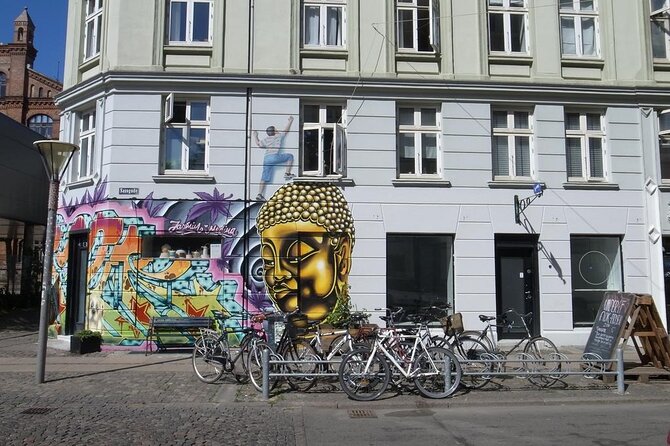
The Meatpacking District is now known for restaurants and nightlife, but the tour presents its industrial past first. The area was once tied to livestock, slaughterhouses, storage, and wholesale trade. Today’s dining scene makes more sense when you see the working district beneath it.
Oksnehallen, in the Brown Zone, was built in 1891. It held merchant offices and had room for 1,600 cattle. The market remained in use until the White Zone opened in the late 1950s. The building now functions as exhibition space, giving it a second life without erasing its original purpose.
Halmtorvet adds another layer. Copenhagen’s hay market once operated inside the Western City Gate, near today’s City Hall Square. It closed in 1888 and moved outside the new livestock market opened in 1879. Wednesdays and Saturdays brought several hundred loads of hay and straw, which were then distributed to stables around the city.
These stops work well together. You move from meat to cattle to hay, seeing how Vesterbro supported Copenhagen before it became an evening destination. The scheduled times are only about 10 minutes each, so this is an overview, not an extended food or architecture tour.
A few more Copenhagen outings worth comparing
- Copenhagen Card-Discover: 80+ Attractions & Public Transport
★ 4.6 · 5,351 reviews - Copenhagen: Hop-On Hop-Off Bus Tour with Boat Tour Option
★ 3.9 · 4,122 reviews - Private Walking Grand Tour of Copenhagen
★ 5.0 · 3,953 reviews - From Copenhagen: Lund and Malmö 2-Country Tour
★ 4.7 · 3,807 reviews
Social care beside the city’s entertainment district
The route does not avoid difficult subjects. At the Men’s Home, established in 1910, you learn about an organization that helps homeless and vulnerable people use their own resources to build better lives. The private institution receives Danish state support.
At Maria Church on Istedgade, the focus shifts to practical care. The small church opened in 1909 and now supports homeless people, families in need, and socially marginalized groups. Its daily work includes spiritual and economic support for people such as undocumented migrants, drug users, sex workers, and others whose lives are criminalized.
These are only five-minute stops, so do not expect a detailed institutional visit. Still, they show why Vesterbro cannot be reduced to nightlife and old industrial buildings. The district’s social history is part of its present-day identity.
If you choose the Full Option, lunch takes about 45 minutes at a classic Danish restaurant. A local tasting and drink are included only in that option. This matters because one booking expected a food-focused experience and found the tour did not offer enough food. The better way to think of the meal is a traditional pause during a walking tour, not a full culinary itinerary.
Copenhagen Central Station and the crossing to Christianshavn
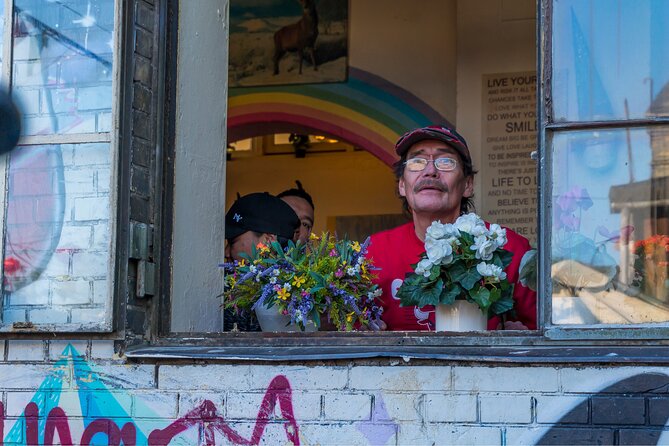
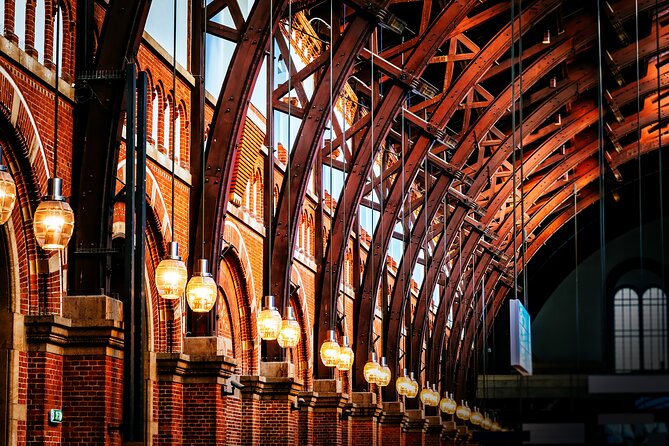
The route reaches København H, Copenhagen Central Station, built in 1911 and influenced by the architecture of Copenhagen’s town hall. It is Denmark’s largest railway station, with seven platforms and 13 tracks. Nørreport has more daily passengers, but the central station remains a major landmark and a practical transition point.
Metro tickets are included, although one person who had good weather and walked the entire route did not need to use one. That tells you something useful: transport is available, but the guide may adjust the plan to your pace and the day’s conditions.
From the station, the route moves toward Knippelsbro. The 115-meter drawbridge connects Copenhagen with Christianshavn. Its current name comes from Hans Knip, who operated the bridge and collected tolls from passing ships in 1641. He reportedly lived on the bridge with his family, which gives the crossing an unusually personal bit of history.
Christianshavn begins with Christians Kirke, a Rococo church built from 1754 to 1759. It was first called Frederik’s German Church and served Copenhagen’s German-speaking congregation. This stop helps explain the district’s maritime and international past.
Warehouses, naval buildings, and old Christianshavn streets
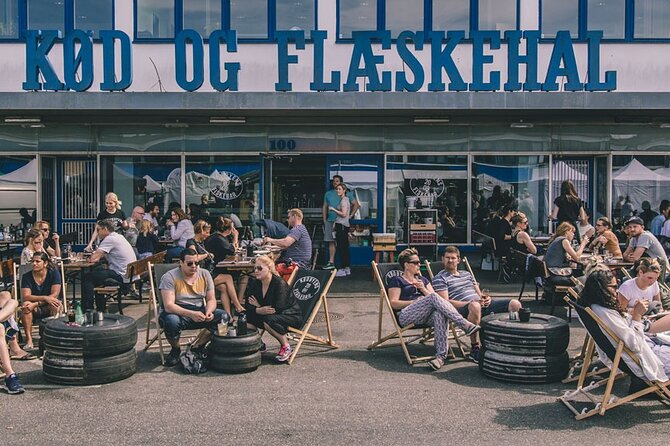
At Strandgade 4, the guide discusses Copenhagen’s industrial story through B&W, the major Danish shipbuilding and engineering company founded in 1843. The firm grew from a one-person smithing workshop into one of Denmark’s largest workplaces and held that position for roughly a century.
The DieselHouse Museum was formerly connected with this area but has moved to København SV. That means you should not expect a museum visit here. Instead, you get the site’s connection to Danish industry and the company now known as MAN Energy Solutions.
Asiatisk Plads was once the base of the Danish Asia Company, which operated from 1732 to 1843. Today, the area houses Denmark’s Ministry of Foreign Affairs and a convention center. The contrast between trading company, government offices, and waterfront public space gives this part of Christianshavn a clear sense of change.
Sankt Annæ Kirke and the surrounding houses are quieter but rewarding. Along the street are protected buildings from the 1600s and 1700s. Numbers 8 through 22 include remains of some of Copenhagen’s oldest houses, dating to about 1650, with number 14 the best preserved.
Wildersgade dates from the founding period of Christianshavn, around 1617 to 1622. Today it is a calm cobblestone street lined with mansions, old houses, and warehouses from the 1700s and 1800s. You get a strong sense of the district as a place where merchants, sailors, workshops, and families once lived close together.
The route also includes Wilders Plads, once a busy market square and now a pleasant place to pause by the water. The marina here is among Copenhagen’s most expensive and is reserved for yacht club members. Look for Wilders Plads 10, a two-story timber-framed building from 1736, originally built as a sailmaker’s workshop and home.
A large yellow Neoclassical building from 1754 to 1756 was once a naval hospice. It later housed the Danish Naval Museum until 2016. These quick stops are best for architecture and context, not for extended sightseeing inside.
Our Saviour’s Church and the edge of Christiania
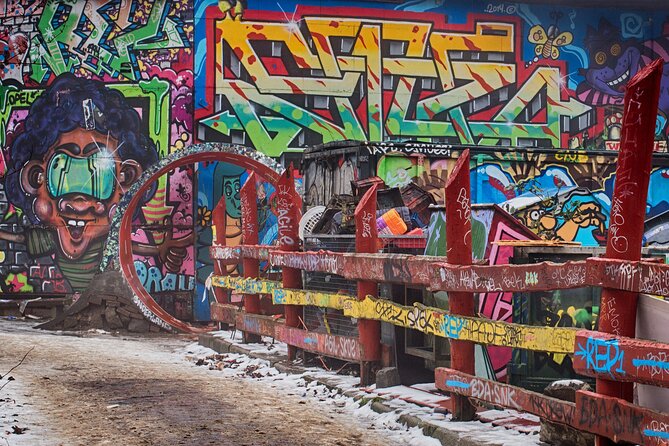
Church of Our Saviour is one of the route’s major visual highlights. Its Baroque design is famous for the twisted spire and exterior spiral staircase that climbs around the tower. It remains an active parish church serving about 8,000 people.
The tour does not include a climb up the spire. You get about 10 minutes at the church, enough to understand its design and role in the neighborhood. If climbing the tower is a priority, you would need to arrange that separately.
Before Christiania, the route touches the old defense zone created under Christian IV. Its purpose was to complete Copenhagen’s protective ring and help prevent attacks from Sweden. This connects Christianshavn’s peaceful waterfront streets with the military planning that shaped them.
Christiania is the final stop. Founded in 1971 by squatters and hippies on former military land, the partially self-governed community covers about 34 hectares and is home to roughly 1,000 residents. It became one of Copenhagen’s most visited sights, attracting about half a million people a year.
The guide cannot enter Christiania with you because guides are not allowed inside. That is an important practical limitation. The tour ends at the entrance, and you explore the car-free community independently. You might find this liberating, but if you want a guided explanation of Christiania’s buildings and social structure, this experience will not provide it.
Price, pace, and the people this tour suits
At $147.96 per person, this is not a bargain walking tour. The cost makes more sense for a private group that values a flexible guide, personal questions, local anecdotes, and a route that moves beyond the usual center. It is harder to justify for a couple, especially if you choose the basic option and receive no tasting or meal.
The advertised duration is about three and a half to four hours. One booking ended after three hours because the group needed to reach a cruise and chose to skip lunch. That is a useful warning: agree clearly with your guide about the finish time and which stops you want to keep.
The route is offered in English and is available only as a private activity for your group. Most people can participate, service animals are allowed, and the tour operates near public transportation. It is not cancelled for rain, so wear shoes and clothing suited to several hours outdoors.
The strongest feature is the guide. Alessandro is described as friendly and personable, while Grazi is praised for enthusiasm and for making sure the group got the most from the walk. Karolina is also singled out for showing lesser-known places and explaining them well. The guide can shape the experience around your interests, which is especially useful on a route with so many subjects.
Should you book this Vesterbro and Christianshavn tour?
Book it if you want social history, wartime stories, architecture, and local neighborhoods more than a checklist of famous monuments. It suits repeat visitors, curious first-time visitors, families with older children, and small groups who want to ask questions as they walk.
Think twice if you want a food tour, extensive museum access, or a guided visit inside Christiania. The basic price is high, and the many short stops can feel hurried if you prefer slow photography or long church visits.
For the best value, choose the Full Option if you want the traditional Danish tasting and restaurant stop, and tell the guide at the start how much time you have. If you can give the route the full four hours, this private walk offers a thoughtful look at Copenhagen’s less polished, more human side.
FAQ
How long does the tour last?
The tour lasts approximately three and a half to four hours.
What is the price?
The listed price is $147.96 per person.
Is the tour private?
Yes. Only your group participates in the private tour.
What language is offered?
The tour is offered in English.
Where does the tour start?
It starts at Viktoriagade 8, 1620 København, Denmark.
Where does the tour end?
It ends at Freetown Christiania in Copenhagen Municipality.
Is lunch included?
Lunch at a classic Danish restaurant is included only with the Full Option.
Is a tasting included?
A local tasting and a drink at a traditional restaurant are included only with the Full Option.
Are metro tickets included?
Yes. Metro tickets are included.
Can the guide enter Christiania with the group?
No. The guide cannot go into Christiania because guides are not allowed to enter with groups.
Newest around Copenhagen
- WWII Copenhagen Nyhavn and War Museum Private Walking Tour★ 5.0 · 2 reviews
- Half Day Exploration of Helsingør and Kronborg★ 3.5 · 3 reviews
- Helsingør Castle and Historic City Self-Guided Walking Tour★ 4.0 · 4 reviews
- Full-Day Tour; Castle, Palace & Cathedral, Winter(JAN-MAR)★ 5.0 · 11 reviews
- walking tour – Copenhagen and Christiansborg 3 hours★ 4.0 · 7 reviews
- Copenhagen Walking Tour with Food Testing (smorrebrod dish & snap)★ 4.5 · 10 reviews
- The Philosopher’s Last Walk: An audio tour on the life of Søren Kierkegaard★ 4.5 · 5 reviews
- The Forgotten Giants Private Tour★ 5.0 · 3 reviews
Christianshavn & Christiania, compared.
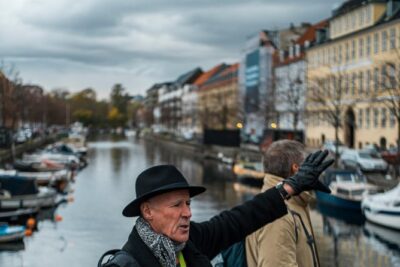
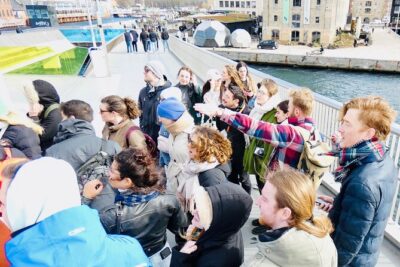
Private Hippies & Christianshavn Politically Incorrect Tour
Read our review →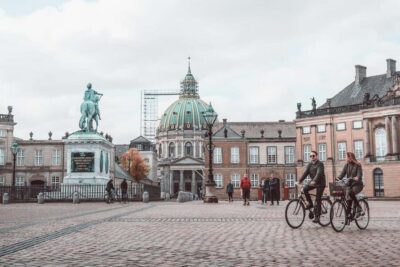
Copenhagen & Christiania : Guided Bike Tour in French
Read our review →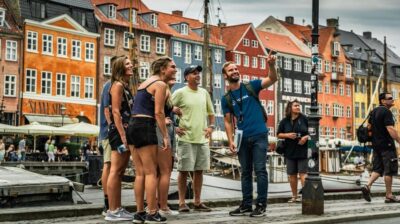
1.5-hour Private Walking Tour of Christianshavn
Read our review →
Copenhagen Christiania: Hidden Stories Self-Guided Adventure
Read our review →
Copenhagen Christiania and Christianshavn Guided Walking Tour
Read our review →
Browse the lists this tour appears in