
Review · NYHAVN & THE HARBOUR IN COPENHAGEN
Sights & Gems: Medieval Copenhagen & Nyhavn with a local host
Copenhagen rewards a good walking route. This two-hour tour links the Marble Church, Rosenborg Castle, the Round Tower, Christiansborg Palace, and Nyhavn in one compact stroll through the city center. I like the small group of no more than 12 people and the mix of famous sights with quieter streets such as Krusemyntegade. I also like that the walk ends in Nyhavn, where you can easily continue with coffee, a pastry, or a meal.
The main tradeoff is time. Most stops last about five minutes, and the tour focuses on exterior views rather than castle or museum visits. That makes it a useful first look at Copenhagen, but you will need a separate visit if you want to explore Rosenborg Castle, Christiansborg Palace, the Round Tower, or Nikolaj Kunsthal indoors.
In This Review
- Key points at a glance
- What this Copenhagen walk is really designed to do
- Starting beneath the Marble Church dome
- Nyboder and the naval families of Copenhagen
- Rosenborg Castle in the King’s Garden
- The Round Tower and old-town streets
- Gråbrødretorv and the rhythm of old Copenhagen
- Amagertorv, the Stork Fountain, and city life
- Christiansborg Palace and Denmark’s government
- Nikolaj Church and Kongens Nytorv
- Ending beside the colorful Nyhavn canal
- Group size, weather, and guide quality
- Who should book this experience?
- Should you book the Copenhagen Medieval and Nyhavn walk?
- FAQ
- Where does the tour begin?
- Where does the tour end?
- How long does the tour last?
- What language is the tour offered in?
- How large is the group?
- Is the Marble Church admission included?
- Is admission to Rosenborg Castle included?
- Can I enter the Round Tower during the tour?
- Is the Nyboder Memorial Rooms admission included?
- Can I cancel for a full refund?
Key points at a glance
- A smart two-hour route: Move from the Marble Church through the old center and finish beside the Nyhavn canal.
- Small-group attention: The group is capped at 12, a comfortable size for questions and clear conversation.
- Royal Copenhagen in one walk: See Rosenborg Castle, Christiansborg Palace, Kongens Nytorv, and the district built around the monarchy.
- More than postcard sights: Nyboder and Krusemyntegade add a quieter look at Copenhagen’s naval past.
- A useful first-day activity: The route helps you get your bearings fast if you have limited time in the city.
- Weather can change the plan: A guide has adapted the experience during wet, windy weather by moving part of the history talk into a warm café.
What this Copenhagen walk is really designed to do
This is not a museum tour or a long historical lecture. It is a brisk introduction to central Copenhagen, with a local host connecting streets, buildings, monarchs, sailors, churches, and modern Danish government.
At $28.43 per person, the price is reasonable for a two-hour guided walk, especially if you want context rather than simply taking photos on your own. You are paying for the route, the guide’s storytelling, and the chance to ask questions in a small group. The value is strongest during a first visit, when every landmark is new and a little background helps the city make sense.
The route covers a lot of ground, but the pace is not described as strenuous. You should still have a moderate level of fitness, since this is a walking activity and the historic center includes streets and public spaces rather than one fixed indoor venue.
The meeting point is practical: between the stairs leading down to Marble Church Metro Station, next to a 7-Eleven. That is easier to locate than a vague meeting point in a large square. The tour is offered in English, and clear communication is one of its strongest qualities. A guide named Maybritt was praised for speaking English that was easy to follow, while another guide, called Maybee, adapted well when the weather turned wet and windy.
Other trips starting at Nyhavn:
- Copenhagen Canal Boat Cruise and City, Nyhavn Walking Tour
★ 4.0 · 14 reviews - Copenhagen: Canal Boat Cruise & Old Town/Nyhavn Walking Tour
★ 4.5 · 4 reviews - Copenhagen City, Old Town, Nyhavn, Architecture Walking Tour
★ 5.0 · 3 reviews
Starting beneath the Marble Church dome
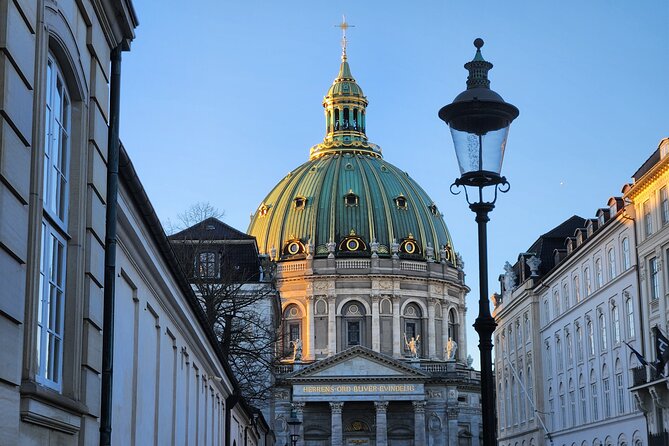
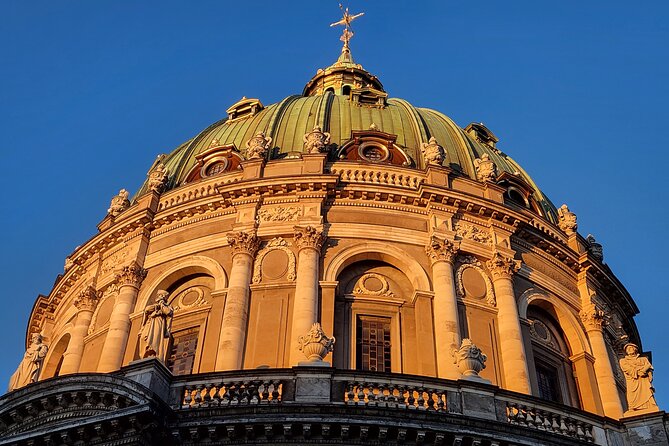
The walk begins at Frederiks Kirke, usually called the Marble Church. Its huge dome is the first major visual reward, and it gives the tour a strong opening in the royal district of Frederiksstaden.
The church was inspired by St. Peter’s Basilica in Rome and took more than 150 years to complete. Its Norwegian marble and detailed design make it one of Copenhagen’s finest architectural stops. You are given about five minutes here, with admission free at this point in the route.
That short pause is enough to admire the façade and hear why the church matters. It is not enough for a careful interior visit, so think of this as an orientation stop. If the dome has caught your attention, you may want to return later with more time.
The location also makes practical sense. The Marble Church sits near several major sights, so the tour can move quickly from royal architecture into the city’s older streets without wasting time on transportation.
Nyboder and the naval families of Copenhagen
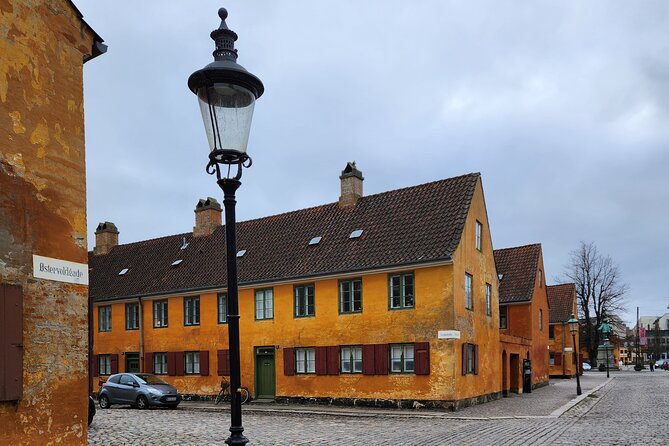
The route then turns toward Nyboder, a distinctive neighborhood founded in 1631 by King Christian IV. Its original purpose was to house Danish naval families, giving the area a direct link to the country’s seafaring past.
This is one of the most useful parts of the walk for anyone who wants more than the standard Copenhagen photo stops. Nyboder feels different from the grand squares and royal buildings. The low historic houses and quiet streets help you picture how sailors and their families once lived.
The tour pauses near the Nyboder Memorial Rooms, where you can look through the windows at preserved museum spaces. The rooms contain original artifacts, uniforms, and maritime objects. Admission is not included, and the schedule allows about five minutes, so you should not expect a full museum visit during the walk.
That limitation is worth knowing in advance. The stop works best as a quick introduction to the district. You see the setting, hear the story, and can decide if you want to return later.
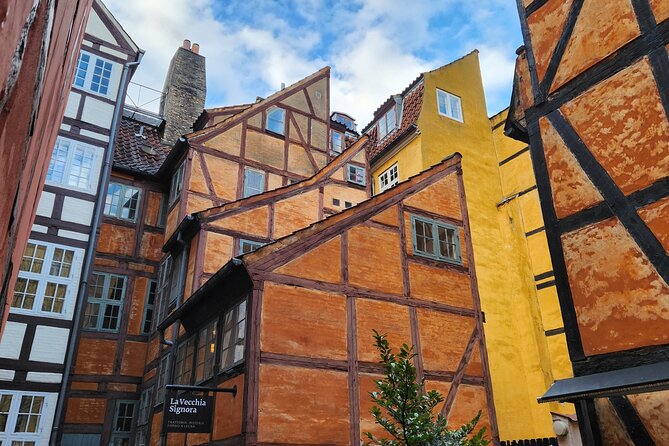
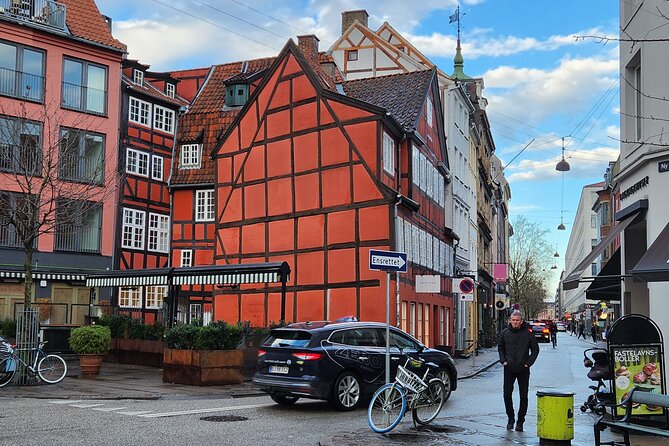
The nearby Krusemyntegade adds another pleasant change of pace. Colorful historic houses line this peaceful street, offering a good look at the architecture connected with the naval quarter. It is the sort of place you could easily miss if you followed only Copenhagen’s largest sights.
Rosenborg Castle in the King’s Garden
Rosenborg Castle brings the route back to royal Copenhagen. King Christian IV built this Renaissance castle in the early 1600s, and it sits inside Kongens Have, the King’s Garden, Denmark’s oldest royal park.
The castle has the look of a storybook palace, with towers and strong architectural details that make it one of the city’s best exterior photo stops. The garden also provides a calmer setting after the narrow streets of Nyboder.
You get about five minutes here, and admission is not included. The guide’s focus is the castle’s outside and its place in Danish royal history, not the interiors or crown jewels. If you want to see the rooms inside, plan a separate visit and allow considerably more time than this walk provides.
I see this as a good choice for a short city introduction. You get the setting, the story, and a clear reason to return, without spending your entire morning in one building.
A few more Copenhagen outings worth comparing
- Copenhagen Card-Discover: 80+ Attractions & Public Transport
★ 4.6 · 5,351 reviews - Copenhagen: Hop-On Hop-Off Bus Tour with Boat Tour Option
★ 3.9 · 4,122 reviews - Private Walking Grand Tour of Copenhagen
★ 5.0 · 3,953 reviews - From Copenhagen: Lund and Malmö 2-Country Tour
★ 4.7 · 3,807 reviews
The Round Tower and old-town streets
The Round Tower, or Rundetårn, is another landmark viewed from outside. King Christian IV built it in 1642 as an observatory, and it remains one of Copenhagen’s most recognizable structures.
Its unusual spiral design gives the stop a bit of character. The copper-clad roof rises above the old-town streets, and the tower reflects Copenhagen’s interest in science, navigation, and practical design as much as royal power.
The visit lasts around five minutes, with admission not included. That means you will not walk up the famous interior ramp or see the city from the top as part of this experience. Still, the outside explanation helps you notice the building when you pass it later on your own.
This is where the tour’s format becomes clear. You receive a series of well-chosen introductions, not long stays. For some people, that is exactly right. Others may find the stops too brief, especially if they prefer to examine architecture slowly or take many photographs.
Gråbrødretorv and the rhythm of old Copenhagen
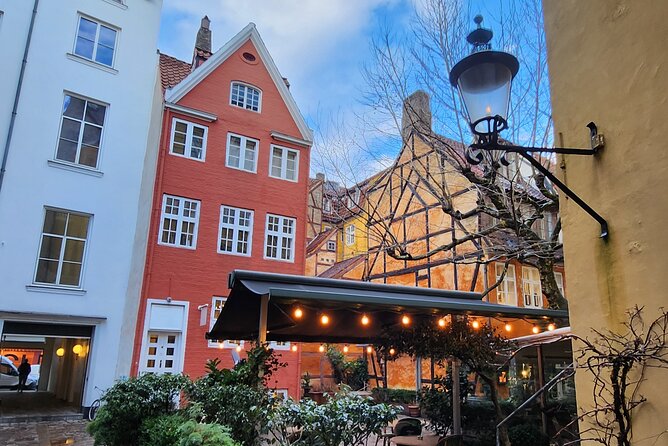
Gråbrødretorv offers a welcome pause from the major landmarks. This pretty square has colorful townhouses, mature trees, cafés, and restaurants. It feels more intimate than the large royal spaces and gives you a chance to see how central Copenhagen works as a lived-in city.
The square is free to visit, and the tour allows about five minutes. That is enough to take in the layout and hear a little about the area, but not enough for a café stop. If the square appeals to you, mark it for a return visit after the tour.
I like this part of the route because it keeps the walk from becoming a checklist of monuments. Copenhagen’s appeal often comes from the spaces between the major sights, and Gråbrødretorv provides one of those small, attractive breaks.
Amagertorv, the Stork Fountain, and city life
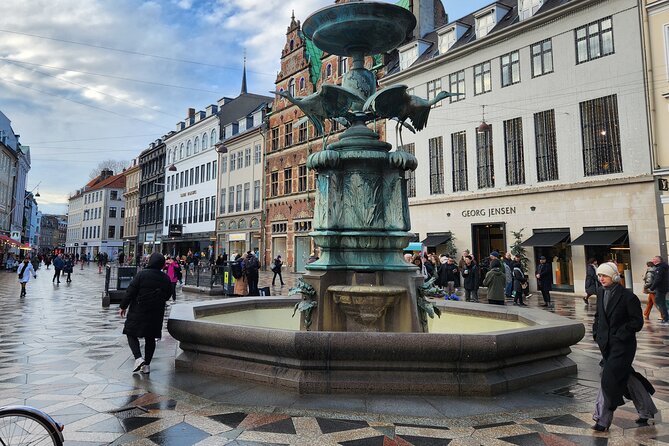
Next comes Amagertorv, a central square on Strøget, Copenhagen’s main shopping district. The Stork Fountain is the visual focus, while the surrounding buildings and mosaic pavement add detail to a busy urban setting.
This stop gives you a useful change in mood. You move from quiet courtyards and royal gardens into a public square where shopping, people-watching, history, and daily city life meet. The guide can help explain what you are seeing, but you will also have time to take in the atmosphere for yourself.
The stop is free and lasts about five minutes. It is not a shopping excursion, so do not expect time to browse stores along the way. Instead, note the location for later. Strøget is an easy place to revisit after the tour if you want to shop or find a quick meal.
Christiansborg Palace and Denmark’s government
Christiansborg Palace is one of the most important stops on the route. Located on Slotsholmen, it occupies a site with more than 800 years of royal foundations and now houses Denmark’s Parliament, Supreme Court, and Royal Reception Rooms.
That combination gives the building unusual importance. It is not simply a former royal residence. It connects the monarchy, the courts, and the elected government in one place.
From outside, you can admire the grand façade and copper spire while hearing stories of royal succession, palace fires, and political change. Admission is not included, and the tour does not promise an interior visit. If the palace interests you, you will need to return separately for its rooms and exhibitions.
Five minutes may sound short for such a significant site, but the stop works as a clear piece of the larger story. Earlier, you see the royal district and Rosenborg. Here, you see how Denmark’s older royal institutions connect with modern democracy.
Nikolaj Church and Kongens Nytorv
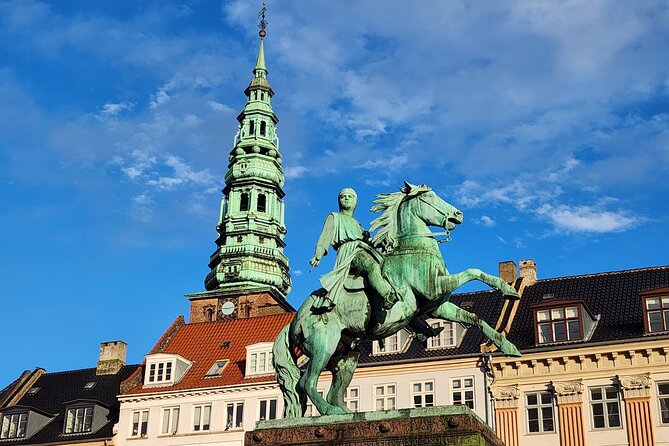
Nikolaj Church, now Nikolaj Kunsthal, provides another quick architectural pause. The original church dates to the 1200s, and its distinctive spire remains part of Copenhagen’s skyline.
The stop is outside only, with admission not included. That keeps the walk moving, but it also means you will not see the exhibitions inside the art center during this experience.
From there, the route reaches Kongens Nytorv, Copenhagen’s grand central square. The Royal Danish Theatre, Hotel d’Angleterre, and the equestrian statue of King Christian V frame the space. This is a useful place to understand the city’s ceremonial side before the route turns toward the canal.
The square is free to visit, and the scheduled stop lasts about five minutes. If you have more time after the walk, Kongens Nytorv is a good base for reaching nearby attractions, shops, and cafés.
Ending beside the colorful Nyhavn canal
Nyhavn is the final stop, and it is a smart choice. The canal is lined with colorful townhouses, historic wooden ships, and cafés facing the water. Once a working harbor for sailors and traders, it is now one of Copenhagen’s most recognizable public spaces.
You will hear about Hans Christian Andersen, who lived in Nyhavn, along with the canal’s change from a rough port into a popular gathering place. The stop is free and lasts about five minutes, but the tour ends here, so you are free to stay as long as you like.
This ending adds real value. You do not have to rush away for a return transfer or follow the guide back to the starting point. You can choose a coffee, pastry, lunch, or a slower walk along the canal. The end point is Nyhavn 28 in the Indre By district, surrounded by cafés and restaurants.
Keep your expectations realistic. Nyhavn can be crowded and prices around the waterfront may be higher than in less central parts of Copenhagen. Still, finishing here gives you flexibility and puts you at one of the city’s essential sights.
Group size, weather, and guide quality
The maximum group size is 12, which is one of the clearest strengths of the experience. A small group makes it easier to hear the guide in city streets and easier to ask a question without turning the walk into a formal lecture.
Guide quality matters more on a walking tour than on many other activities. Maybritt received praise for clear English and strong command of Copenhagen’s story. Another guide, Maybee, responded sensibly to poor weather by finding a warm coffee lounge and continuing the explanation indoors.
That example also points to a practical concern. Copenhagen weather can be wet and windy, and most of the walk takes place outside. Wear suitable shoes and bring weather protection. The guide may be able to adjust the plan, but no walking route can remove the effects of bad weather entirely.
Who should book this experience?
I would choose this tour if you have only a short time in Copenhagen, are visiting for the first time, or want a useful city orientation before exploring alone. It suits people who enjoy architecture, royal stories, public squares, and a steady walk with frequent short stops.
It is also a good match if you prefer a local host over a large sightseeing group. The English-language format and small group should make the storytelling easy to follow.
I would choose something else if you want long interior visits, extensive museum time, or a slow photography walk. The tour does not include admission to the main paid sights, and five-minute stops cannot do justice to every building.
Free cancellation is available until 24 hours before the start time. After that point, the amount paid is not refunded, and last-minute changes are not accepted.
Should you book the Copenhagen Medieval and Nyhavn walk?
Book it if you want a compact, fairly priced introduction to Copenhagen with a local guide and a small group. The route covers the city’s major royal and historic landmarks while adding Nyboder and Krusemyntegade, two places that give the walk more character than a simple postcard circuit.
The best way to use it is as a first-day framework. Listen for the places you want to revisit, then return to Rosenborg, Christiansborg, the Round Tower, or Nikolaj Kunsthal when you have time for the inside.
At $28.43, the experience offers good value for a focused two-hour walk. Its only real weakness is the short time at each stop. If you accept that this is an introduction rather than a full tour of every building, it is an easy choice for a first look at central Copenhagen.
FAQ
Where does the tour begin?
The tour begins between the stairs leading down to Marble Church Metro Station, next to a 7-Eleven in Copenhagen.
Where does the tour end?
The tour ends at Nyhavn 28 in the Indre By district of Copenhagen.
How long does the tour last?
The tour lasts approximately two hours.
What language is the tour offered in?
The tour is offered in English.
How large is the group?
The group has a maximum of 12 people.
Is the Marble Church admission included?
The Marble Church stop has free admission.
Is admission to Rosenborg Castle included?
No. The tour views Rosenborg Castle from outside, and admission is not included.
Can I enter the Round Tower during the tour?
Admission to the Round Tower is not included. The scheduled stop focuses on viewing the tower from outside.
Is the Nyboder Memorial Rooms admission included?
No. Admission is not included. The tour makes a short stop where you can look through the windows at the preserved rooms.
Can I cancel for a full refund?
Yes. You can cancel at least 24 hours before the experience start time for a full refund. Cancellations or changes made less than 24 hours before the start time are not accepted for a refund.
Newest around Copenhagen
- WWII Copenhagen Nyhavn and War Museum Private Walking Tour★ 5.0 · 2 reviews
- Half Day Exploration of Helsingør and Kronborg★ 3.5 · 3 reviews
- Helsingør Castle and Historic City Self-Guided Walking Tour★ 4.0 · 4 reviews
- Full-Day Tour; Castle, Palace & Cathedral, Winter(JAN-MAR)★ 5.0 · 11 reviews
- walking tour – Copenhagen and Christiansborg 3 hours★ 4.0 · 7 reviews
- Copenhagen Walking Tour with Food Testing (smorrebrod dish & snap)★ 4.5 · 10 reviews
- The Philosopher’s Last Walk: An audio tour on the life of Søren Kierkegaard★ 4.5 · 5 reviews
- The Forgotten Giants Private Tour★ 5.0 · 3 reviews
Nyhavn & the Harbour, compared.

Copenhagen Canal Boat Cruise and City, Nyhavn Walking Tour
Read our review →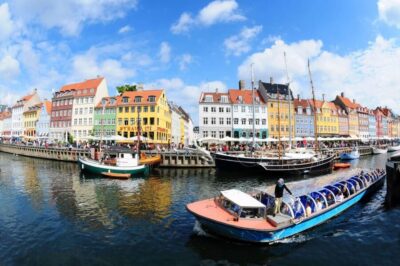
Canal Boat Cruise & Old Town/Nyhavn Walking Tour
Read our review →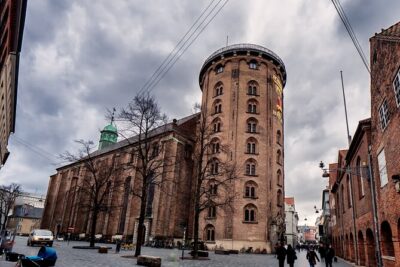
Copenhagen City, Old Town, Nyhavn, Architecture Walking Tour
Read our review →Copenhagen City, Old Town, Nyhavn, Architecture Walking Tour
Read our review →
WWII Copenhagen Nyhavn and War Museum Private Walking Tour
Read our review →Browse the lists this tour appears in