Review · COPENHAGEN TOURS
Life on Copenhagen’s Streets: Philip’s crazy life
Some city walks change how you see a place. Life on Copenhagen’s Streets follows Philip through central Copenhagen as he tells the story of his own life, including homelessness, drug abuse, crime, poor choices, and the hard work of finding a way forward. This is not a sightseeing stroll built around grand buildings. It is a personal account set against familiar city streets.
I like the directness of Philip’s storytelling and the way the walk connects private hardship with public places. I also like the compact route, which moves from Nørreport Station to City Hall Square without needing a bus or long transfer. The main consideration is emotional: Philip’s story includes painful and difficult subjects, so this is not the right choice if you want a light, cheerful introduction to Copenhagen.
In This Review
- Key points about Philip’s Copenhagen walk
- Why this is not an ordinary Copenhagen city walk
- Nørreport Station: starting in the middle of daily Copenhagen
- Church of Our Lady: a landmark viewed from outside
- Gammeltorv and the old city’s public spaces
- Studiestræde: cafes, bars, and the everyday city
- Rådhuspladsen: finishing beside the metro
- Philip’s storytelling is the main reason to book
- Price, group size, and the value of 90 minutes
- Who will get the most from this experience
- Should you book Life on Copenhagen’s Streets?
- FAQ
- Where does the tour begin?
- What time does the tour start?
- Where does the tour end?
- How long does the experience last?
- Is the Church of Our Lady visited inside?
- Is the tour offered in English?
- How large can the group be?
Key points about Philip’s Copenhagen walk
- Philip Larsen tells a personal story: The focus is his life, not a standard list of dates and monuments.
- The route covers five central stops: You walk from Nørreport Station through the old city to Rådhuspladsen.
- The tour lasts about 90 minutes: Some outings have continued for close to two hours when conversation ran long.
- The story covers homelessness, addiction, crime, and recovery: Philip also stresses the importance of asking for help.
- The group limit is 20 people: That gives the walk a more personal scale than a large city tour.
- The ending is easy to reach: The tour finishes beside the metro at City Hall Square.
Why this is not an ordinary Copenhagen city walk
Copenhagen is often sold through tidy canals, royal buildings, bicycles, and polished public spaces. Those parts of the city are real, but they are only part of the picture. This walk asks you to look at the city through the life of one person who has experienced its less comfortable side.
Philip’s story is the center of the experience. He speaks about the choices and events that shaped his life, including periods connected with drug abuse, homelessness, and crime. The account is described as unusually open, including mistakes and parts of his past that are not easy to discuss.
That honesty gives the walk its value. You are not simply learning where a square is or when a church was built. You are considering how quickly a life can change, how one decision can affect later choices, and why support matters before a crisis grows worse.
I especially like that the walk does not treat Philip’s past as a dramatic performance. The strongest descriptions of the experience point to a reflective guide who answers questions and makes people feel comfortable asking them. He also brings a hopeful message: even after a long period at the lowest point, change remains possible.
The tone is serious, but it is not presented as hopeless. That balance matters. A walk about hardship can become either sentimental or grim. Here, the useful lesson is that Philip shares both the damage and the possibility of rebuilding.
A few more Copenhagen outings worth comparing
- Copenhagen Card-Discover: 80+ Attractions & Public Transport
★ 4.6 · 5,351 reviews - Copenhagen: Hop-On Hop-Off Bus Tour with Boat Tour Option
★ 3.9 · 4,122 reviews - Private Walking Grand Tour of Copenhagen
★ 5.0 · 3,953 reviews
Nørreport Station: starting in the middle of daily Copenhagen
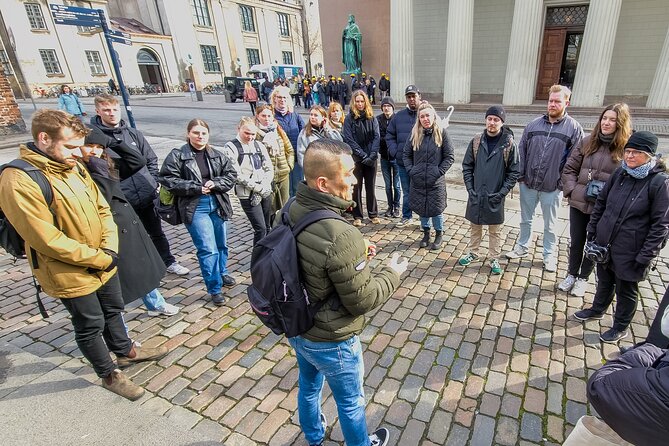
The meeting point is at Nørreport Station, on Nørre Voldgade 82. The listed start time is 1:30 pm, and you should arrive with enough time to find the exact meeting point in this busy transport area.
Nørreport is described as Denmark’s busiest station, with about 250,000 people passing through each day. That makes it a fitting place to begin. You are not starting in a quiet museum courtyard or a postcard square. You begin among commuters, metro users, and people moving through the city for ordinary reasons.
The first portion lasts about 15 minutes. Admission is free because the station is part of the public route. This opening also gives you a quick sense of the walk’s method: Philip uses real city spaces as the setting for his story.
For you, the practical benefit is simple. Nørreport has strong public transport links, so the meeting point should be straightforward to reach. The drawback is that a busy station can make it harder to spot a guide or hear introductions, especially if the group gathers near a crowded entrance. Keep the meeting address handy and arrive early.
Church of Our Lady: a landmark viewed from outside
The second stop is the Church of Our Lady, known in Danish as Vor Frue Kirke. It is Copenhagen’s Lutheran cathedral and one of the city center’s major religious buildings.
You spend about 15 minutes here, but the tour does not enter the church. That detail is important. If you are hoping for an interior visit, organ music, or a close look at the church’s artwork, this walk will not provide it.
The value of this stop comes from the setting and Philip’s narration, not from an included monument visit. The church provides a recognizable point in central Copenhagen while the discussion stays focused on his life and the broader subject of hardship in the city.
I see the outside-only format as both a limit and a benefit. It keeps the tour moving and prevents the walk from becoming a conventional church tour. At the same time, you should not book this experience expecting detailed architectural commentary or entry to Copenhagen Cathedral.
Gammeltorv and the old city’s public spaces
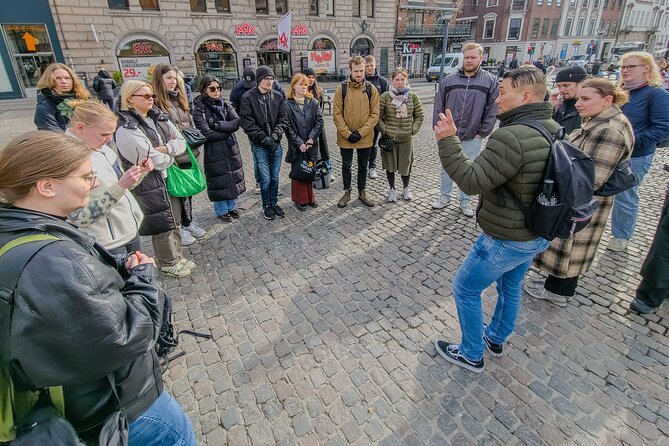
From the cathedral, the walk continues to Gammeltorv, or the Old Square. It is described as Copenhagen’s oldest square, and the group spends about 15 minutes here.
This is where the contrast between Copenhagen’s historic center and Philip’s modern story becomes especially useful. Gammeltorv is a formal, well-known public place, but Philip’s account brings attention back to the people who live, work, struggle, and pass through these streets.
The stop is free, and there is no separate admission to manage. You can expect another period of standing and listening rather than a long museum-style explanation. The pace is divided into short sections, with walking between each location.
That rhythm works well for a personal story. You are not standing in one spot for the full 90 minutes, and the changes of place give the conversation a natural structure. For school groups, this format has also been described as effective because the walking and stopping break the story into manageable parts.
If you have limited mobility, keep in mind that this is a walking tour with several stops. The available information says most people can participate, but it does not provide a detailed accessibility assessment or a route description for wheelchairs.
Somewhere else in Denmark, for a completely different day:
- From Copenhagen: Lund and Malmö 2-Country Tour
★ 4.7 · 3,807 reviews - Copenhagen Highlights Walking Tour
★ 5.0 · 2,324 reviews - Copenhagen: Highlights 3 Hour Bike Tour with a Local Guide
★ 4.8 · 2,312 reviews - Hamlet and Sweden Tour – Two Countries in one day !
★ 5.0 · 2,223 reviews
Studiestræde: cafes, bars, and the everyday city
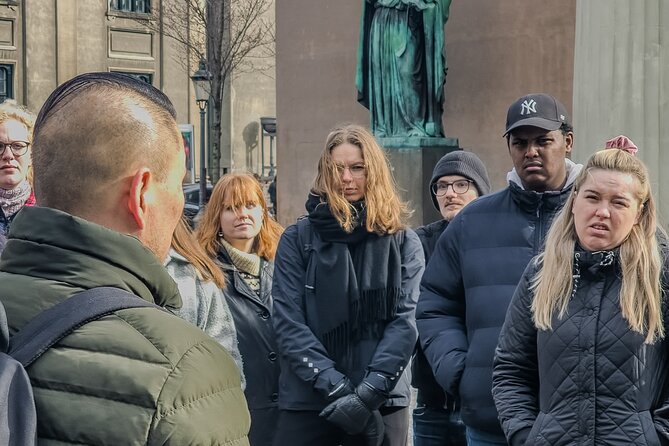
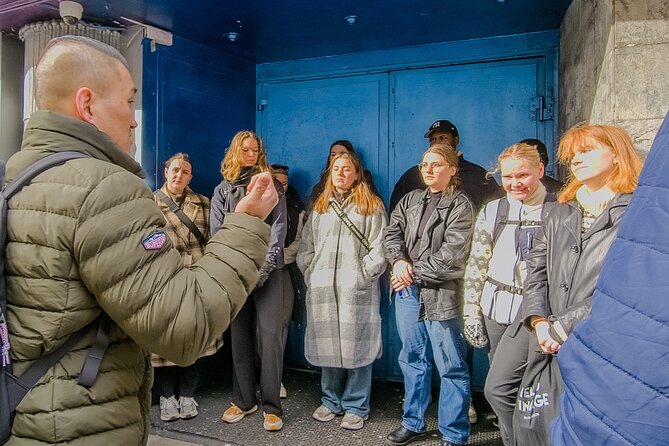
The fourth stop is Studiestræde, a central street lined with shops, cafes, bars, clubs, and restaurants. The group spends about 15 minutes here.
This may be the most revealing setting on the route because it is an ordinary social street rather than a single landmark. It is a place where people come to eat, meet friends, go out, and move through the city. Against that setting, Philip’s discussion of addiction, homelessness, and crime becomes harder to keep at a distance.
You are still in central Copenhagen, surrounded by familiar urban activity, but the story asks you to think about who may be overlooked in such spaces. That is one reason I find the route more useful than a generic walk through major sights. Philip’s experience gives social issues a human face without reducing the city to a problem.
The tone may feel intense here. The subject matter is personal, and some parts of the story are described as sad, frightening, and thought-provoking. If you are bringing children or teenagers, consider their age and readiness for frank discussion. The walk has worked well for student groups, but it is not a children’s entertainment tour.
Rådhuspladsen: finishing beside the metro
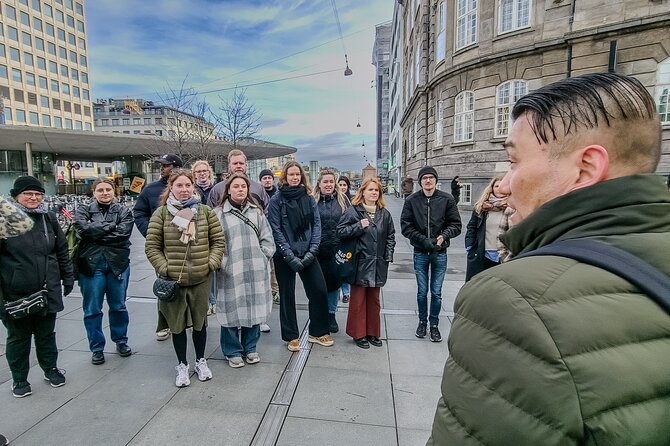
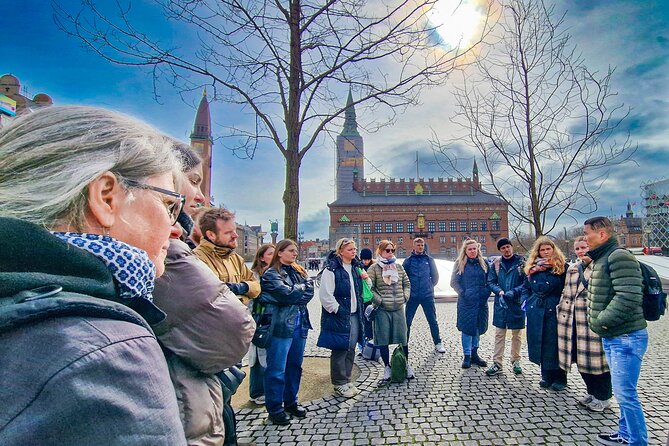
The final stop is Rådhuspladsen, or City Hall Square, one of Copenhagen’s best-known public squares. The Copenhagen City Hall dominates the space, with its early 20th-century construction and prominent position in the center.
The official walk lasts about 90 minutes, with roughly 15 minutes allocated to each stop. In practice, allow a little flexibility. One account describes a 1.5-hour booking turning into a two-hour walk and conversation. That is a good sign if you value questions and discussion, but it means you should not schedule a tight appointment immediately afterward.
The tour ends next to the metro at Rådhuspladsen. This is a useful finish. You can continue sightseeing, return to your hotel, or connect to another part of Copenhagen without retracing the route.
There is also a symbolic quality to ending at City Hall Square. You have moved through busy transport areas, old public spaces, and a social street, then finished at one of the city’s main civic gathering points. Philip’s story remains personal, but the location gives it a wider public setting.
Philip’s storytelling is the main reason to book
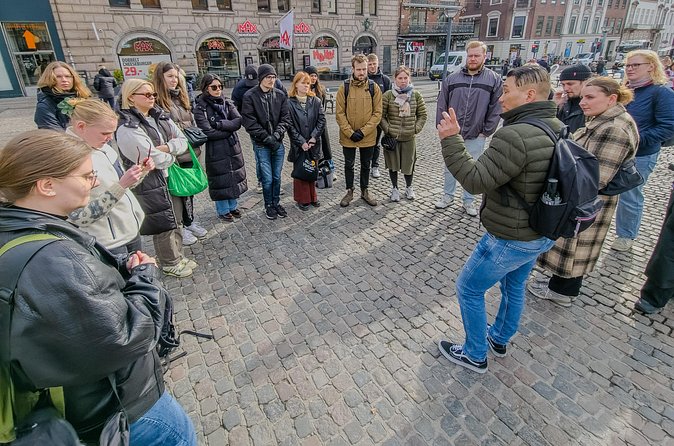
The strongest feature here is not the route itself. You can visit all five places without joining a tour. The reason to pay for this experience is Philip’s willingness to tell his story with unusual openness.
The descriptions of his guiding style emphasize three qualities:
- He is candid about difficult choices: He does not only present the parts of his life that are easy to admire.
- He explains events in a reflective way: The story is not just a sequence of shocks. It considers how decisions and circumstances shaped what came next.
- He welcomes questions: The walk allows discussion rather than forcing you to listen silently from start to finish.
That last point can make a major difference. Personal stories about addiction and homelessness can leave you unsure what to ask. Philip’s approach is described as making questions feel possible, which helps turn the walk into a conversation rather than a speech.
The message about reaching out for help is another important part of the experience. The story includes darkness, but it also includes hope. You are encouraged to think about prevention, support, and recovery, not just failure.
Price, group size, and the value of 90 minutes
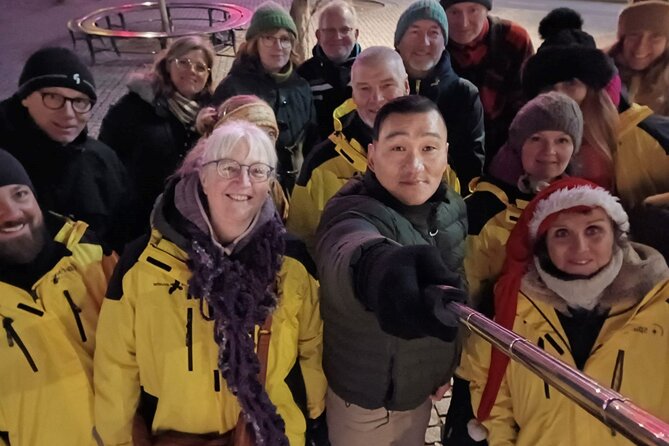
The price is $30.62 per person. That is more than you might pay for a basic free walking tour, but the comparison is not quite fair. You are paying for a personal account and a guided conversation, not simply for directions between landmarks.
The route itself has no paid admission. The Church of Our Lady is viewed from outside, and the other stops are public places. So the price reflects the guide’s time and the nature of the experience rather than entrance fees.
A maximum of 20 people keeps the group from becoming too large. It may still feel like a group activity, but the limit gives you a better chance to hear Philip and ask something directly. The exact group size on your date is not provided, so do not assume it will be a tiny private walk.
At 90 minutes, the tour fits neatly into a Copenhagen afternoon. Still, leave room after the scheduled ending in case conversation continues. I would plan for two hours if you want to be relaxed, particularly if you are attending with students or a group that expects to ask questions.
The value is strongest for people who want context and human perspective. If your goal is to see as many famous buildings as possible, another city tour may give you more sights for the same time. If you want to understand difficult parts of urban life through one person’s experience, this price is easier to justify.
Who will get the most from this experience
I would recommend the walk to adults, older teenagers, students, educators, and anyone interested in social issues. It can work particularly well for groups studying homelessness, addiction, crime, personal responsibility, or support systems.
It is also a good choice for repeat visitors to Copenhagen. Once you have seen the classic sights, a personal walk can change how you read the city center. You may pass the same squares and streets later with more awareness of the people who use them in very different ways.
You should think twice if you want a relaxed introduction to Copenhagen or a tour centered on architecture. The story is described as hard, sad, and moving. The guide’s honesty is the strength of the experience, but it is also the reason the walk can feel heavy.
The route is offered in English. Service animals are allowed, and the activity is near public transportation. Most people can participate, but the information does not promise a fully step-free route or provide detailed seating arrangements at each stop.
Booking confirmation is provided at the time of purchase. Free cancellation is available if you cancel at least 24 hours before the local start time. A minimum group size applies, and if the operator cancels because that number is not reached, you can receive a full refund or choose another option.
Should you book Life on Copenhagen’s Streets?
Book this walk if you want a serious, personal look at Copenhagen and are willing to spend 90 minutes listening carefully. Philip Larsen’s account is described as honest, thoughtful, and moving, with enough openness for genuine questions and enough hope to keep the experience from becoming despairing.
Do not book it as a substitute for a classic sightseeing tour. You will not enter the cathedral, and the main landmarks are settings for Philip’s story rather than the central subject.
For the right audience, this is a powerful afternoon walk. Arrive early at Nørreport, wear comfortable shoes, keep your schedule flexible, and expect an experience that may stay with you longer than a list of facts about Copenhagen.
FAQ
Where does the tour begin?
The tour begins at Nørre Voldgade 82, near Nørreport Station in Copenhagen.
What time does the tour start?
The listed start time is 1:30 pm.
Where does the tour end?
The walk ends beside the metro at City Hall Square, also called Rådhuspladsen.
How long does the experience last?
The scheduled duration is approximately 1 hour and 30 minutes. The conversation can sometimes continue longer, so allowing extra time is sensible.
Is the Church of Our Lady visited inside?
No. The church is part of the route, but the tour does not enter the building.
Is the tour offered in English?
Yes. English is the listed tour language.
How large can the group be?
The maximum group size is 20 people.
Newest around Copenhagen
- WWII Copenhagen Nyhavn and War Museum Private Walking Tour★ 5.0 · 2 reviews
- Half Day Exploration of Helsingør and Kronborg★ 3.5 · 3 reviews
- Helsingør Castle and Historic City Self-Guided Walking Tour★ 4.0 · 4 reviews
- Full-Day Tour; Castle, Palace & Cathedral, Winter(JAN-MAR)★ 5.0 · 11 reviews
- walking tour – Copenhagen and Christiansborg 3 hours★ 4.0 · 7 reviews
- Copenhagen Walking Tour with Food Testing (smorrebrod dish & snap)★ 4.5 · 10 reviews
- The Philosopher’s Last Walk: An audio tour on the life of Søren Kierkegaard★ 4.5 · 5 reviews
- The Forgotten Giants Private Tour★ 5.0 · 3 reviews
Copenhagen Tours, compared.
Copenhagen Card-Discover: 80+ Attractions & Public Transport
Read our review →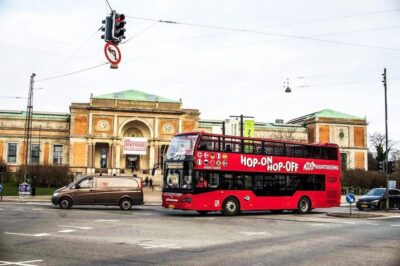
Hop-On Hop-Off Bus Tour with Boat Tour Option
Read our review →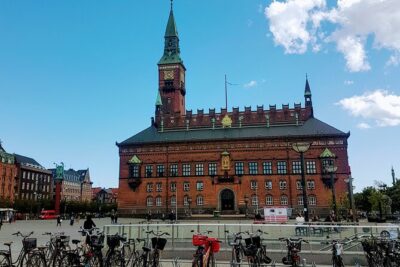
Highlights 3 Hour Bike Tour with a Local Guide
Read our review →
Hamlet and Sweden Tour – Two Countries in one day !
Read our review →