
Review · CRUISES & BOAT TOURS IN COPENHAGEN
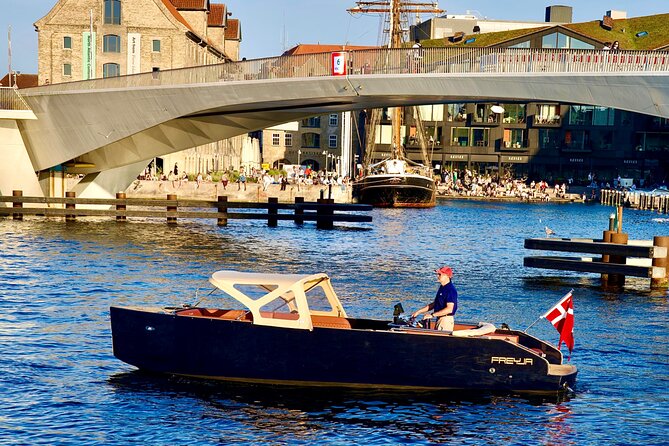
Discover Copenhagen Private Boat Tour Experience
Copenhagen tells its story best from the water. This private cruise gives you a relaxed look at royal palaces, old naval yards, Christiania, modern architecture, and quiet houseboat canals, all from a boat reserved for your group. I especially like the personal pace and Captain Denis’s easy, informed style. You can also bring the right people with you, since the boat takes up to eight rather than packing you into a large sightseeing vessel.
The main consideration is cost. At $484.89 per group, this is a premium outing for two or three people, but the price becomes much more reasonable when divided among six or eight. The tour also depends on good weather, and the booking is non-refundable unless the operator cancels because of poor conditions.
In This Review
- Key things to know before you book
- Starting at the Old Customs House
- Nyhavn, the Playhouse, and Paper Island
- Naval Copenhagen at Holmen
- Christiania and the harbor’s counterculture
- The mast crane, powder road, and Reffen
- Trekroner Fort and the northern harbor
- The Little Mermaid and the royal waterfront
- Christianshavn and the city center
- Gammel Strand, Christiansborg, and Børsen
- What the $484.89 price really buys
- Timing, weather, and who should book
- Should you book the FREYJA private boat tour?
- FAQ
- Where does the private boat tour start?
- Where does the tour end?
- How long does the cruise last?
- How many people can join?
- What language is offered?
- Is the tour available in poor weather?
- Can I cancel the booking for a refund?
- Are service animals allowed?
Key things to know before you book
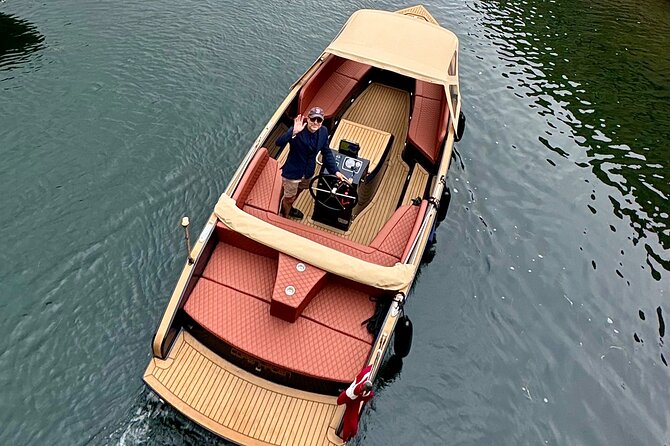
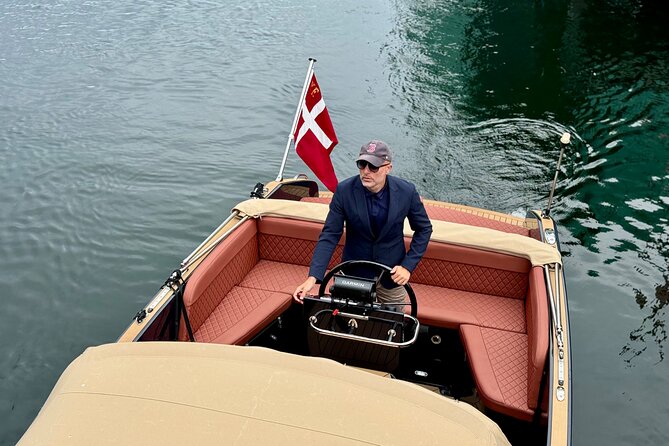
- Captain Denis makes the difference: He explains Copenhagen’s sights in a friendly, conversational way and adjusts the trip to suit the group.
- The boat reaches more than the central canals: You can see Christiania, Holmen, Reffen, Trekroner Fort, Nordhavn, The Little Mermaid, and the main royal sights.
- A private boat changes the mood: You get a quieter, more comfortable ride than on a large public canal cruise.
- Three hours is a strong middle choice: Shorter trips can cover central highlights, while longer bookings allow time for outer harbor sights.
- Food and drinks can add comfort: Previous outings included wine, snacks, and ordered food, though the available arrangements should be confirmed before booking.
- Weather matters: The experience may be canceled in poor weather, but your booking cannot normally be changed or refunded by choice.
Starting at the Old Customs House
The meeting point is Havnegade 44, close to the central harbor. That puts you near the Old Customs House, Det Gamle Toldhus, a fitting place to begin a city tour built around Copenhagen’s maritime past.
Built in 1734, the Baroque customs house once handled ships arriving from across Europe. Goods such as rum, timber, and silk passed through the port, along with news and new ideas. As the boat moves away, you are not simply looking at an old building. You are following the same water route that made Copenhagen an important trading city.
That sense of connection is one of the boat tour’s strengths. From street level, Copenhagen can feel like a collection of separate neighborhoods. From the harbor, the pieces line up. Trade, naval power, royal life, modern design, and everyday houseboat living all share the same water.
More boats from Copenhagen:
- Copenhagen: Hop-On Hop-Off Bus Tour with Boat Tour Option
★ 3.9 · 4,122 reviews - Social Sailing – Copenhagen Canal Tour – Captain’s Favorite
★ 5.0 · 1,610 reviews - Copenhagen Bus and Boat ticket, Valid 48 Hours
★ 4.0 · 565 reviews
Nyhavn, the Playhouse, and Paper Island
Nyhavn is Copenhagen’s famous postcard, with brightly painted houses, old wooden ships, cafés, and cobbled quays. It began as a working harbor in 1673 and once had a rough reputation among sailors. Today it is much more polished, but the water-level view still lets you see why this canal became the city’s public face.
Hans Christian Andersen lived in three different Nyhavn houses. From the boat, you get a good angle on the façades without having to fight for a spot along the crowded promenade. Have your camera ready here, but do not expect a quiet canal. Nyhavn is popular for a reason.
Just beyond the colorful buildings, the Royal Danish Playhouse presents a sharp change in style. Opened in 2008, it uses oak, glass, and black steel in a design that reaches toward the harbor. Its wide wooden promenade is part of Copenhagen’s everyday public life, with people sitting near the water in warm weather.
The contrast is useful. In only a few minutes, you move from old merchant buildings to modern theater architecture. That is Copenhagen in miniature: historic, practical, and willing to try something new.
The route continues toward Papirøen, or Paper Island. The former warehouse district was once known for storing paper for the Danish press. It later became associated with Copenhagen Street Food, pop-up galleries, artists, and sunset drinks by the quay.
Much of the old food market area has been cleared for new construction, including the Opera Park. Still, the boat gives you a chance to understand the island’s larger story. Copenhagen repeatedly turns old industrial ground into places for food, design, housing, and public life.
Naval Copenhagen at Holmen
The old mast houses and the Cannonball Courtyard bring the harbor’s military past into view. The long timber buildings once held and shaped huge ship masts. Nearby, cannonballs remain lodged in brickwork from the British bombardment of Copenhagen in 1807.
This is a good example of why a private guide helps. The buildings are not flashy, and you could easily pass them without understanding their purpose. With context, they become evidence of two very different sides of the harbor: careful shipbuilding and sudden war.
Holmen continues that story with Torpedohallen, a former naval facility where torpedo boats once docked and trained. The industrial building has been repurposed for residential and creative use, while the nearby Long Boat Houses offer a softer view. These low wooden homes, some more than 150 years old, line the canal in painted reds, greens, and blues.
I like this part of the route because it feels less staged than the postcard sights. You see working harbor history, restored buildings, houseboats, and a quieter side of local life. It also gives the boat ride a pleasant change of pace.
Copenhill then adds one of Copenhagen’s boldest modern ideas. The building is a waste-to-energy plant with a public roof that includes a ski slope, walking route, climbing wall, and park space. From the water, you can see the green roof and the giant smokestack.
The point is not just novelty. The facility turns non-recyclable waste into electricity and district heating, then places a public recreation area on top. Copenhagen’s approach is practical and playful at the same time. It also makes for one of the tour’s most memorable photographs.
Christiania and the harbor’s counterculture
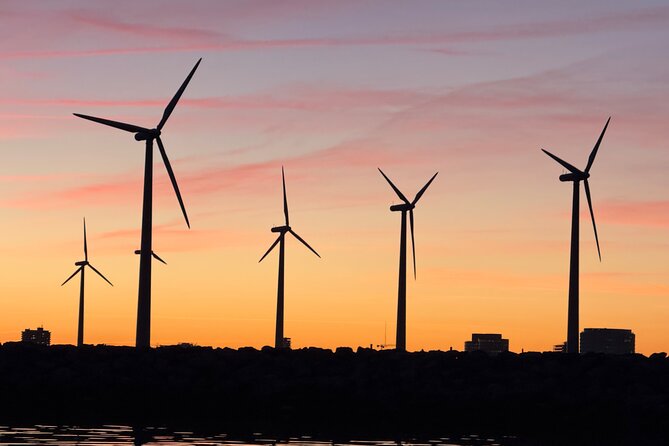
Christiania is one of the city’s most debated places. Founded in 1971 when squatters moved into an abandoned military site, it developed into a self-governing community with handmade homes, colorful art, gardens, and a long association with cannabis culture.
From the boat, you mainly see the canalside edge: houses on stilts, unusual structures, gardens, and sculptures made from scrap. That view is more peaceful than the area’s public reputation might suggest. Still, the boat does not give you a full walking tour of Christiania, so treat this section as an introduction rather than a substitute for visiting on foot.
The nearby naval museum ships add another layer. The frigate Peder Skram, torpedo boat Sehested, and submarine Sælen are preserved at Holmen. Seeing them from the water lets you judge their size and shape in the setting where naval vessels once operated.
The ships are especially useful for families and anyone interested in recent military history. They are real vessels, not replicas, and their presence gives the harbor a sense of purpose beyond sightseeing.
The Royal Pavilions and the Royal Yacht Dannebrog shift the mood again. The pavilions are used for royal arrivals and departures by sea. The Dannebrog, launched in 1931, remains in active service and functions as a floating royal residence during official visits and holidays.
The yacht may be moored when you pass, so the view can depend on the day. If it is there, it is one of the clearest reminders that Copenhagen’s royal traditions are still part of ordinary city life.
A few more Copenhagen outings worth comparing
- Copenhagen Card-Discover: 80+ Attractions & Public Transport
★ 4.6 · 5,351 reviews - Private Walking Grand Tour of Copenhagen
★ 5.0 · 3,953 reviews - From Copenhagen: Lund and Malmö 2-Country Tour
★ 4.7 · 3,807 reviews - Copenhagen Highlights Walking Tour
★ 5.0 · 2,324 reviews
The mast crane, powder road, and Reffen
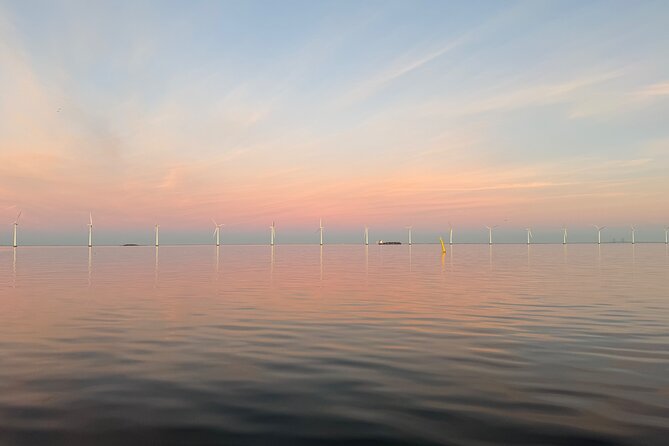
The Mastekranen, or Mast Crane, was built in 1749 to lift huge masts onto ships. Its wooden frame and pulley system required human effort, a detail that makes the old structure more impressive than its quiet appearance suggests.
The route also passes Krudtløbsvej, meaning Powder Run Road. Gunpowder once traveled along this route from the Royal Powder Magazine to ships and docks. The remaining low brick buildings and moss-covered roofs now sit beside houseboats and gardens, a remarkably peaceful setting for a place once associated with dangerous naval work.
Reffen brings the harbor into the present. The former shipyard now uses shipping containers for food stalls, bars, workshops, and art spaces. More than 50 food businesses and start-ups serve dishes ranging from bao buns and Brazilian barbecue to ice cream and craft beer.
If your timing allows a longer stop, Reffen can be a useful place to eat or have a drink. On a shorter cruise, you may only see the containers and waterfront activity from the boat. Either way, it shows how Copenhagen gives old industrial areas a new public purpose.
Trekroner Fort and the northern harbor
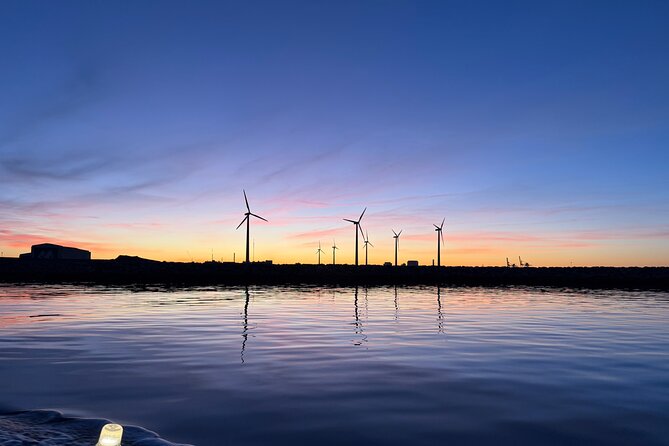
Farther out, Trekroner Fort sits at the entrance to Copenhagen’s harbor. The original defense began with a floating battery made from sunken ships and cannons. The current brick and stone fortification dates from 1818.
The fort helped defend the harbor during periods of conflict, including the British attacks and the two World Wars. Today its walls, gun openings, and grassy upper areas make it look more like a historic island than an active military site.
This is where the longer version of the tour earns its keep. A one-hour booking will not offer the same reach as a cruise that continues toward the harbor entrance and Nordhavn. Ask about the planned route when choosing your duration, since the advertised range is unusually broad, from about one hour to as long as 12.
Nordhavn shows Copenhagen’s current building plans. The former container port is being remade with housing, bicycle routes, harbor baths, rooftop gardens, and energy-conscious buildings. The UN City appears as a bright white complex with solar shades and seawater cooling systems.
Former grain silos have also been converted into apartments. From the water, you get a clear look at how a port can change without erasing every trace of its working past. It is a useful stop for anyone interested in urban planning and sustainable design.
The Little Mermaid and the royal waterfront
The Little Mermaid is small, modest, and often surrounded by people on shore. From the boat, you get a more natural view of the statue sitting on her rock and looking toward the sea.
Sculpted by Edvard Eriksen and unveiled in 1913, the statue was inspired by Hans Christian Andersen’s fairy tale. It has been painted, damaged, beheaded, and restored over the years, yet it remains Copenhagen’s most familiar symbol.
Do not expect a grand monument. The appeal is its scale and mood. Seen from the water, the mermaid feels connected to the story and the harbor rather than separated from them.
The Yellow Palace comes next, followed by Amalienborg, the working center of the Danish monarchy. Four nearly identical Rococo mansions form an octagonal square around a statue of King Frederik V. The Marble Church sits behind the palace, while the Opera House faces it across the water.
You might see Royal Life Guards in bearskin hats during the changing of the guard. The key word here is working. Amalienborg is not only a museum-like royal setting. It remains a royal residence and a place for official life.
Across the harbor, the Copenhagen Opera House is a striking counterpoint. Completed in 2005, it was designed by Henning Larsen and funded as a gift to the Danish state by shipping magnate Mærsk Mc-Kinney Møller. Its wide cantilevered roof reaches over the harbor like the bow of a ship.
From the boat, the Opera and Amalienborg appear to face one another. That view neatly links Denmark’s monarchy, shipping wealth, and cultural ambition.
Christianshavn and the city center
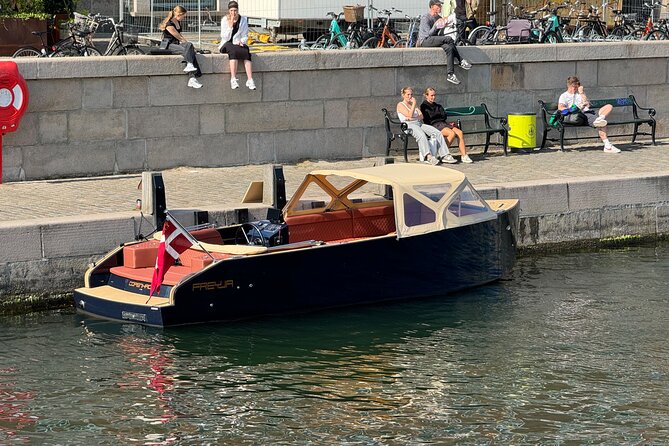
Christianshavn has a gentler feel than the open harbor. King Christian IV founded it in the early 1600s with Amsterdam as an influence, and the canals still pass colorful townhouses, houseboats, balconies, bicycles, and cafés.
I enjoy this part of the cruise because the view is close and human. The buildings lean toward the water, and the narrow canal makes the city feel smaller. It is a fine place to slow down after the larger sights.
The Church of Our Saviour rises above the neighborhood with its golden external spiral staircase. Completed in 1695, the church is known for the roughly 400 steps that lead to an open-air viewpoint. The famous story that the architect died after noticing the spiral turned the wrong way is a legend, not established fact.
The boat will not replace the climb, but it gives you the best way to appreciate the tower’s unusual shape from below.
Cirkelbroen, designed by Olafur Eliasson and opened in 2015, uses linked circular platforms and tall masts. The bridge encourages people to slow down and change direction rather than cross in a straight line.
The Black Diamond, the modern wing of Denmark’s Royal Library, offers a different kind of drama. Its dark glass reflects the harbor, while the interior holds manuscripts and rare books. From the water, the building looks like a slice of black stone or an open book.
Frederiksholms Kanal then carries you into a quieter stretch near Kongens Bryghus, the King’s Brewery, founded by Christian IV in 1608. The Lapidarium of Kings now occupies the former brewery buildings, displaying royal stone sculptures. Nearby, the old lighthouse ship adds another small piece of working maritime history.
Gammel Strand, Christiansborg, and Børsen
Ved Stranden and Gammel Strand mark one of Copenhagen’s oldest waterfront areas. Gammel Strand means Old Beach, recalling the medieval shoreline where fisherwomen sold eels and flounder.
Today, colorful 18th-century buildings and cafés line the canal. You may also catch views toward the Thorvaldsen Museum and Christiansborg’s dome. This final central stretch brings the city’s early fishing life, art, politics, and modern café culture together.
The equestrian statue of Bishop Absalon at Højbro Plads recalls the man credited with founding Copenhagen in 1167. He built the first fortress on Slotsholmen, the island at the center of the city’s political life.
Christiansborg Palace now houses Denmark’s Parliament, Supreme Court, and Prime Minister’s Office, along with royal rooms used for ceremonies and receptions. That combination makes it one of the most useful sights to understand from the water. Denmark’s government and monarchy occupy the same historic setting, with medieval foundations beneath a modern democracy.
The last major sight is Børsen, the former stock exchange. Christian IV commissioned the building in the 1620s, and its famous dragon-tail spire once marked Copenhagen’s commercial ambitions.
A fire in April 2024 destroyed much of Børsen, including the spire. Reconstruction is under way, but the damage means your view will not match older photographs. Even so, the building remains an important symbol of Danish resilience and trade.
What the $484.89 price really buys
The cost is per group of up to eight, not per person. For eight people, it works out to about $61 per person. For four, it is about $121 each. For two, the same private experience becomes a major splurge.
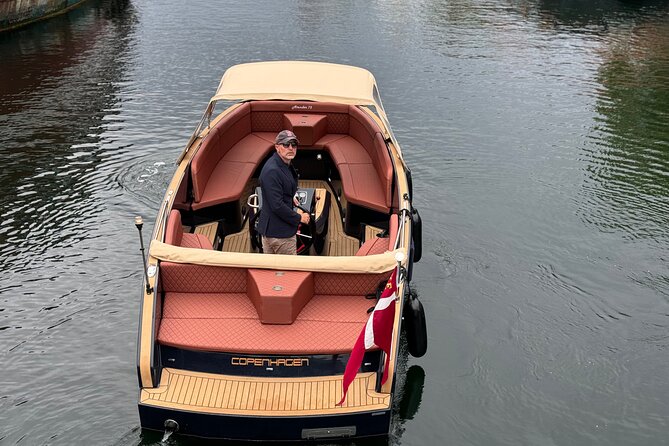
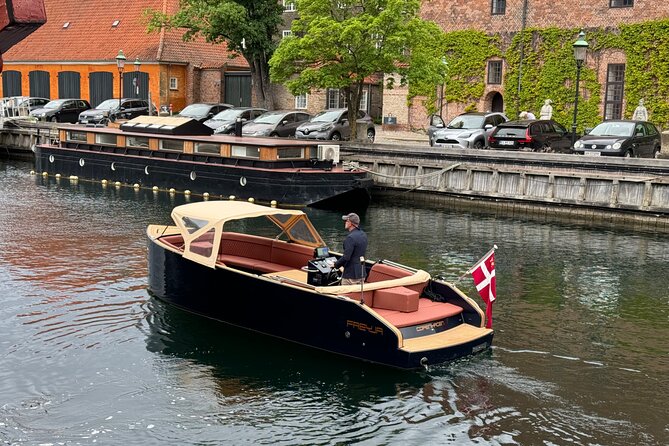
That price buys privacy, space, a flexible route, and a guide who can speak directly with your group. Several outings included wine, snacks, or ordered food, and the boat was described as clean, comfortable, and well kept. One family went out despite rain and stayed dry with warm wraps and a cushioned bench.
The strongest praise centers on Captain Denis. He is described as friendly, funny, easy to talk with, and able to explain both landmarks and Danish daily life. That matters more than a memorized list of dates. You get the chance to ask why a place matters and shift the conversation toward your own interests.
A public canal boat remains cheaper and perfectly suitable if you only want a quick overview. I would choose FREYJA for a family group, a celebration, a small group of friends, or anyone who dislikes canned sightseeing.
Timing, weather, and who should book
A three-hour outing is a sensible choice for most people. It gives you enough time for central canals, Christianshavn, Holmen, the royal waterfront, and several outer harbor sights without turning the trip into an all-day commitment.
A one-hour booking is better for a compact look at central Copenhagen. Longer bookings make more sense if you want Trekroner Fort, Reffen, Nordhavn, and the Little Mermaid in one outing. Confirm the intended route before you pay, since the duration can range from one to 12 hours.
The tour is offered in English, uses a mobile ticket, and returns to Havnegade 44. Service animals are allowed, public transportation is nearby, and most people can participate. If you have mobility or health concerns, contact the operator in advance for advice.
The booking is non-refundable and cannot normally be amended. Since the boat requires good weather, keep your schedule flexible if possible. If the operator cancels because of poor conditions, you can receive a different date or a full refund.
Should you book the FREYJA private boat tour?
Book it if you want Copenhagen to feel personal rather than packaged. The most convincing reasons are Captain Denis, the comfortable small boat, and the wide route that links old canals with naval sites, royal buildings, Christiania, modern architecture, and the open harbor.
Skip it if you are traveling alone or as a couple on a tight budget, or if rain is likely and your plans cannot move. For a group of six to eight, though, the price becomes easier to justify, and a three-hour private cruise can be one of the most efficient and enjoyable ways to get your bearings on Copenhagen’s waterways.
FAQ
Where does the private boat tour start?
The meeting point is Havnegade 44, 1058 København, Denmark.
Where does the tour end?
The activity ends back at the meeting point.
How long does the cruise last?
The listed duration ranges from approximately one hour to 12 hours. A three-hour trip is a commonly chosen middle option.
How many people can join?
The private boat can take up to eight people, and only your group participates.
What language is offered?
The tour is offered in English.
Is the tour available in poor weather?
The experience requires good weather. If the operator cancels because of poor conditions, you will be offered another date or a full refund.
Can I cancel the booking for a refund?
No. The experience is non-refundable and cannot normally be changed for any reason. The weather-related exception applies when the operator cancels.
Are service animals allowed?
Yes, service animals are allowed. Public transportation is also nearby, and most people can participate. If you have specific mobility or health questions, contact the operator before booking.
Newest around Copenhagen
- WWII Copenhagen Nyhavn and War Museum Private Walking Tour★ 5.0 · 2 reviews
- Half Day Exploration of Helsingør and Kronborg★ 3.5 · 3 reviews
- Helsingør Castle and Historic City Self-Guided Walking Tour★ 4.0 · 4 reviews
- Full-Day Tour; Castle, Palace & Cathedral, Winter(JAN-MAR)★ 5.0 · 11 reviews
- walking tour – Copenhagen and Christiansborg 3 hours★ 4.0 · 7 reviews
- Copenhagen Walking Tour with Food Testing (smorrebrod dish & snap)★ 4.5 · 10 reviews
- The Philosopher’s Last Walk: An audio tour on the life of Søren Kierkegaard★ 4.5 · 5 reviews
- The Forgotten Giants Private Tour★ 5.0 · 3 reviews
Cruises & Boat Tours, compared.
Hop-On Hop-Off Bus Tour with Boat Tour Option
Read our review →
Social Sailing – Copenhagen Canal Tour – Captain’s Favorite
Read our review →
1, 2 or 3-Hour Boat Rental (No License Required)
Read our review →
Private Copenhagen Boat cruise in Scandinavian mahogany boat
Read our review →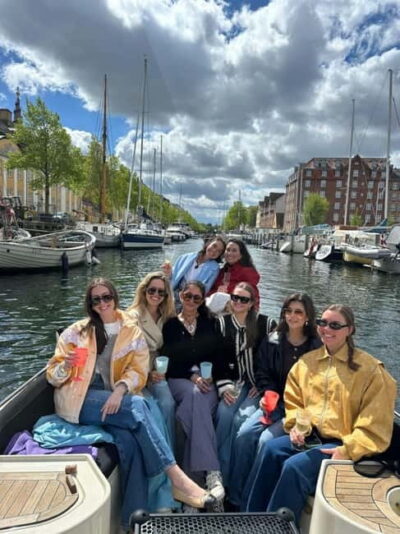
Browse the lists this tour appears in