Review · COPENHAGEN TOURS
Copenhagen: The Royal Danish Theatre Guided Tour
The theater has more secrets than curtains. The Royal Danish Theatre tour gives you access to Copenhagen’s Old Stage, where gold, velvet, and crystal chandeliers frame a working cultural landmark. I especially like the chance to see both the grand public rooms and the practical backstage spaces, including the tailor’s room. I also like that the tour reaches H.M. King Frederik 10.’s private salon, a detail that adds a royal twist to the visit.
The main drawback is access: the tour is not suitable for children under seven, wheelchair users, or people with mobility impairments. You also need to leave strollers, food, drinks, luggage, and large bags behind. Guides named Hilary and Hillary have received especially warm praise, so the quality of the English presentation appears to be one of the experience’s strongest points.
In This Review
- Key points to know before you go
- Why the Old Stage is worth your time
- Entering through the Kgs. Nytorv foyer
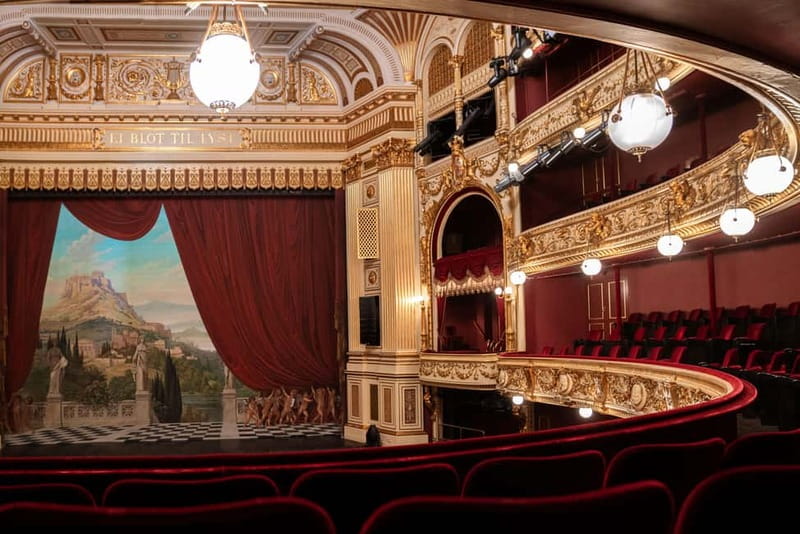
- The spectacular hall and Balcony Foyer
- Behind the curtain: tailoring and scenography
- H.M. King Frederik 10.’s private salon
- The theater’s place in Danish culture
- Is $24 a fair price?
- Practical details that affect your visit
- Who should book the Old Stage tour?
- Should you book this Copenhagen theater tour?
- FAQ
- Where does the Royal Danish Theatre tour meet?
- How early should I arrive?
- How long does the tour last?
- What language is the tour in?
- What does the ticket include?
- What rooms and areas can I see?
- Is the tour suitable for young children?
- Can wheelchair users join the tour?
- Can I cancel my booking?
Key points to know before you go
- The 1874 Old Stage: Learn how this historic theater became a setting for major Danish ballet, opera, and theater.
- Royal rooms and public grandeur: See the spectacular hall, Balcony Foyer, and H.M. King Frederik 10.’s private salon.
- Backstage craft: Visit the big tailor’s room and hear how costumes and stage scenery help create performances.
- A 75-minute English tour: The pace gives you time to look closely without taking up half your day.
- A central meeting point: Meet in the large foyer by the main entrance at Kgs. Nytorv, just around the corner from the official address.
- Good flexibility: You can cancel up to 24 hours ahead for a full refund and reserve without paying immediately.
Why the Old Stage is worth your time
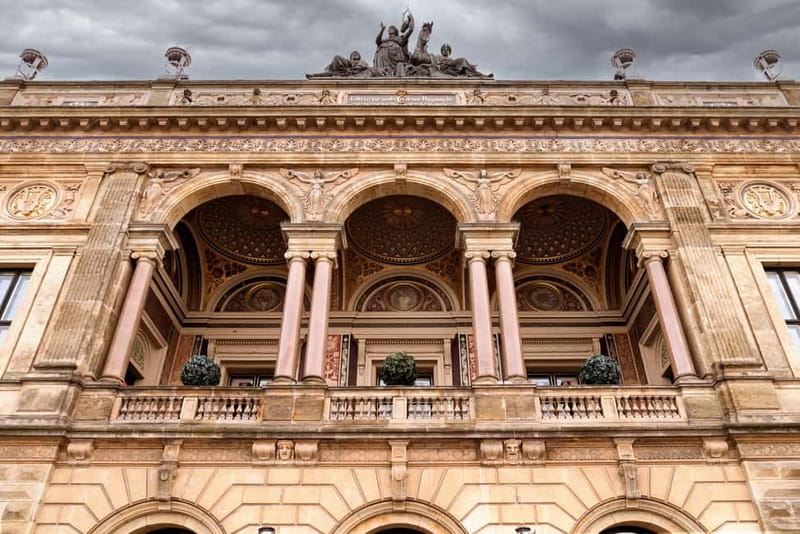
The Royal Danish Theatre is not simply a pretty hall where you take a quick look, snap a photo, and leave. The tour shows you how the building functions as a theater and explains the people and work required to put a performance in front of an audience.
The Old Stage was inaugurated in 1874. That date matters because the building carries both ceremony and daily theatrical work. You see the polished rooms associated with an important national institution, but you also hear about staging, costumes, and scenography, the visual design that shapes the world onstage.
I like this mix. A standard theater visit can leave you admiring the ceiling while wondering what happens beyond the curtain. Here, the tour moves between public spaces and working areas, giving you a better sense of how performances are built.
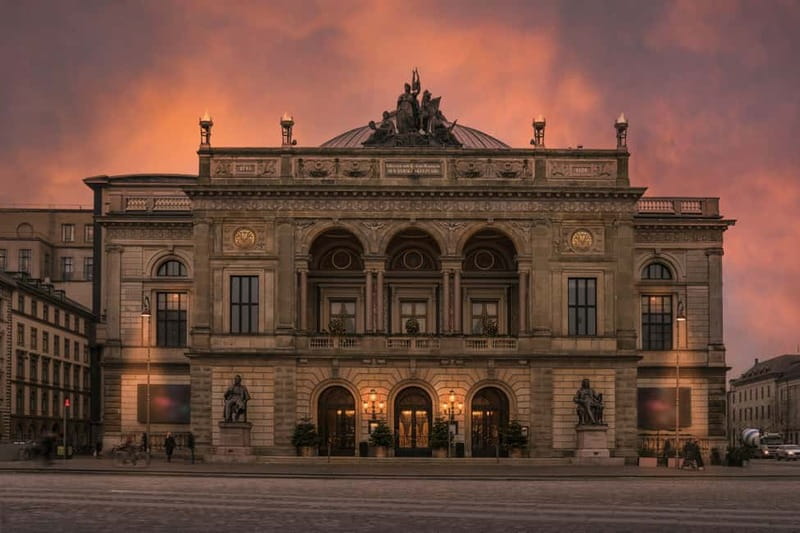
The setting at Kgs. Nytorv also makes the visit easy to fit into a day in central Copenhagen. The meeting point is in the large foyer by the main entrance. It is just around the corner from the official address, August Bournonvilles Passage 8, so arrive 15 minutes early and look for the foyer rather than relying only on the street address.
A few more Copenhagen outings worth comparing
- Copenhagen Card-Discover: 80+ Attractions & Public Transport
★ 4.6 · 5,351 reviews - Copenhagen: Hop-On Hop-Off Bus Tour with Boat Tour Option
★ 3.9 · 4,122 reviews - Private Walking Grand Tour of Copenhagen
★ 5.0 · 3,953 reviews
Entering through the Kgs. Nytorv foyer
The tour begins in the large foyer by the main entrance at Kgs. Nytorv. This is a useful starting place because the building makes an immediate impression before the guide has even begun the formal explanation.
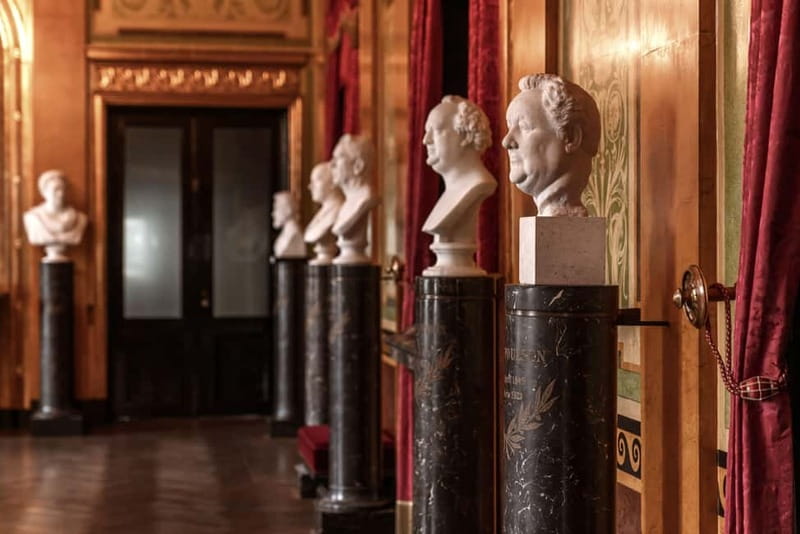
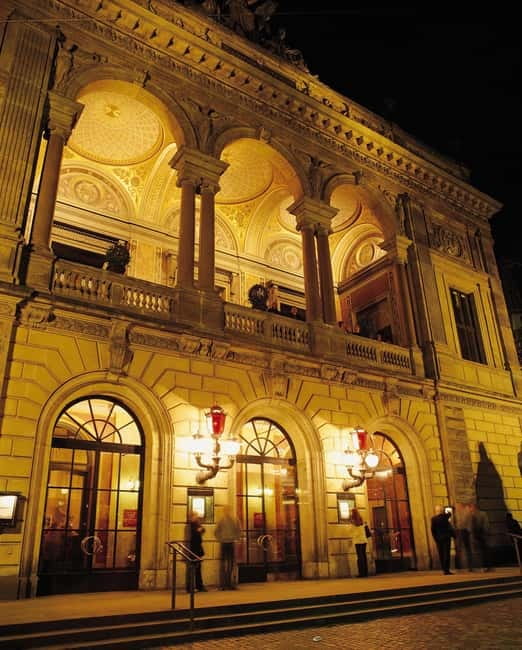
Expect an interior shaped by theatrical display: gold details, velvet, and crystal chandeliers. These materials are not small decorative touches. They tell you that the Old Stage was designed to make arrival part of the performance. Even before you reach the auditorium, the building sets a formal mood.
Your English-speaking guide leads the group from the foyer through the theater. The tour lasts 75 minutes, a sensible length for seeing several spaces without turning the visit into an endurance test. It is long enough for explanation, but short enough to fit around lunch, another museum, or an evening performance.
The guide’s role matters here. Hilary was praised for explaining details clearly and keeping the hour and 15 minutes moving at a good pace. Another highly rated guide was also named Hillary. The slightly different spellings appear in the available information, but the practical point is simple: the guide is a major part of the experience, and the feedback about the English delivery is consistently strong.
The spectacular hall and Balcony Foyer
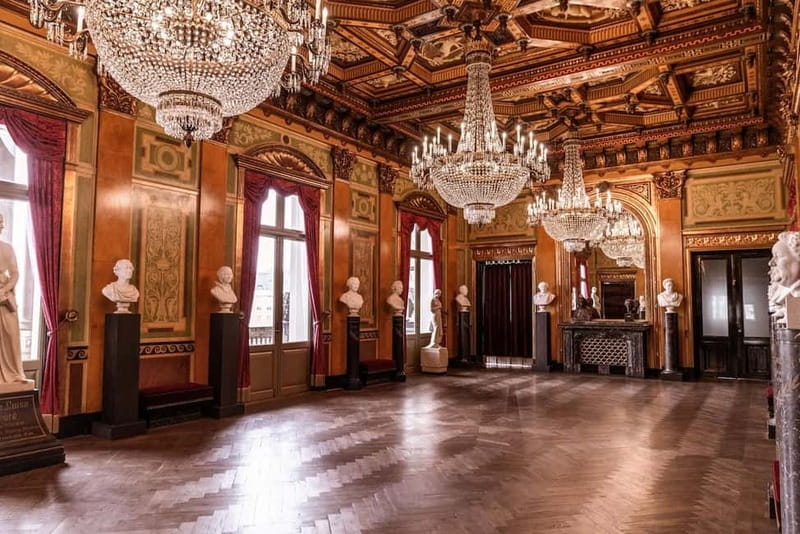
The hall is the visual centerpiece of the visit. You can expect the guide to explain the room’s place within the Old Stage and point out the architectural details that are easy to miss when you are seated for a performance.
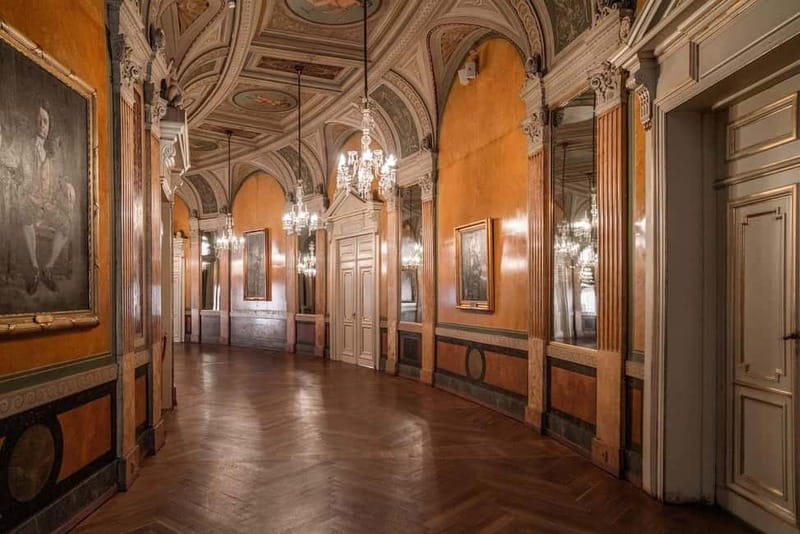
The Balcony Foyer adds another layer. It is not just a passageway to the upper level. Its design helps show how the theater was meant to be experienced as a complete social setting, with elegant spaces surrounding the main stage.
I like this part of the tour for two reasons. First, you see the building from an angle that a regular theater ticket may not provide. Second, the guide connects the rooms to the performances held there, including classical ballet, opera, and theater.
The auditorium and foyer are also the parts most likely to satisfy visitors who want a classic Copenhagen cultural stop. If your main goal is beautiful architecture, these rooms deliver the strongest visual reward. If you are more interested in the practical work of theater, stay alert for the transition to the backstage areas, where the tone changes from ceremony to production.
Behind the curtain: tailoring and scenography
The backstage portion gives the tour its practical edge. You visit the big tailor’s room and learn about the work involved in preparing costumes for performances.
That detail is valuable because costumes are often treated as decoration by the audience. In reality, they help define a character, period, movement style, and the overall look of a production. The tour gives you a clearer idea of how costume work fits into the larger process.
You also hear about staging and scenography. The supplied details do not promise that you will see a full production workshop in action, so I would not book this expecting a hands-on demonstration. Instead, think of this section as an explanation of the systems behind the curtain.
The contrast with the ornate hall is part of the fun. Out front, the theater is polished and ceremonial. Behind the scenes, the focus shifts to materials, preparation, and coordination. That contrast helps you understand why the building feels larger and more complex than it first appears.
A German visitor was particularly surprised by the size of the theater and the variety of spaces inside. That is a useful warning in the best sense: do not judge the visit by the foyer alone. The building opens up as the tour continues.
Somewhere else in Denmark, for a completely different day:
- From Copenhagen: Lund and Malmö 2-Country Tour
★ 4.7 · 3,807 reviews - Copenhagen Highlights Walking Tour
★ 5.0 · 2,324 reviews - Copenhagen: Highlights 3 Hour Bike Tour with a Local Guide
★ 4.8 · 2,312 reviews - Hamlet and Sweden Tour – Two Countries in one day !
★ 5.0 · 2,223 reviews
H.M. King Frederik 10.’s private salon
The royal salon gives the tour a detail you will not find in an ordinary theater walk-through. You are shown H.M. King Frederik 10.’s private salon, a room connected to the Danish monarchy and the theater’s official role.
This stop adds context without turning the entire tour into a royal palace visit. The main subject remains the Royal Danish Theatre, but the salon shows how national performance institutions and royal ceremony can share the same building.
I find this especially useful for visitors who want more than architecture. The room offers a glimpse into the theater’s ceremonial side, while the tailor’s room represents its working side. Together, they create a balanced picture of the Old Stage.
The exact amount of time spent in the salon will depend on the guide and the group, so do not expect an extensive royal residence tour. It is one part of a wider route that also includes the hall, Balcony Foyer, and backstage areas.
The theater’s place in Danish culture
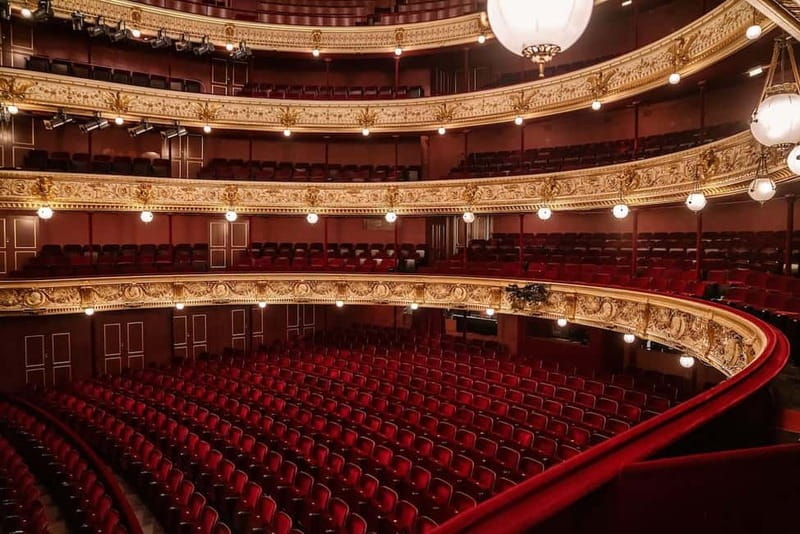
The guide explains the building’s history and the performances connected with it. Classical ballet, opera, and theater have all been presented on this stage, which has hosted some of Denmark’s major artistic achievements.
That background gives the rooms more meaning. Without it, the chandeliers are simply attractive, the velvet is simply luxurious, and the stage is simply large. With context, you begin to see the building as a place where Danish cultural life has been presented and preserved.
I also appreciate that the tour covers the work of staging performances, not only the finished result. A theater can look effortless from the audience, but the tour points toward the costumes, scenery, and backstage preparation required to make that appearance possible.
The experience is best for you if you enjoy cultural buildings, theater, opera, ballet, royal connections, or behind-the-scenes access. You do not need to be a theater expert. The route is designed to explain the building to a general English-speaking audience.
If you have no interest in architecture or performing arts, the tour may feel less rewarding. You will spend 75 minutes looking at rooms and hearing about production rather than watching a performance. That is an important distinction.
Is $24 a fair price?
At $24 per person, I consider the tour reasonably priced for a 75-minute guided visit to several parts of a major cultural building. Your ticket includes entrance to the Old Stage and the live English tour, so you are paying for access as well as interpretation.
The value is strongest if you would otherwise walk past the theater and see only its exterior. The hall, Balcony Foyer, backstage areas, tailor’s room, and royal salon give you a broad look at spaces that are not presented as part of a casual visit.
The price is less compelling if you only want a quick architectural photo stop. In that case, the 75-minute commitment may feel too long, especially if your Copenhagen schedule is packed.
I would also factor in the guide. Clear storytelling can turn a beautiful building into a memorable visit, and the strongest feedback centers on guides who explained the details in an engaging way. Hilary was singled out for making the 75 minutes pass quickly, which is exactly what you want from a guided tour.
The reserve-now, pay-later option adds useful flexibility. You can hold a place without paying immediately, and cancellation is free up to 24 hours before the tour. That is helpful when you are arranging several Copenhagen activities around changing weather or opening times.
Practical details that affect your visit
The tour is conducted in English. If you want Danish, you need to use The Royal Danish Theatre’s own website to find a Danish-language option.
Arrive 15 minutes early. The meeting point is in the large foyer by the main entrance at Kgs. Nytorv, not directly at the official address. This small difference could cause a rushed start if you wait outside August Bournonvilles Passage 8.
The theater does not allow baby strollers, food, drinks, luggage, or large bags on the tour. Pack light and plan ahead. Pets are not allowed, although assistance dogs are permitted.
The tour is not suitable for children under seven. It is also not suitable for people with mobility impairments or wheelchair users. These restrictions are important because the route includes several areas of a historic theater, and the available information does not promise step-free access or adapted facilities.
The experience lasts 75 minutes, but check the available starting times before booking. The exact schedule matters if you are trying to connect it with another timed activity.
Who should book the Old Stage tour?
I would recommend it to you if you want to understand how Copenhagen’s performing arts institutions work, not just admire a grand interior. It is a strong choice for adults, older children who meet the minimum age, architecture fans, classical music followers, and anyone who enjoys seeing rooms normally closed to the public.
It also suits a short city break. You get a focused cultural experience in just over an hour, with a central meeting point and no need to devote an entire morning or afternoon.
I would be more cautious if you have limited mobility, are traveling with a stroller, or are carrying luggage. The same is true if you are hoping to attend a live performance rather than take a guided tour. This experience explains the stage and the theater, but it does not include a ballet, opera, or play.
Should you book this Copenhagen theater tour?
Book it if you want a well-paced look at the Old Stage from several angles: the grand hall, Balcony Foyer, royal salon, backstage spaces, and tailor’s room. At $24, the combination of access and English guidance makes sense for anyone who values architecture, Danish culture, and the practical work behind a performance.
Skip it if your schedule is tight, you need wheelchair access, or you are looking for a show rather than a building tour. For the right visitor, though, this is a smart way to see why the Royal Danish Theatre is more than a beautiful facade.
FAQ
Where does the Royal Danish Theatre tour meet?
The meeting point is in the large foyer by the main entrance at Kgs. Nytorv. It is just around the corner from the official address, August Bournonvilles Passage 8.
How early should I arrive?
You should arrive 15 minutes before the tour begins.
How long does the tour last?
The guided tour lasts 75 minutes.
What language is the tour in?
The tour is conducted in English. For a Danish-language tour, visit The Royal Danish Theatre’s website.
What does the ticket include?
The ticket includes entrance to The Old Stage and the guided tour.
What rooms and areas can I see?
The route includes the impressive hall, Balcony Foyer, backstage areas, the big tailor’s room, and H.M. King Frederik 10.’s private salon.
Is the tour suitable for young children?
No. The tour is not suitable for children under seven.
Can wheelchair users join the tour?
No. The tour is not suitable for wheelchair users or people with mobility impairments.
Can I cancel my booking?
Yes. You can cancel up to 24 hours in advance for a full refund. You can also reserve now and pay later.
Newest around Copenhagen
- WWII Copenhagen Nyhavn and War Museum Private Walking Tour★ 5.0 · 2 reviews
- Half Day Exploration of Helsingør and Kronborg★ 3.5 · 3 reviews
- Helsingør Castle and Historic City Self-Guided Walking Tour★ 4.0 · 4 reviews
- Full-Day Tour; Castle, Palace & Cathedral, Winter(JAN-MAR)★ 5.0 · 11 reviews
- walking tour – Copenhagen and Christiansborg 3 hours★ 4.0 · 7 reviews
- Copenhagen Walking Tour with Food Testing (smorrebrod dish & snap)★ 4.5 · 10 reviews
- The Philosopher’s Last Walk: An audio tour on the life of Søren Kierkegaard★ 4.5 · 5 reviews
- The Forgotten Giants Private Tour★ 5.0 · 3 reviews
Copenhagen Tours, compared.

Copenhagen Card-Discover: 80+ Attractions & Public Transport
Read our review →
Hop-On Hop-Off Bus Tour with Boat Tour Option
Read our review →
Highlights 3 Hour Bike Tour with a Local Guide
Read our review →
Hamlet and Sweden Tour – Two Countries in one day !
Read our review →