Review · COPENHAGEN TOURS
Copenhagen: The Opera House Guided Tour
A backstage tour with real theatrical muscle. Copenhagen’s Royal Danish Opera House gives you far more than a pretty auditorium: you see Olafur Eliasson’s glowing sculptures, the maple-clad Main Stage, gilded ceiling, moving stage fields, and the machinery that makes complex performances possible. I especially like the dramatic foyer light and the chance to see the backstage systems that turn scenery into theatrical illusion. The $24 price is fair for a 75-minute visit, though the tour may feel too technical for very young children.
The main drawback is the fixed English format. If you prefer Danish, you need to book through the Royal Danish Theatre directly. You also cannot bring food, drinks, luggage, large bags, pets, or baby strollers inside, so plan your visit with light baggage.
The tour is a good fit if you care about design, architecture, opera, or the practical work behind a production. It is wheelchair accessible, but children under seven are not recommended. Arrive 15 minutes early because the meeting point is around the corner from the official address, in the lobby by the harbour entrance.
In This Review
- Key points at a glance
- Why the Royal Danish Opera House is worth your time
- The foyer, where light does most of the talking
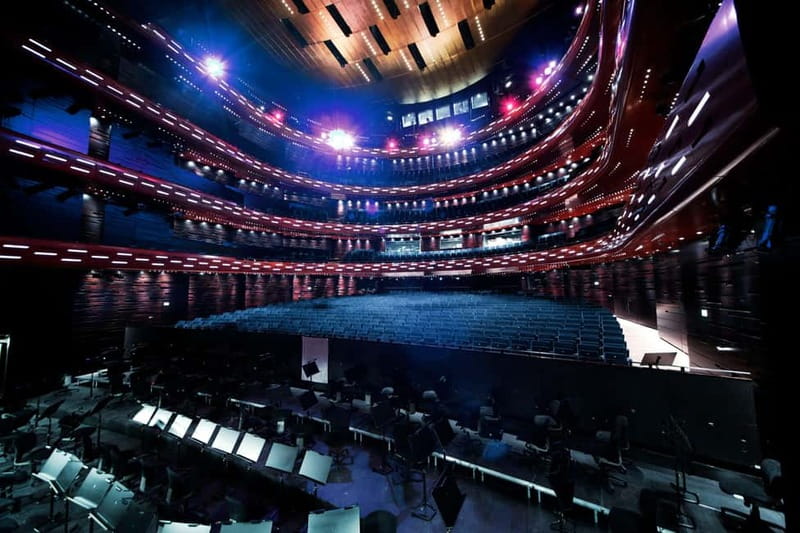
- Inside the auditorium: gold, wood, and controlled atmosphere
- Behind the scenes with movable stage fields
- Staging, costumes, and scenography explained
- What the 75-minute schedule feels like
- Price, practical restrictions, and access
- Who will enjoy this Opera House tour most
- Should you book the Copenhagen Opera House tour?
- FAQ
- How long is the Copenhagen Opera House guided tour?
- What language is the tour conducted in?
- Where is the meeting point?
- How early should I arrive?
- Is the Opera House tour wheelchair accessible?
- Can I bring a baby stroller?
- Are children under seven welcome?
- Can I cancel the booking for a refund?
Key points at a glance
- Olafur Eliasson’s light sculptures turn the foyer into the tour’s first major attraction.
- The glossy maple shell around the Main Stage gives the entrance hall a warm, polished look.
- The gilded auditorium ceiling and glowing woodwork reveal the Opera House at its most theatrical.
- Movable stage fields show how gigantic scenery can be shifted during productions.
- The 75-minute English tour covers staging, costumes, scenography, and technical effects.
- Wheelchair access and flexible booking terms make the visit easy to fit into a Copenhagen schedule.
Why the Royal Danish Opera House is worth your time
Copenhagen has plenty of grand buildings, but this Opera House is interesting for a different reason. It brings architecture and theatre technology together in one visit. You are not simply looking at a finished performance space. You are learning how the building makes performances possible.
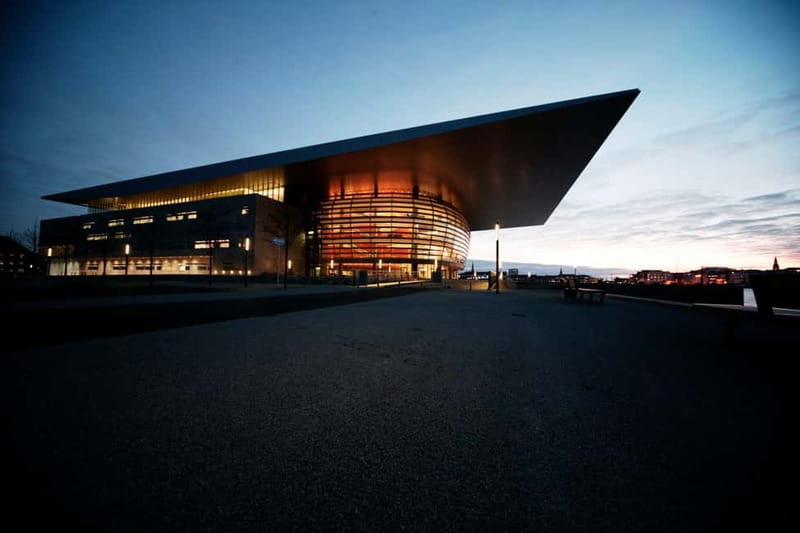
The Royal Danish Opera House was given to the Danish people by shipowner Mærsk Mc-Kinney Møller. That fact adds useful context as you walk through the building. The Opera House is both a national cultural venue and a working theatre, so the tour connects public design with the less visible labor of putting on a show.
At $24 per person, this is not an all-day attraction. It is a focused visit lasting 75 minutes. I consider the price reasonable because you see several distinct parts of the building, including spaces that ordinary ticket holders may not access during a performance.
The strongest appeal is variety. You begin with bright, open public architecture, move into the auditorium, and then go behind the scenes. Each section answers a different question: How should a major theatre welcome its audience? How does the auditorium create atmosphere? How can a stage handle enormous scenery?
A few more Copenhagen outings worth comparing
- Copenhagen Card-Discover: 80+ Attractions & Public Transport
★ 4.6 · 5,351 reviews - Copenhagen: Hop-On Hop-Off Bus Tour with Boat Tour Option
★ 3.9 · 4,122 reviews - Private Walking Grand Tour of Copenhagen
★ 5.0 · 3,953 reviews
The foyer, where light does most of the talking
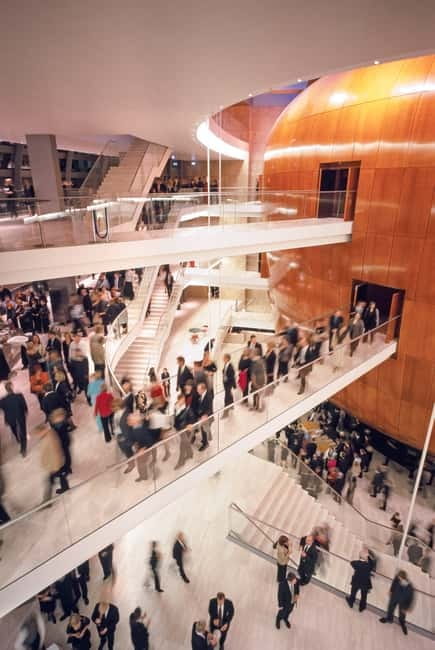
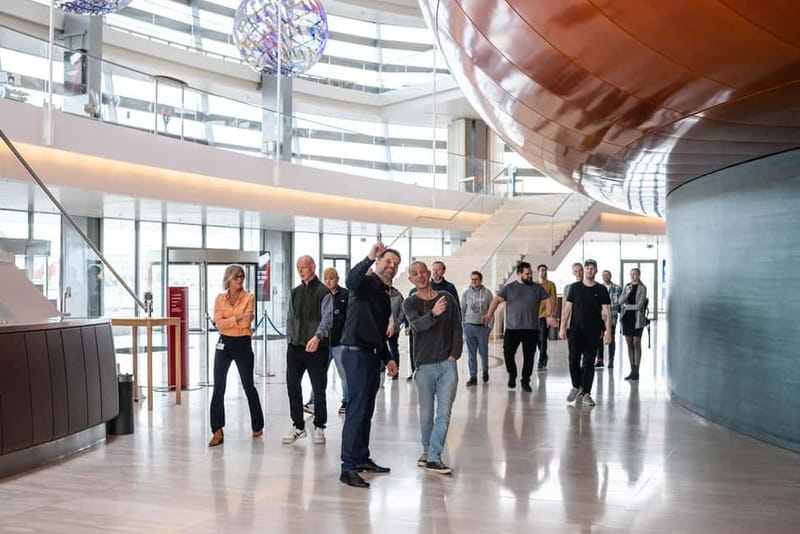
Meet your guide in the large foyer by the main entrance. This first space makes an immediate impression through light, scale, and polished materials. It is a useful opening because you can take in the building as an architectural project before the guide starts explaining the machinery behind it.
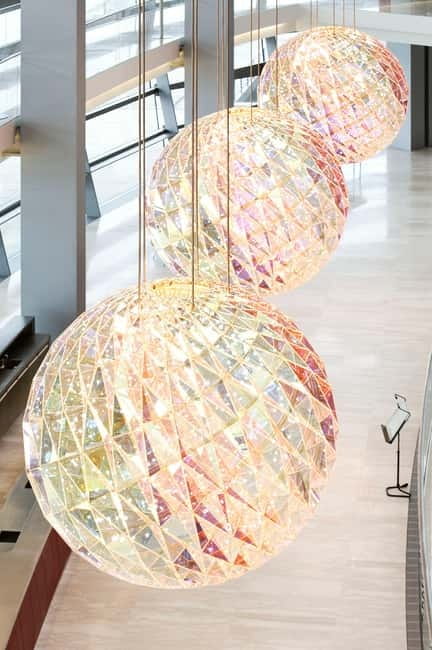
Olafur Eliasson’s world-renowned light sculptures are a major reason to pay attention here. The sculptures are not a minor decoration tucked into a corridor. They help shape the mood of the foyer and give the entrance its distinctive visual character.
The light can feel overwhelming, in a good way. If you prefer quiet, restrained interiors, this may seem intense at first. If you enjoy modern design, the foyer gives you plenty to look at before the more technical parts of the tour begin.
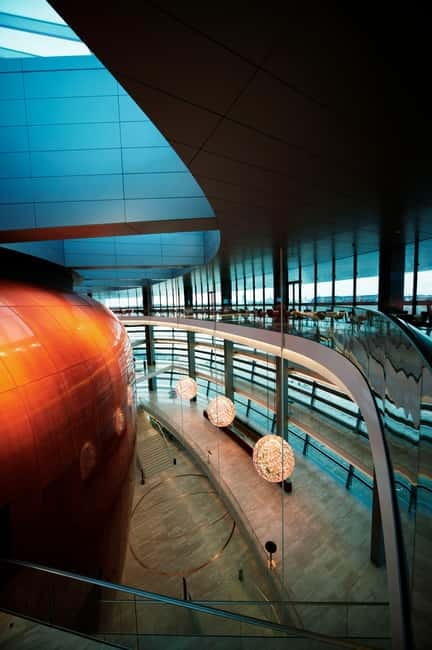
You will also see the glossy maple shell around the Main Stage. The warm wood surface balances the brighter light sculptures and keeps the space from feeling cold or purely industrial. I like this contrast because it shows how the Opera House uses both modern art and traditional theatre materials to guide your attention.
Take a moment to look up and around rather than rushing after the group. The foyer is one of the easiest areas to appreciate at your own pace, and its light changes the way the maple shell appears from different angles.
Inside the auditorium: gold, wood, and controlled atmosphere
From the foyer, the guide takes you into the auditorium. Here, the tone changes. The foyer is bright and open, while the hall is designed to focus attention toward the performance area.
The gilded ceiling is one of the clearest visual highlights. It gives the auditorium a formal, almost ceremonial quality. The glowing woodwork adds warmth and keeps the room from becoming all glitter and hard surfaces.
This is the point where the tour works well for people who may not follow opera closely. You do not need to know a particular production or composer to appreciate how the room is built to support theatre. The guide explains the setting and atmosphere, helping you see the auditorium as a tool for performance rather than only as an impressive room.
The auditorium section is also a good pause between the artistic foyer and the working backstage areas. You get the polished public face of the Opera House before seeing the systems that audiences normally never notice.
A possible limitation is that the experience depends on the guide’s explanation. Without the commentary, you would still see a handsome auditorium, but much of the value comes from understanding how the design, lighting, woodwork, and ceiling work together. Pay attention here if you want more than photographs.
Behind the scenes with movable stage fields
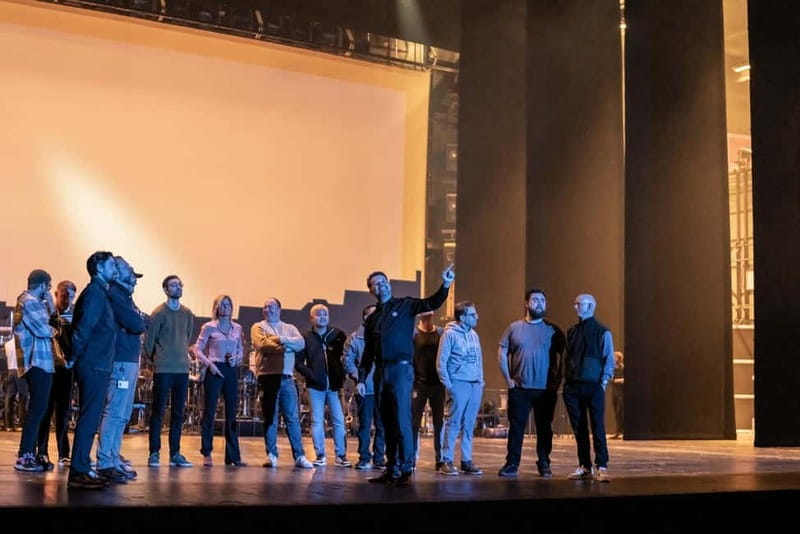
The backstage portion is the tour’s most unusual feature. You see movable stage fields that allow gigantic and complex scenery to be shifted. This is where the building stops looking like a grand cultural monument and starts looking like a large working machine.
The concept is simple to describe but difficult to carry out. Productions may require several large scenic elements, and those pieces must be moved into place with precision. The Opera House uses high-tech solutions and movable stage fields to make those changes possible.
This matters because stage magic often depends on what the audience never sees. A set can appear to change instantly, yet the process requires carefully planned movement, storage, and coordination. The tour gives you a practical sense of that hidden work.
I found the backstage focus especially valuable because it avoids treating theatre as only a visual art. Scenography, staging, technical movement, and timing all shape what appears onstage. If you enjoy engineering, design, or the mechanics of live events, this part may be the highlight.
The setting may feel less glamorous than the foyer or auditorium. That is part of the point. You are seeing the functional side of the Opera House, where space, equipment, and production needs have to work together. Do not expect a theatrical show during this section. Expect an explanation of how the show can happen at all.
Somewhere else in Denmark, for a completely different day:
- From Copenhagen: Lund and Malmö 2-Country Tour
★ 4.7 · 3,807 reviews - Copenhagen Highlights Walking Tour
★ 5.0 · 2,324 reviews - Copenhagen: Highlights 3 Hour Bike Tour with a Local Guide
★ 4.8 · 2,312 reviews - Hamlet and Sweden Tour – Two Countries in one day !
★ 5.0 · 2,223 reviews
Staging, costumes, and scenography explained
The tour also covers the work involved in staging performances, costumes, and scenography. These subjects help fill in the creative gap between an idea and a finished production.
Staging concerns how performers, scenery, and action are arranged. Costumes help define the visual world of a production. Scenography brings together the design of the stage environment, including scenery and the way the performance space is presented.
The value here is practical. You get a broader view of theatre production rather than a narrow architectural tour. The guide’s job is not only to point out beautiful rooms but also to explain the teams and systems needed to make performances work.
The English-language format is important. The tour is conducted in English, so you should be comfortable following spoken explanations about theatre work and technical systems. A Danish-language tour is available through the Royal Danish Theatre website, but it is a separate option.
The guide was praised for being informative, and that quality matters most in the backstage section. A guide who explains why the equipment exists can turn a quick look at stage machinery into a clear lesson in theatre production. You should expect the information to be central to the experience, not just a short walk through the building.
What the 75-minute schedule feels like
Seventy-five minutes is a useful length for this visit. It gives the guide time to cover the foyer, auditorium, and backstage areas without turning the tour into a half-day commitment.
You will probably want to arrive early rather than cutting it close. The meeting spot is in the lobby at the main entrance out to the harbour, just around the corner from Ekvipagemestervej 10. Arriving 15 minutes ahead gives you time to find the correct entrance and join the group without a rushed start.
The tour has a clear progression:
- You meet the guide in the foyer.
- You look at the light sculptures and maple shell around the Main Stage.
- You enter the auditorium to see the gilded ceiling and woodwork.
- You go behind the scenes to learn about movable stage fields and technical effects.
- You finish with wider discussion of staging, costumes, and scenography.
This order makes sense. It begins with what you can see immediately, then moves toward the hidden work that supports it. You are given the visual impression first and the technical explanation afterward.
The tour is guided in English and includes the Opera House entrance and guided commentary. It is not a performance ticket, and you should not expect to see a full opera or rehearsal unless specifically stated elsewhere. The focus is the building and its production systems.
Price, practical restrictions, and access
At $24, the tour offers good value for anyone who would otherwise spend time admiring the Opera House only from outside. You see the foyer and auditorium, but the real added value comes from the backstage access and explanation of stage technology.
The price is less compelling if you are interested only in modern architecture and do not care about theatre production. In that case, the foyer and auditorium may be the main attractions, and 75 minutes could feel longer than necessary. For anyone interested in how live performances are built, the backstage section makes the cost easier to justify.
The Opera House is wheelchair accessible. That is useful for visitors who want a formal cultural tour without giving up access to the working areas, although the supplied information does not specify every route or facility. If you have detailed mobility needs, confirm the route before booking.
Baby strollers are not allowed. Food and drinks are also prohibited, as are luggage and large bags. Pets cannot enter, although assistance dogs are allowed. These rules make it wise to visit after leaving bulky items elsewhere and to avoid arriving with a full daypack.
Children under seven are not recommended. The subject matter involves architecture, machinery, staging, costumes, and scenography, so older children and teenagers with an interest in theatre may get much more from it.
The booking terms are useful if your schedule is uncertain. You can reserve now and pay later, and cancellation is free up to 24 hours in advance for a full refund. That flexibility matters in Copenhagen, where weather and changing plans can easily rearrange a day.
Who will enjoy this Opera House tour most
I would recommend this tour to several kinds of visitors:
- Architecture fans who want to see the building’s foyer, maple shell, auditorium, and decorative details.
- Opera and theatre followers who want to understand what happens before the curtain rises.
- Design students and creative professionals interested in light, wood, costumes, staging, and scenography.
- Families with older children who can follow a 75-minute guided explanation.
- Visitors with limited time who want a concentrated cultural activity rather than a full performance.
I would be more cautious about booking it for toddlers or preschool-age children. The tour is not recommended under age seven, and the information-heavy backstage section may not hold the attention of very young children.
It is also not the best choice if you want to experience an opera performance itself. This is a guided building and production tour. You see how the theatre works, but you are not buying a seat for a show.
Should you book the Copenhagen Opera House tour?
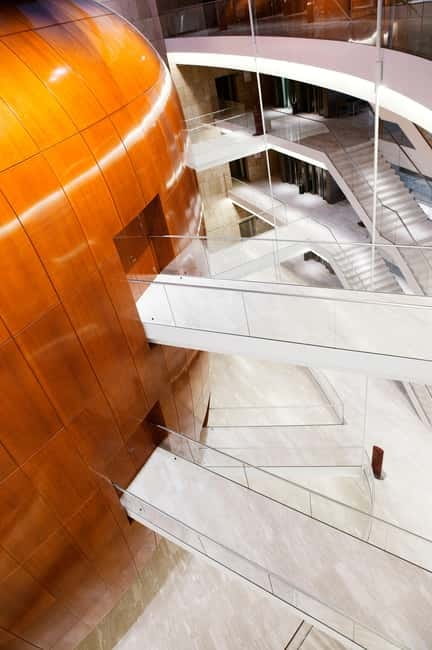
Book it if you want to see both sides of the Royal Danish Opera House: the polished public spaces and the technical areas that make performances possible. The light sculptures, maple shell, gilded ceiling, and glowing woodwork give you strong visual highlights, while the movable stage fields add substance beyond architecture.
Skip it if your interest is limited to a quick exterior photograph or if you are visiting with children under seven. Also think twice if a Danish-language explanation is important to you, since this tour is in English.
For most adults and older children who enjoy design, theatre, or behind-the-scenes work, $24 is a sensible price for 75 minutes. Arrive early, travel light, and give the backstage explanation your full attention. That is where this tour earns its place in a Copenhagen itinerary.
FAQ
How long is the Copenhagen Opera House guided tour?
The tour lasts 75 minutes.
What language is the tour conducted in?
The guided tour is conducted in English. A Danish-language tour is available through the Royal Danish Theatre website.
Where is the meeting point?
Meet in the lobby at the main entrance out to the harbour. It is just around the corner from the official address, Ekvipagemestervej 10.
How early should I arrive?
You should arrive 15 minutes before the tour begins.
Is the Opera House tour wheelchair accessible?
Yes, the activity is wheelchair accessible.
Can I bring a baby stroller?
No. Baby strollers are not allowed on the tour.
Are children under seven welcome?
The tour is not recommended for children under seven years old.
Can I cancel the booking for a refund?
Yes. You can cancel up to 24 hours in advance for a full refund.
Newest around Copenhagen
- WWII Copenhagen Nyhavn and War Museum Private Walking Tour★ 5.0 · 2 reviews
- Half Day Exploration of Helsingør and Kronborg★ 3.5 · 3 reviews
- Helsingør Castle and Historic City Self-Guided Walking Tour★ 4.0 · 4 reviews
- Full-Day Tour; Castle, Palace & Cathedral, Winter(JAN-MAR)★ 5.0 · 11 reviews
- walking tour – Copenhagen and Christiansborg 3 hours★ 4.0 · 7 reviews
- Copenhagen Walking Tour with Food Testing (smorrebrod dish & snap)★ 4.5 · 10 reviews
- The Philosopher’s Last Walk: An audio tour on the life of Søren Kierkegaard★ 4.5 · 5 reviews
- The Forgotten Giants Private Tour★ 5.0 · 3 reviews
Copenhagen Tours, compared.
Copenhagen Card-Discover: 80+ Attractions & Public Transport
Read our review →
Hop-On Hop-Off Bus Tour with Boat Tour Option
Read our review →
Highlights 3 Hour Bike Tour with a Local Guide
Read our review →
Hamlet and Sweden Tour – Two Countries in one day !
Read our review →