
Review · WALKING TOURS IN COPENHAGEN
Copenhagen – Private Walking Tour
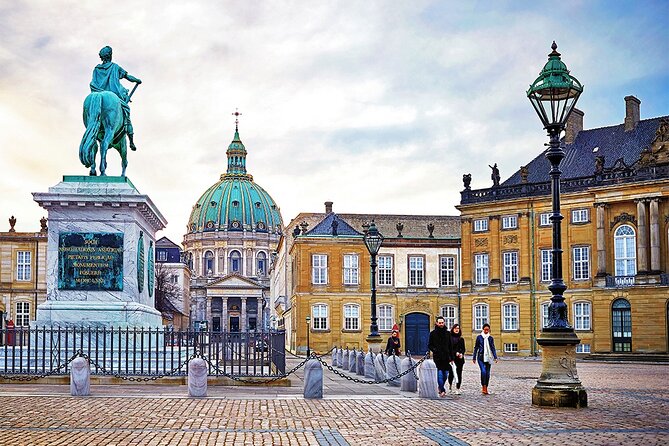
See Copenhagen on foot, one landmark at a time. This private two-hour walk links City Hall, Christiansborg, Børsen, Strøget, Kongens Nytorv, and Nyhavn, giving you a useful first look at the city without the fuss of a large group. I like the private format, since your group of up to 15 receives the guide’s attention, and I like the central route, which covers several of Copenhagen’s key sights in a short time.
The main drawback is the pace. The listed stops add up to roughly 95 minutes before walking time, so the tour leaves little room for long explanations, interior visits, or a relaxed coffee break. Entry fees are not included, and the published end point appears different from the stated final stop, so you should confirm the finish before booking.
In This Review
- Key points to know before booking
- What this Copenhagen walk is really designed to do
- City Hall and Rådhuspladsen: a useful place to begin
- The National Museum and Christiansborg from the outside
- Børsen and the old trading quarter
- Stork Fountain and Strøget: local meeting place, major shopping street
- Kongens Nytorv and Copenhagen’s grand urban scale
- Nyhavn: a colorful finish by the canal
- Is $470.45 good value for a private group?
- Pace, transport, and small practical warnings
- Who will get the most from this tour?
- Should you book the Copenhagen private walking tour?
- FAQ
- How long does the Copenhagen private walking tour last?
- How many people can join the private tour?
- What language is the tour offered in?
- What sights are included on the route?
- Are attraction entrance fees included?
- Where does the tour start?
- Where does the tour end?
- Can the booking be canceled or changed?
Key points to know before booking
- A private group of up to 15: You avoid sharing the guide with strangers, though the price is the same for a small group or a full group.
- A strong first-day route: City Hall, Christiansborg, Børsen, Strøget, Kongens Nytorv, and Nyhavn cover the central core.
- Two hours means an overview: You will see exteriors and hear context, but this is not a museum or palace tour.
- The price is $470.45 per group: That can be fair for a large party, but it is costly for one or two people.
- Guide quality matters: Valentina is specifically praised for making the visit memorable and well prepared.
- Check the end point: The sightseeing route finishes at Nyhavn, while the listed end address is Frihedsstøtten on Vesterbrogade.
What this Copenhagen walk is really designed to do
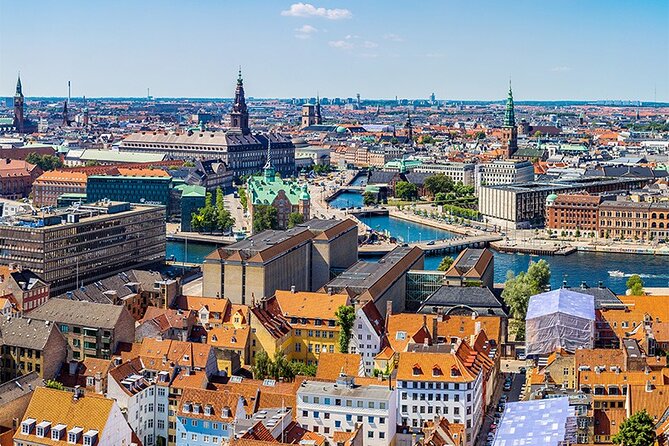
I would treat this experience as a city orientation, not a full cultural tour. In two hours, you move through Copenhagen’s political center, historic trading quarter, principal shopping street, grand square, and famous canal district.
That makes the route useful on your first day. You can get a sense of where the main sights sit, then return later to the places that deserve more time. The walk also gives you a guide to explain what you are seeing, which is more useful than simply snapping photos and moving on.
The private setup is the biggest practical advantage. A guide can adjust the explanation for your group, answer questions, and keep the pace suited to your party. You are not tied to the interests of a mixed crowd. Still, private does not mean slow. With so many stops packed into two hours, you should expect a brisk walk.
The tour is offered in English. It includes an official guide, but no attraction entry. That distinction matters here because several important buildings are seen from the outside only.
Other guided walks in Copenhagen:
- Private Walking Grand Tour of Copenhagen
★ 5.0 · 3,953 reviews - Copenhagen Highlights Walking Tour
★ 5.0 · 2,324 reviews - Politically Incorrect Private Highlights Walking Tour
★ 5.0 · 1,244 reviews
City Hall and Rådhuspladsen: a useful place to begin
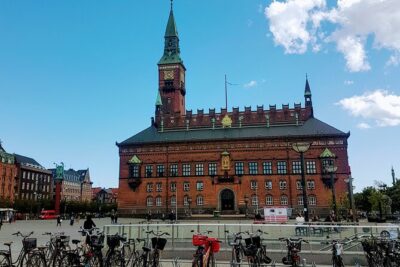
The tour starts at Copenhagen City Hall, the headquarters of the city council. The building dates from 1905 and is known for its detailed frontage and tall clock tower, one of Copenhagen’s highest buildings.
I like City Hall as a starting point because it places you in the middle of the city right away. You are not beginning in a quiet residential corner or at an outlying attraction. The 15-minute stop should give your guide enough time to explain the building and point out the main architectural details, though it is not enough for an interior visit.
From there, you cross Rådhuspladsen, or City Hall Square. The square provides a broad view of several notable buildings, including Politikens Hus and Industriens Hus. You also head toward Tivoli Gardens, the famous amusement park dating from the 19th century.
Do not confuse seeing Tivoli from the route with visiting Tivoli. The park requires its own admission, and that cost is not part of this experience. If Tivoli is a major reason for your Copenhagen visit, plan a separate block of time. The walk only gives you an introduction to its location and place in the city.
The square can also be a good point for practical orientation. From here, you can understand how the central streets connect, which helps later when you explore independently.
The National Museum and Christiansborg from the outside
The route continues past the National Museum of Denmark, the country’s largest museum of cultural history. Its collections cover Denmark and other parts of the world, so it is one of the most useful places to return to if you want more background after the walk.
The museum is not listed as an interior stop. You will see the exterior and receive whatever explanation your guide can provide within the schedule. That is enough to help you decide if it deserves a later visit, but it will not replace the museum itself.
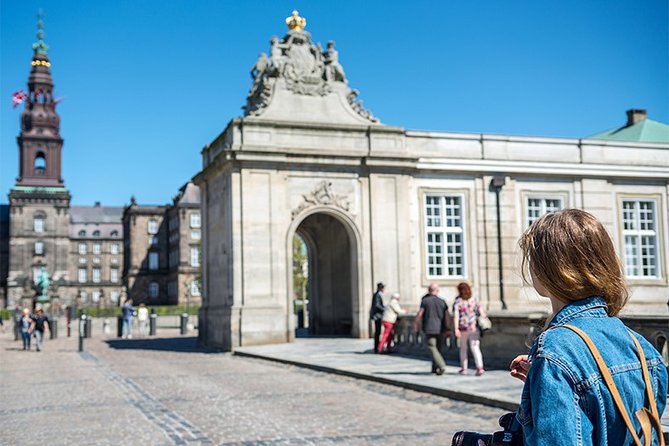
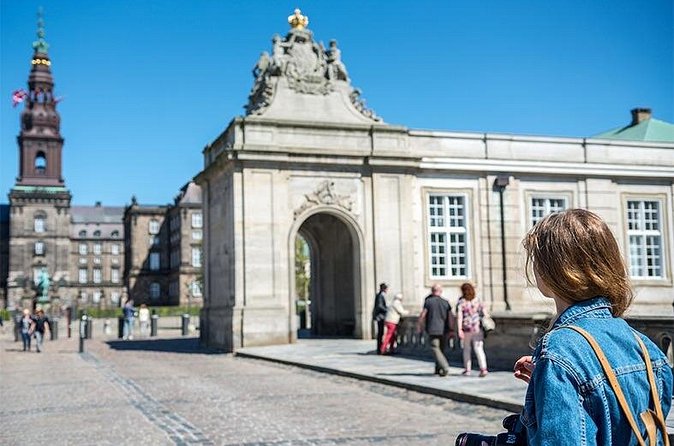
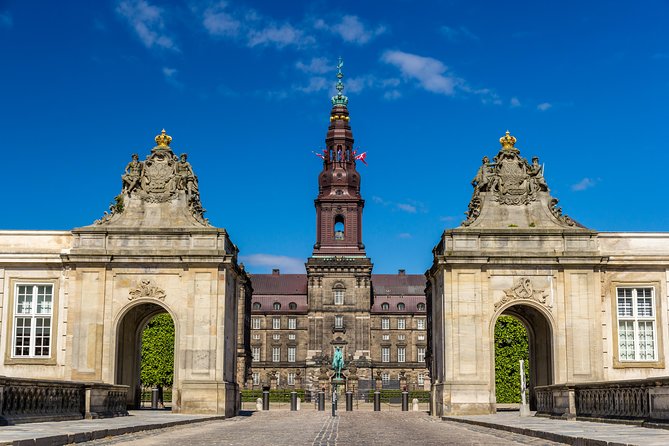
Next comes Christiansborg Palace, home to the Danish parliament. The palace is especially interesting from an architectural point of view because the complex includes Neo-baroque, Neo-classical, and Baroque elements.
This is one of the strongest sections of the route for anyone who likes government, architecture, or the visible layers of Copenhagen’s past. You get a sense of how royal and political power occupy the same central district. Yet again, the emphasis is on the exterior. If you want palace rooms, parliamentary spaces, or a longer look inside, you will need a separate ticket and more time.
The schedule does not assign a separate duration to the National Museum and Christiansborg section. That is another sign that the guide will keep you moving. Ask your guide your most important question early, rather than waiting until the end.
Børsen and the old trading quarter
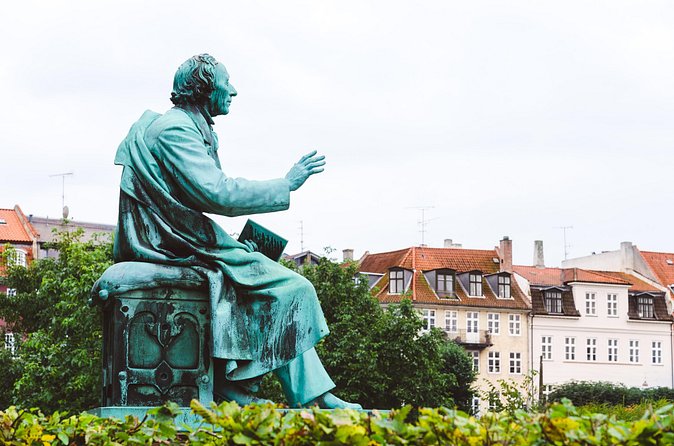
Børsen, the 17th-century Old Stock Exchange, is one of the most distinctive buildings on the walk. Its Dutch Renaissance design is credited to Lorentz and Hans van Steenwinckel the Younger, and the building now houses the Danish Chamber of Commerce.
The 15-minute stop should work well for an exterior explanation. Børsen gives the route a change of mood after the civic buildings around City Hall and Christiansborg. Here, the focus shifts toward commerce and Copenhagen’s role as a trading city.
You will want to look closely at the building rather than treating it as a quick photo stop. The architecture is the main attraction, and a guide can point out details that are easy to miss when you walk past alone.
There is no admission charge for the stop because it is an outside visit. That also means the experience depends heavily on the guide’s storytelling. A strong guide can turn a short look at the facade into a memorable lesson. A weaker one may leave you with little beyond a photograph.
A few more Copenhagen outings worth comparing
- Copenhagen Card-Discover: 80+ Attractions & Public Transport
★ 4.6 · 5,351 reviews - Copenhagen: Hop-On Hop-Off Bus Tour with Boat Tour Option
★ 3.9 · 4,122 reviews - From Copenhagen: Lund and Malmö 2-Country Tour
★ 4.7 · 3,807 reviews - Copenhagen: Highlights 3 Hour Bike Tour with a Local Guide
★ 4.8 · 2,312 reviews
Stork Fountain and Strøget: local meeting place, major shopping street
The next stop is the Stork Fountain, built to mark the silver wedding anniversary of Crown Prince Frederik VIII and Crown Princess Louise. It has long served as a meeting point for local people.
The 10-minute pause is brief, but the fountain is a useful marker between the historic buildings and the shopping streets. I like stops such as this because they connect formal history with ordinary city life. A monument can be impressive, but knowing that people use it as a meeting place makes it easier to understand its place in the city.
After the fountain, you enter Strøget. This is not one single street in the strict sense. It is a series of connected streets forming a long shopping route between City Hall and Kongens Nytorv.
You should expect a general introduction rather than time to browse. Fifteen minutes is enough to understand the route and see the character of the area, but not enough for serious shopping. If you plan to buy Danish design, clothing, or souvenirs, note the shops that interest you and return after the tour.
This section also gives you a practical way to navigate central Copenhagen on your own. Once you know that Strøget runs between the two major squares, you have a simple line to follow through the city center.
Kongens Nytorv and Copenhagen’s grand urban scale
Kongens Nytorv, or King’s New Square, brings the walk into a more formal urban setting. The square contains notable buildings and statues, including the equestrian statue of Christian V, described as the oldest equestrian statue in Copenhagen.
The 15-minute visit lets you pause after the narrower shopping streets and take in the larger scale of the square. This is a good place for photographs, but it is also a helpful spot to notice how Copenhagen changes from working streets to ceremonial public space.
The guide can connect the square with the route you have already walked. City Hall, the shopping streets, the old exchange, and the royal district are not isolated sights. They form a compact central area, and the tour’s value comes from seeing those links.
The tradeoff is familiar: you will receive a quick reading of the square, not a long historical discussion. If you have a particular interest in Christian V or the surrounding buildings, use the private format to ask for more detail.
Nyhavn: a colorful finish by the canal
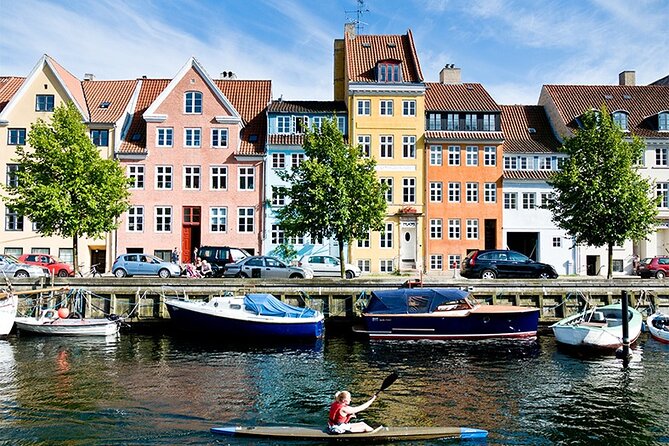
The stated sightseeing route ends at Nyhavn, the New Harbour. The canal stretches for about 450 meters and is lined with colorful 17th and 18th-century townhouses, cafes, and restaurants.
This is the most instantly recognizable part of the walk, and it makes a satisfying final stop. The canal gives you the classic Copenhagen view many people expect, with bright facades, boats, and waterfront dining. Your guide can help place the scene in the wider route, rather than presenting it as an isolated postcard.
The 15-minute stop is enough for photographs and a short explanation. It is not enough for a meal, a drink, or a proper canal-side pause. I would plan to stay afterward if you like the setting. Nyhavn is also a useful place to continue exploring independently, since you finish among central sights and restaurants.
There is an important practical issue here. The itinerary says the tour finishes at Nyhavn, but the listed end point is Frihedsstøtten at Vesterbrogade 6, near the western side of the city center. Those locations are not the same. Ask the provider to confirm the actual end point before you pay, especially if you have a dinner reservation, hotel transfer, or timed attraction afterward.
Is $470.45 good value for a private group?
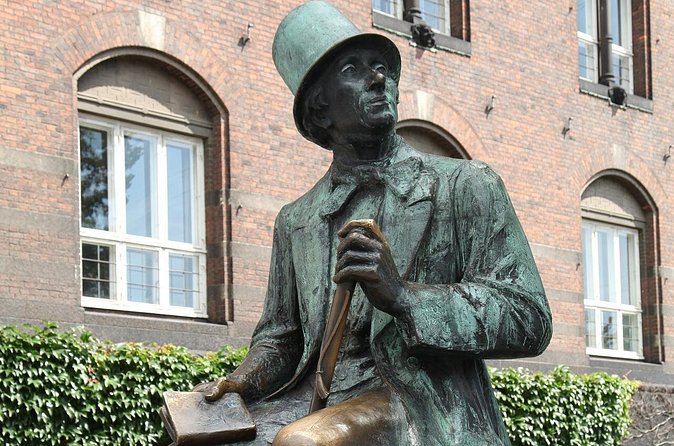
The price is $470.45 for the entire group, with up to 15 people allowed. That works out to about $31 per person if you fill all 15 places, which can be reasonable for a private English-language guide covering central Copenhagen.
For two people, the calculation changes sharply. The same price becomes more than $235 per person, and you receive only about two hours of sightseeing with no admissions included. For a couple or a very small group, you should decide how much the private attention is worth.
The price makes more sense for a family, reunion, or larger party that wants one guide and one shared route. You do not have to coordinate several separate bookings, and the group can ask questions without competing with strangers.
Still, value depends on the guide. One specific account praises Valentina as pleasant and well prepared, crediting her with making the visit memorable. That is the kind of guide who can make a fast route work. Since only a small number of detailed ratings are available, I would not treat the price as a guarantee of a particular guide or style.
Remember that attraction tickets cost extra. That includes places you may wish to enter during or after the walk, such as Tivoli Gardens or museums. The tour is best priced as a guided orientation, not as an all-inclusive sightseeing package.
Pace, transport, and small practical warnings
The tour is near public transportation, and most people can participate. The walk itself connects central places, so you should think of public transport mainly as a way to reach the start or continue after the finish.
Allow extra time beyond the stated two hours. The listed stop times total about 95 minutes, leaving only around 25 minutes for walking between locations, transitions, and questions. That is possible, but it is not generous.
You may also want to handle city transport and attraction planning separately. A practical warning from the available experience notes that Copenhagen’s metro requires you to check in at a visible but easy-to-miss post. Failing to do so can result in a fine. The same advice points out that ticket prices may not be obvious before purchase, and city passes for transport and museums are better bought online rather than through tourism services.
These points are not part of the walking tour itself, but they matter if you plan to add museums, Tivoli, or public transport around it. Museum ticket queues can take time, and Tivoli admission can be expensive. Do not assume you can fit those visits into the two-hour walk without planning.
The cancellation rule is also strict. The booking is non-refundable and cannot be changed for any reason, so only reserve once your schedule is firm.
Who will get the most from this tour?
I think this walk suits a first-time visitor who wants a clear introduction to central Copenhagen. It also suits families and larger groups that value having one official guide rather than following a fixed public group.
You will likely appreciate it if you enjoy architecture, civic history, royal buildings, shopping streets, and famous city views. The route gives you a broad sample without requiring an entire day.
It is less suitable if you want to enter several attractions, spend time in museums, shop at leisure, or stop for food along the way. It is also a poor fit for a small party watching every dollar, since the group price is high when shared by only one or two people.
I would book it early in a Copenhagen visit, preferably when you still have time afterward to return to the National Museum, Christiansborg, Tivoli, or Nyhavn. That way, the guide helps you choose what deserves your own time next.
Should you book the Copenhagen private walking tour?
Book it if you have a larger group, want an English-speaking guide, and prefer a quick personal introduction to Copenhagen’s central sights. The route is sensible, the landmarks are important, and Valentina’s praise suggests that a good guide can make the short format work well.
Think twice if you are a couple, need interior access, or want a relaxed stroll. At $470.45, the value depends on group size and guide quality, and the unclear final meeting point needs checking first. For the right group, this is a useful orientation walk. For a small party seeking depth, a longer or more focused tour may offer better value.
FAQ
How long does the Copenhagen private walking tour last?
The tour lasts approximately two hours.
How many people can join the private tour?
The private tour is available for a group of up to 15 people.
What language is the tour offered in?
The tour is offered in English.
What sights are included on the route?
The route includes Copenhagen City Hall, Rådhuspladsen, the National Museum of Denmark, the exterior of Christiansborg Palace, Børsen, Stork Fountain, Strøget, Kongens Nytorv, and Nyhavn.
Are attraction entrance fees included?
No. Attraction entrance fees are extra, and the route is based on outside visits.
Where does the tour start?
The tour starts in Copenhagen, Denmark. A specific starting point should be confirmed at booking.
Where does the tour end?
The sightseeing route is described as ending at Nyhavn, but the listed end address is Frihedsstøtten, Vesterbrogade 6, 1620 København. Confirm the actual end point before booking.
Can the booking be canceled or changed?
No. The experience is non-refundable and cannot be changed for any reason.
Newest around Copenhagen
- WWII Copenhagen Nyhavn and War Museum Private Walking Tour★ 5.0 · 2 reviews
- Half Day Exploration of Helsingør and Kronborg★ 3.5 · 3 reviews
- Helsingør Castle and Historic City Self-Guided Walking Tour★ 4.0 · 4 reviews
- Full-Day Tour; Castle, Palace & Cathedral, Winter(JAN-MAR)★ 5.0 · 11 reviews
- walking tour – Copenhagen and Christiansborg 3 hours★ 4.0 · 7 reviews
- Copenhagen Walking Tour with Food Testing (smorrebrod dish & snap)★ 4.5 · 10 reviews
- The Philosopher’s Last Walk: An audio tour on the life of Søren Kierkegaard★ 4.5 · 5 reviews
- The Forgotten Giants Private Tour★ 5.0 · 3 reviews
Walking Tours, compared.
Politically Incorrect Private Highlights Walking Tour
Read our review →
Group Walking Tour – City Highlights – 2 Hours
Read our review →
3h walking tour, small group max 10 people Copenhagen
Read our review →
Walk & Canal Tour: Copenhagen Highlights + Changing of the Guards
Read our review →
Browse the lists this tour appears in