
Review · CASTLE TOURS
Copenhagen: Christiansborg Palace Entry Ticket
Power still lives here. Christiansborg Palace gives you a rare look at Denmark’s working center of government, not just a polished royal residence. I like the ticket’s broad access, from the grand Great Hall and Throne Room to the Royal Stables and 800-year-old ruins. I also like that you can set your own pace rather than follow a fixed tour. The main drawback is that the palace is spread across several areas, and some sections may close before the official 5 p.m. closing time.
At $35 per person, this is not a quick look at one grand room. It is a full day ticket covering five separate parts of the complex, with enough variety to suit history fans, architecture lovers, and anyone curious about Danish public life. You will need to manage your time carefully, and official events can force changes or cancellations.
In This Review
- Key points at a glance
- Why Christiansborg matters in Copenhagen
- Starting with the Royal Reception Rooms
- The Royal Stables and Denmark’s white horses
- The Royal Kitchen, where ceremony becomes practical
- Going underground to the 800-year-old ruins
- Christiansborg Chapel and the limits of the ticket
- How much time should you allow?
- Is $35 a fair price?
- Who will enjoy Christiansborg most?
- Practical details before you go
- Should you book Christiansborg Palace?
- FAQ
- How long is the Christiansborg Palace ticket valid?
- What areas are included with the palace ticket?
- Is the Palace Chapel included?
- Is a guided tour included?
- What time is the last entry?
- Can official events affect my visit?
- Can I bring food, luggage, or a backpack?
Key points at a glance
- Five different sights in one ticket: Visit the Royal Reception Rooms, Royal Stables, Royal Kitchen, underground ruins, and Christiansborg Chapel.
- The palace is still a workplace: The Folketing, Danish Prime Minister, High Court, and royal reception rooms all operate within the wider complex.
- The Great Hall is the visual high point: Its scale, decoration, and Queen’s wall hangings give you the grand royal moment most people expect.
- Real horses add life to the visit: The Royal Stables are home to beautiful white horses, not just empty historic stalls.
- The ruins explain Copenhagen’s long story: Underground remains connect today’s palace with more than 800 years of earlier buildings.
- Allow more time than you think: The palace closes at 5 p.m., last entry is 4:30 p.m., and some areas can close around 4 p.m.
Why Christiansborg matters in Copenhagen
Christiansborg sits on Slotsholmen, the island at the heart of Copenhagen. Since the early 1400s, this has been Denmark’s center of power. The building you see today is the third Christiansborg Palace, but it is only the latest chapter in a long sequence of castles and palaces.
The first Christiansborg was built between 1734 and 1745 under Christian VI. It burned in 1794. A second palace was completed in 1828 during the reign of Frederik VI, then destroyed by fire in 1884. The present building took shape between 1907 and 1928. Frederik VIII laid its cornerstone, and Christian X opened it.
That repeated rebuilding gives the visit more weight. You are not simply looking at royal furniture and grand rooms. You are seeing a site where medieval power, monarchy, modern government, and national ceremony all overlap.
The Folketing uses most of the palace today. The Danish Prime Minister, the High Court, and the Royal Reception Rooms are also based here. That mixture makes Christiansborg different from a palace that exists only as a museum. State visits, royal audiences, and official events still take place inside.
Other castles within reach of Copenhagen:
- Copenhagen: Kronborg, Frederiksborg Castle and Roskilde Tour
★ 4.9 · 1,763 reviews - Copenhagen: Rosenborg Castle Entry Ticket
★ 4.6 · 381 reviews - Full-Day; Castle, Palace, Cathedral & Viking ships Tour
★ 5.0 · 326 reviews
Starting with the Royal Reception Rooms
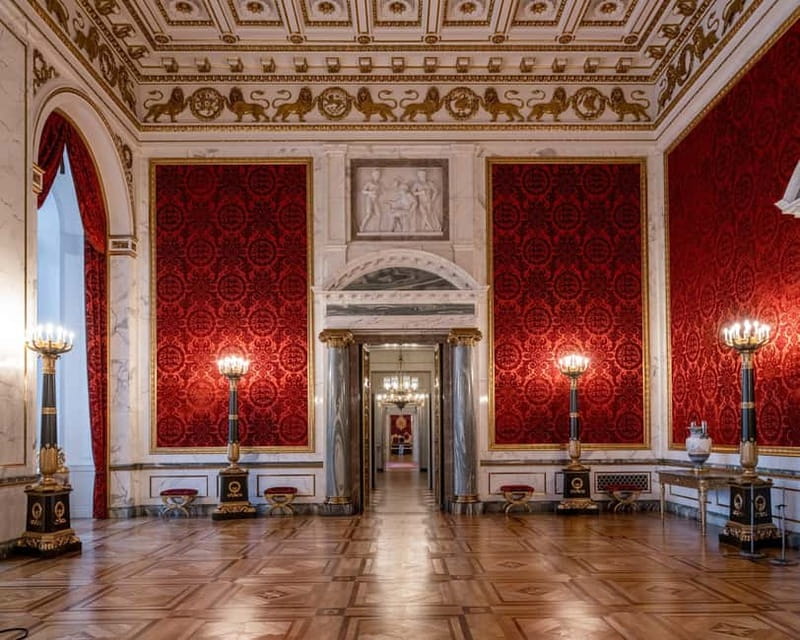
Begin with the Royal Reception Rooms if you want the strongest first impression. This is where you find the palace’s formal interiors, including the Throne Room and Great Hall.
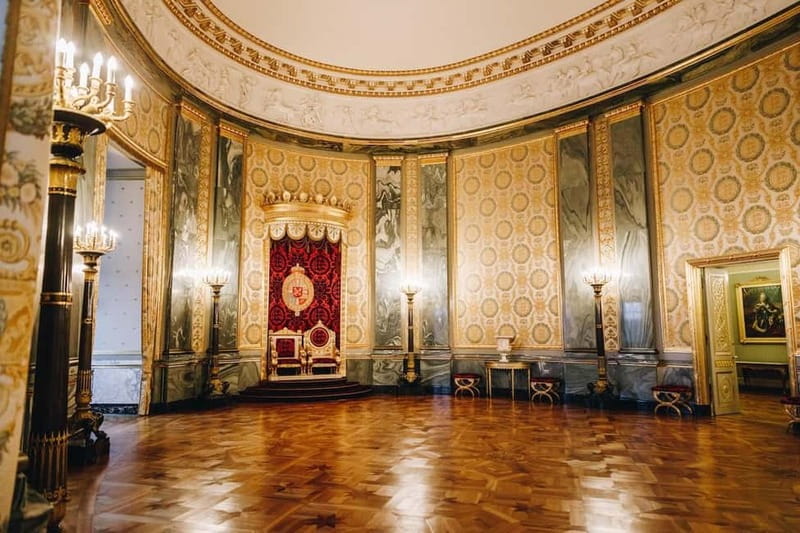
The Throne Room has a special ceremonial atmosphere. It is designed for important state occasions, so the room feels less like a private royal apartment and more like a stage for national events. You can picture the formality of royal audiences and official ceremonies without needing a long guided lecture.
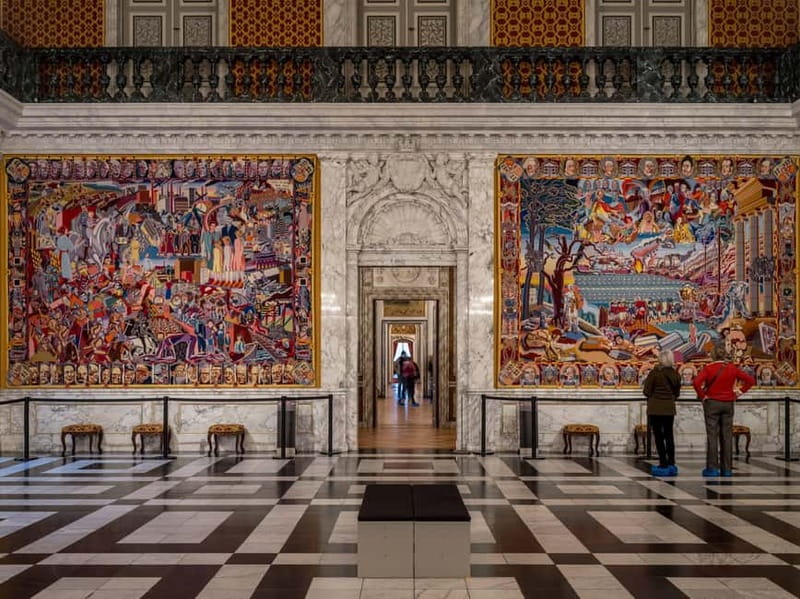
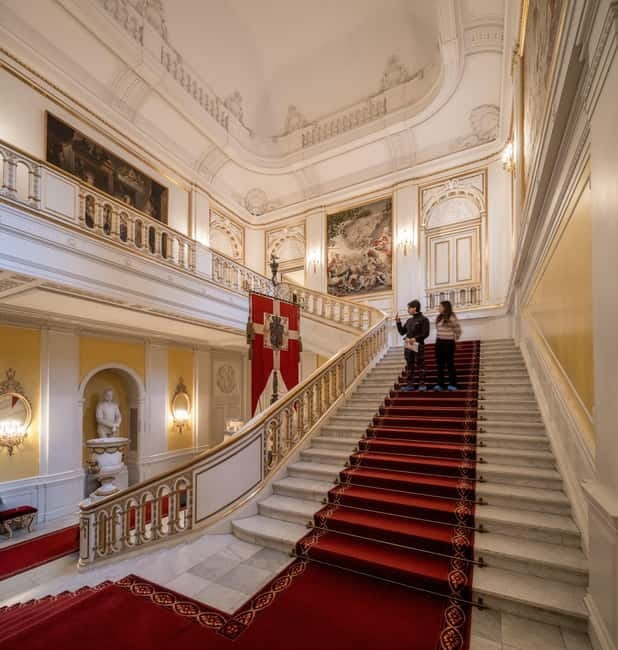
The Great Hall is the grand centerpiece. Its size gives you the sense of Denmark’s monarchy at full ceremonial scale. Look up, slow down, and give yourself time to take in the decoration rather than treating it as a passage between rooms.
The Queen’s Tapestries are a major reason to visit the Great Hall. They provide color and visual drama across the room, while also connecting the modern palace to Danish history and royal tradition. One visitor particularly enjoyed the Gobelins, which are part of the palace’s decorative appeal.
Photography is allowed in the rooms, according to a recent visit, so you can take pictures as you go. Still, this is one place where your eyes will do a better job than your phone. The scale of the Great Hall is difficult to capture in a single frame.
The rooms are well organized, with explanations that give you context without overwhelming every object with text. If you like museums that let you look first and read second, this format works well. An audio app has also been described as concise and educational, though this is not a guided tour.
The Royal Stables and Denmark’s white horses
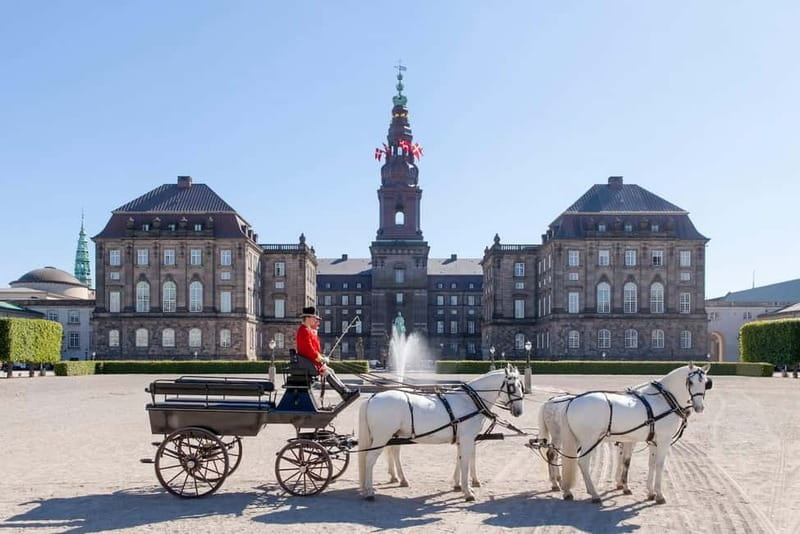
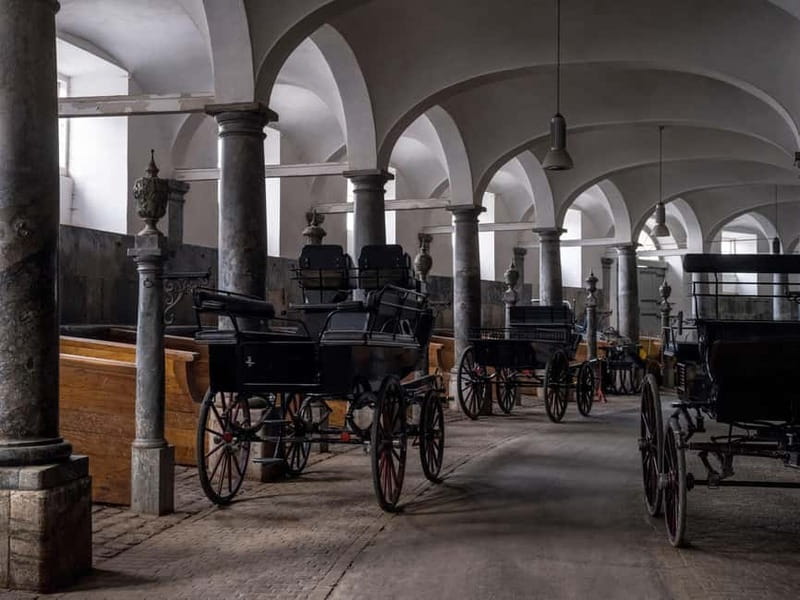
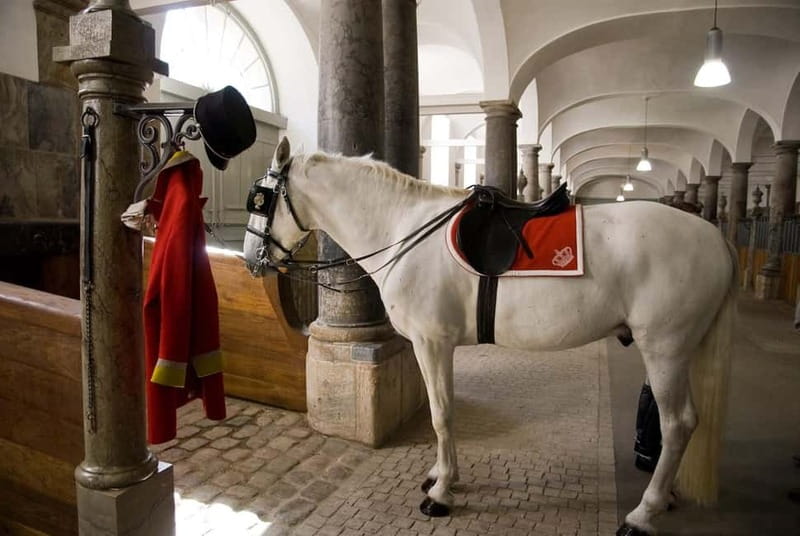
The Royal Stables bring a welcome change of mood. After the formal rooms, you move into a more practical part of royal life, where horses, carriages, and stable work connect the palace to ceremony in a physical way.
The most memorable detail is that the stables contain real royal horses. Beautiful white horses have been seen there, which gives this section more life than a display of empty stalls and labels. If you have children with you, the horses may be the part they remember best.
The stables also help explain how royal ceremonies function. Grand arrivals and processions depend on animals, carriages, staff, and careful preparation. Here, the palace feels less like a distant symbol and more like a working institution.
Allow enough time for the stables rather than racing through them after the reception rooms. They are in a different area of the palace complex, and one useful practical detail is that you may need to walk around the grounds to find each entrance. Signs help, and staff can point you in the right direction.
The Royal Kitchen, where ceremony becomes practical
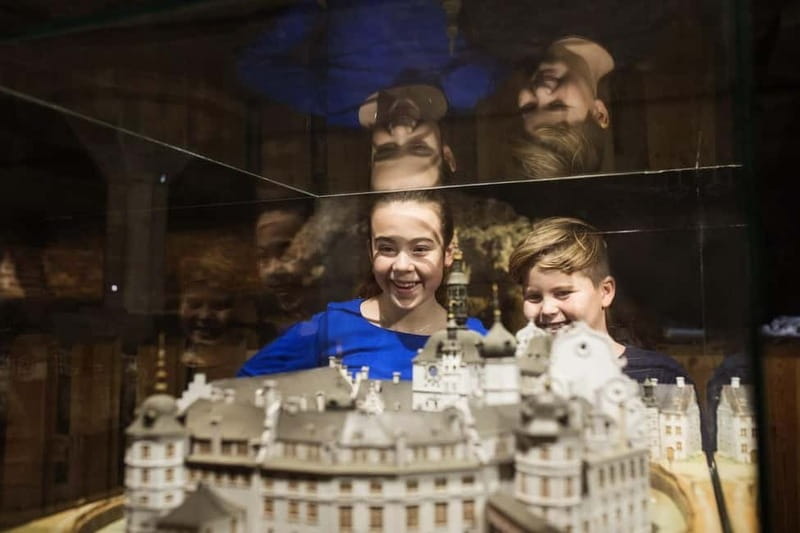
The Royal Kitchen offers another useful change of perspective. The reception rooms show the finished public image of royal life. The kitchen lets you think about the labor behind formal meals and palace events.
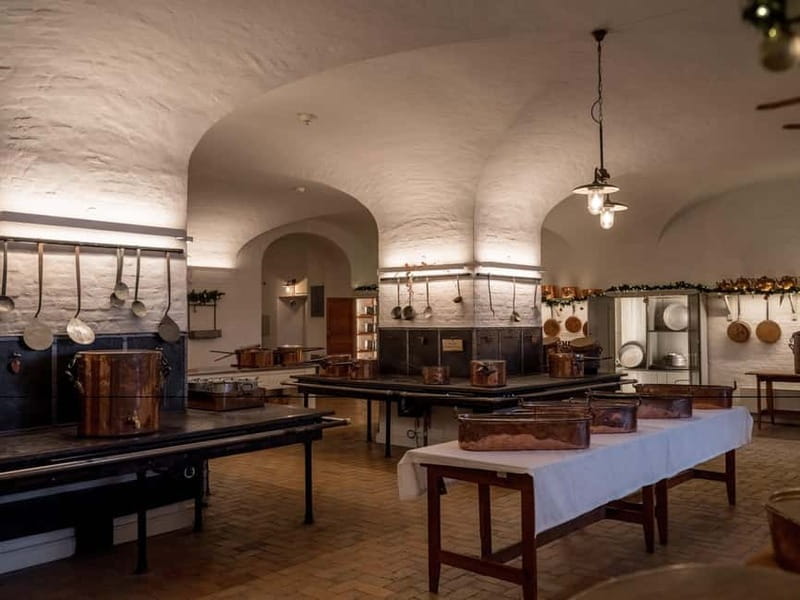
This is a good stop for anyone who enjoys historic kitchens, household organization, or the behind-the-scenes side of palaces. The attraction is not simply the equipment. It is the contrast between the polished rooms upstairs and the work required to support them.
The kitchen is included in the same palace ticket, so you do not have to decide if it deserves an extra charge. That matters because some visitors may be more interested in the rooms and ruins than domestic history. You can choose your emphasis without buying separate admission.
The various areas are not arranged as one straight route. Treat the ticket as permission to explore a complex rather than as a single linear tour. Check the posted hours as you go, since at least one visitor found that some sections closed around 4 p.m. even though the palace itself remained open until 5 p.m.
A few more Copenhagen outings worth comparing
- Copenhagen Card-Discover: 80+ Attractions & Public Transport
★ 4.6 · 5,351 reviews - Copenhagen: Hop-On Hop-Off Bus Tour with Boat Tour Option
★ 3.9 · 4,122 reviews - Private Walking Grand Tour of Copenhagen
★ 5.0 · 3,953 reviews - From Copenhagen: Lund and Malmö 2-Country Tour
★ 4.7 · 3,807 reviews
Going underground to the 800-year-old ruins
The ruins under Christiansborg are the most important stop for understanding the site. Upstairs, the palace presents royal power in its finished form. Underground, you see the remains of earlier buildings that occupied Slotsholmen.
These ruins reach back roughly 800 years. They make the palace’s repeated fires and rebuilding visible instead of leaving them as dates in a brochure. You can connect the medieval Copenhagen Castle with the later Christiansborg buildings and understand that the present palace is part of a much longer story.
The underground setting also changes the pace. The grand rooms ask you to look upward at decoration and ceremony. The ruins ask you to look down, follow foundations, and think about what survived. The contrast is one of the best features of the ticket.
If you are short on time, do not skip the ruins automatically. The Great Hall may be the showpiece, but the ruins provide the clearest sense of historical change. They also give the visit a stronger connection to Copenhagen itself, beyond the royal family and formal interiors.
Christiansborg Chapel and the limits of the ticket
The Palace Chapel is included in the overall visit, but it has different access details. The chapel is free to enter and open on Sundays. That means you should check the day of your visit before building your plan around it.
Because the chapel is not presented as part of the same paid access in exactly the same way as the other sections, think of it as an added opportunity rather than the main reason to buy the ticket. If it is open during your visit, it can round out the palace experience with a quieter religious setting.
The five main areas are the Royal Reception Rooms, Royal Stables, Royal Kitchen, ruins, and chapel. Their different characters are what make the ticket worthwhile. You are not paying for five versions of the same display.
How much time should you allow?
The ticket is valid for one day, which gives you useful flexibility. You can move through the sections in one visit, pause for a break, and return to another part if the admission rules allow it that day. The supplied details do not promise re-entry, so ask staff before leaving the complex.
Do not arrive near closing time and expect to see everything. Last entry is at 4:30 p.m., while the palace closes at 5 p.m. Since some areas may close around 4 p.m., an early start is the safest plan.
A sensible order is:
- Royal Reception Rooms and Great Hall
- Royal Stables
- Royal Kitchen
- Underground ruins
- Palace Chapel, if open
You do not have to follow that order. I would start with the reception rooms while your attention is fresh, then use the stables and kitchen for variety. Finish with the ruins, unless the staff advises that a section is closing soon.
The grounds also offer a place to relax after the visit. One recent experience included time in the gardens, which can be useful after several hours indoors.
Is $35 a fair price?
At $35, Christiansborg is more expensive than a basic single-room palace admission. The value comes from the range of access. You receive the grand rooms, Great Hall, Queen’s Tapestries, kitchen, stables, and ruins under one ticket.
That is a strong deal if you plan to see most of the complex. It is less attractive if you only want a quick look at the Great Hall. In that case, the ticket may feel costly for the amount of time you spend inside.
I would compare the price with your interests and schedule, not just with the admission fee at another Copenhagen sight. The palace covers royal ceremony, working government, horses, food service, and archaeology. Few palace visits give you that many angles on one site.
There is no guided tour included. That keeps your visit independent, but it also means you need to read the signs, use any available audio material, or arrange a separate guide if you want a fuller explanation. The clear displays are enough for many people, especially those who prefer freedom over a fixed group route.
The activity information describes a small group limited to nine participants, but the core product is an entry ticket rather than a standard guided excursion. That small-group detail may matter at the point of booking, while the palace itself can still have different crowd levels depending on official events and opening conditions.
Who will enjoy Christiansborg most?
I would recommend this for first-time visitors who want one substantial historic stop in central Copenhagen. It gives you a broad picture of Danish royalty and government without sending you across the city to several unrelated museums.
It also suits:
- History fans who want medieval remains as well as later palace interiors
- Architecture lovers interested in decoration, rebuilding, and changing styles
- Families who will enjoy the horses and visual grandeur
- Visitors who prefer self-guided sightseeing
- Anyone curious about how a royal site still functions in modern government
It may be less suitable if you want a short, tightly guided tour. The complex requires walking between entrances, and the number of sections can feel like work if you are trying to fit it into a packed morning.
The exterior may not prepare you for the interiors. One useful warning is not to judge the palace from outside. The building can look less impressive from the street than the rooms inside. Give the interior a fair chance before deciding that Christiansborg is not for you.
Practical details before you go
Food and drinks are not allowed inside. Leave luggage, large bags, backpacks, and baby strollers elsewhere, since these are not permitted. Pets are also not allowed, apart from assistance dogs.
Check the palace’s status on the day you plan to visit. Christiansborg remains active for state visits, audiences, and official events. Those events can change or cancel an entry booking, so flexibility is valuable.
Free cancellation is available up to 24 hours in advance, and you can reserve now and pay later. Those terms are helpful if your Copenhagen schedule is still shifting, but they do not remove the need to check the day’s opening information.
Staff can help with directions once you are inside the palace grounds. That matters because the entrances to the different sections are spread around the site. Do not assume every doorway leads to the next part of the visit.
If you arrive late in the day, ask whether your ticket can be adjusted. One visitor who arrived about an hour before closing was offered a printed ticket validated for the next day. That is not something to count on, but it is worth asking politely if time works against you.
Should you book Christiansborg Palace?
Book it if you want variety and historical context in one stop. The Great Hall and Throne Room deliver the royal grandeur, while the stables, kitchen, and ruins keep the visit from becoming a parade of decorated rooms.
I would especially choose this ticket if you have at least several hours, enjoy exploring independently, and want to see how Danish monarchy connects with present-day government. Start early, keep an eye on section closing times, and wear comfortable shoes for the separate areas.
Skip it if your schedule allows only a brief palace visit or if you need a fully guided experience. For most visitors with enough time, though, the $35 ticket offers a well-rounded look at Copenhagen’s oldest center of power, with real horses, underground ruins, and royal rooms all under one admission.
FAQ
How long is the Christiansborg Palace ticket valid?
The ticket is valid for one day.
What areas are included with the palace ticket?
The ticket includes the Royal Reception Rooms, the Great Hall with the Queen’s Tapestries, the Royal Kitchen, the Royal Stables, and the ruins under Christiansborg Palace.
Is the Palace Chapel included?
The Palace Chapel is free to enter and is open on Sundays. Access can differ from the paid palace sections, so check its opening status for your visit.
Is a guided tour included?
No. A guided tour is not included with the entry ticket.
What time is the last entry?
Last entry is at 4:30 p.m., and the palace closes at 5 p.m. Some areas may close earlier, around 4 p.m.
Can official events affect my visit?
Yes. Christiansborg is an active palace used for state visits, audiences, and official events. An official event may require a booking to be changed or canceled.
Can I bring food, luggage, or a backpack?
No. Food and drinks, luggage, large bags, backpacks, baby strollers, and baby carriages are not allowed. Assistance dogs are permitted.
Newest around Copenhagen
- WWII Copenhagen Nyhavn and War Museum Private Walking Tour★ 5.0 · 2 reviews
- Half Day Exploration of Helsingør and Kronborg★ 3.5 · 3 reviews
- Helsingør Castle and Historic City Self-Guided Walking Tour★ 4.0 · 4 reviews
- Full-Day Tour; Castle, Palace & Cathedral, Winter(JAN-MAR)★ 5.0 · 11 reviews
- walking tour – Copenhagen and Christiansborg 3 hours★ 4.0 · 7 reviews
- Copenhagen Walking Tour with Food Testing (smorrebrod dish & snap)★ 4.5 · 10 reviews
- The Philosopher’s Last Walk: An audio tour on the life of Søren Kierkegaard★ 4.5 · 5 reviews
- Explore the Instaworthy Spots of Copenhagen with a Local★ 3.5 · 3 reviews
Castle Tours, compared.

Kronborg, Frederiksborg Castle and Roskilde Tour
Read our review →

Full-Day; Castle, Palace, Cathedral & Viking ships Tour
Read our review →
Out of Copenhagen; 2x Castles, Cathedral & (Viking Ships)
Read our review →
Kronborg (Hamlet Castle) & Frederiksborg Castles: PRIVATE TOUR
Read our review →
Copenhagen City & Christiansborg Palace Private Walking Tour
Read our review →Browse the lists this tour appears in