
Review · WALKING TOURS IN COPENHAGEN
3h Private walking tour, Copenhagen
Copenhagen reveals itself one street at a time. This private three-hour walk gives you a useful first look at the Danish capital, combining famous sights such as Nyhavn, Christiansborg Palace, Amagertorv, and City Hall with stories about Danish life, monarchy, architecture, and hygge. I like the one-group format, which keeps the experience personal, and I like the chance to shape the route around your interests. The main thing to watch is the pace: one guide received criticism for walking too quickly, so you should speak up early if you need a slower rhythm.
The tour costs $285.83 per group of up to 10 people, not per person. That can be fair value for a family or larger party, especially if you want a quick orientation without sharing a guide with a crowd. It is less attractive for one or two people unless the private format and tailored route matter more to you than saving money.
The guides have made a strong impression through warmth and subject knowledge. Jose has been praised for making Danish history easy to follow, while Morgan, Tom, Michelle, and Michel were each noted for enthusiasm, useful context, and personal attention. Michel also adjusted the route for a participant recovering from knee surgery, a helpful reminder that this is a private walk, not a rigid march.
In This Review
- Key points before you book
- Why this private Copenhagen walk works well
- Nyhavn and the Copenhagen you picture first
- Amagertorv and the old city center
- Christiansborg Palace and the business of Denmark
- Amalienborg and Denmark’s royal family
- The Round Tower and Copenhagen from above
- Copenhagen Cathedral and the city’s older religious center
- Strøget, shopping, and the practical city center
- City Hall Square and the tour’s loose ending
- Guide quality and the importance of speaking up
- Is $285.83 good value for up to 10 people?
- Who should book this Copenhagen tour?
- Should you book it?
- FAQ
- How long does the Copenhagen walking tour last?
- How many people can join the private tour?
- Where does the tour start?
- Where does the tour end?
- Are entrance tickets included?
- Can the route be adapted for my interests?
Key points before you book
- A private group of up to 10: You get the guide’s attention without a large tour crowd.
- A broad central Copenhagen route: The walk can include Nyhavn, Amagertorv, Christiansborg Palace, the Round Tower, the cathedral, Strøget, and City Hall.
- Useful for a first day: Three hours gives you a clear map of central Copenhagen and ideas for later exploring.
- Flexible route planning: The guide can adapt the tour to your interests, weather, walking speed, and group needs.
- Mostly an outside introduction: Several landmarks are viewing stops, and admission fees for selected sights are not included.
- A pace worth discussing: Ask the guide to check in often, particularly if anyone in your group has knee, hip, or mobility concerns.
Why this private Copenhagen walk works well
I see this as an orientation tour rather than a museum visit or a deep study of one part of town. In three hours, you move through several central districts and learn how Copenhagen fits together. That is useful when you have just arrived, have limited time, or want a local guide to point out what deserves a second look.
The private format is the real selling point. Your group alone takes part, so you can ask questions without worrying about holding up 30 other people. You can also request more royal history, architecture, Danish politics, shopping, or everyday culture. The route is shaped by weather, group interest, and walking speed, so the final ending is not fixed.
The meeting point is Fiolstræde 42 in central Copenhagen. From there, the walk reaches the old city and its major sights on foot. No car transport is included, and food and drinks are your responsibility. Public transport is nearby, but the experience itself is a walking tour.
The operator advertises the tour in English. Confirmation arrives at booking, and service animals are allowed. Most people can take part, but the route may feel demanding if you are not used to walking on city streets. Tell the guide about any limitation before setting off, then repeat the request if the pace begins to run away from you.
Other guided walks in Copenhagen:
- Private Walking Grand Tour of Copenhagen
★ 5.0 · 3,953 reviews - Copenhagen Highlights Walking Tour
★ 5.0 · 2,324 reviews - Politically Incorrect Private Highlights Walking Tour
★ 5.0 · 1,244 reviews
Nyhavn and the Copenhagen you picture first
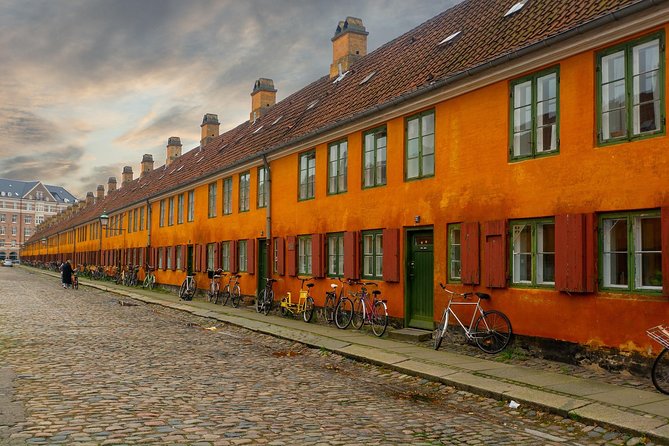
Nyhavn is the visual centerpiece of many first visits to Copenhagen. Its colorful canalside houses, historic harbor setting, and compact waterfront make it easy to understand why it appears on so many postcards. On this walk, Nyhavn provides a quick introduction to the city’s public face: attractive, historic, and still part of daily urban life.
You should not expect a long stop devoted only to Nyhavn. The tour aims to cover many sights, so the guide’s role is to give you context while keeping the route moving. That tradeoff works well if you want an overview. If you want time for photographs, cafés, or a close look at each building, tell the guide at the start.
The harbor district also helps set up the discussion of Danish hygge. That word is often reduced to candles and cozy rooms, but a good guide can connect it to the way people use public spaces, gather with friends, and value a comfortable pace of life. The experience promises stories you would not get from walking alone, and this is where those stories can turn a pretty street into a place with character.
Amagertorv and the old city center
Amagertorv is described as one of the most central squares in Copenhagen and one of the city’s oldest. Its name comes from farmers from Amager, who once came into town to sell produce. Today, the square forms part of Strøget, Copenhagen’s major pedestrian shopping zone.
The planned stop is brief, about five minutes. That is enough for a short explanation and a look around, but not enough for a long architectural study. I would treat it as a connecting point between several parts of the old center rather than a destination where you will spend much of the tour.
This stop is valuable because it shows how Copenhagen’s old marketplace life has shifted into a modern pedestrian district. You get a small piece of medieval urban history, then see the same central space functioning as part of a shopping route. The contrast gives the city a sense of continuity without requiring a long lecture.
Christiansborg Palace and the business of Denmark
Christiansborg Palace sits on Slotsholmen and serves as the home of the Danish Parliament, the Prime Minister’s Office, and the Supreme Court. It is not only a palace. It is also one of the clearest places to understand how Denmark combines monarchy, elected government, and the courts in one symbolic center.
The tour includes Christiansborg among its principal sights, but the information provided does not promise admission to the interior. You should plan on an exterior or area visit unless your guide confirms otherwise. Optional activity costs are not included, so any paid entry would be extra.
For a first visit, that may be enough. A guide can explain what you are seeing, point out the palace’s role in modern Denmark, and help you decide if the interior deserves a separate visit. I like this approach because it protects the limited three-hour schedule. You get the political context without spending the entire walk indoors.
A few more Copenhagen outings worth comparing
- Copenhagen: Highlights 3 Hour Bike Tour with a Local Guide
★ 4.8 · 2,312 reviews - Copenhagen Highlights 3 Hour Bike Tour with local Guide
★ 5.0 · 1,125 reviews - 3-hour Copenhagen City Highlights Bike Tour
★ 5.0 · 757 reviews - 3h walking tour, small group max 10 people Copenhagen
★ 5.0 · 686 reviews
Amalienborg and Denmark’s royal family

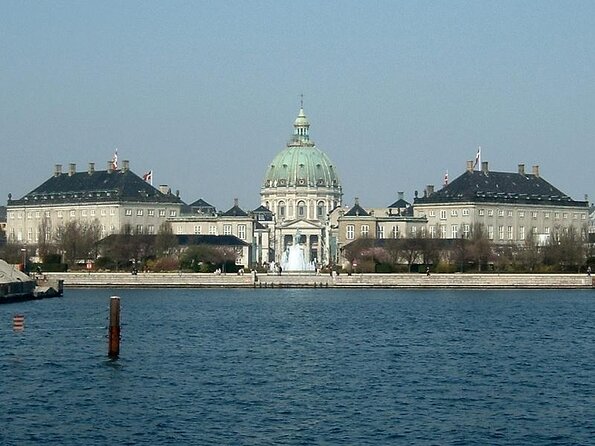
Amalienborg Palace is the stop for visitors interested in royal life. Denmark’s royal family still resides inside the palace, giving the site a direct connection to the country’s present-day monarchy rather than only its past.
The listed stop lasts about 10 minutes. Admission to the Amalienborg Palace Museum is not included, so this portion is best understood as a brief introduction unless you buy a separate ticket. You may see the palace area and hear about the royal household, but you should not assume that the museum visit forms part of the three-hour tour.
That distinction matters when comparing the price with a full-day sightseeing package. This experience gives you a guided overview of major landmarks. It does not bundle all entrance fees or replace a detailed palace visit. If royal interiors are a priority, ask how much time the guide can devote to Amalienborg and consider returning independently.
The Round Tower and Copenhagen from above

The Round Tower, or Rundetaarn, dates from the 17th century and remains Europe’s oldest functioning observatory. It was built during the reign of Christian IV, when Denmark had a strong interest in astronomy, especially after the work of astronomer Tycho Brahe.
The tower’s observatory is still used by amateur astronomers. An outdoor platform surrounds it and offers views across the older part of Copenhagen. The scheduled stop is only about five minutes, and admission is not included.
That short timing is the clearest sign that you should not expect to climb the tower during the guided route. The guide can explain why it was built and show you where it fits into the city, while you can decide later if you want to pay for entry and spend more time above the rooftops.
This is a good example of the tour’s overall method: show you the important places, give you the story, and help you choose where to return. It is efficient, but it favors breadth over extended visits.
Copenhagen Cathedral and the city’s older religious center
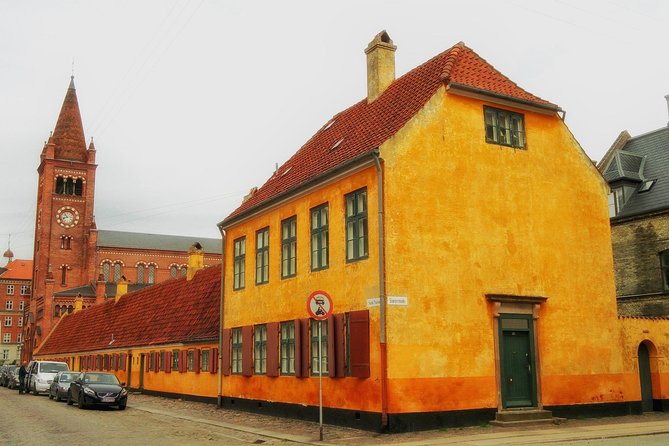
Church of Our Lady, also called Copenhagen Cathedral, gives the walk a quieter cultural stop. The building you see today is a restrained Neoclassical design by architect C.F. Hansen. Its foundation stone was laid by King Frederik VI in 1817, and it was consecrated in 1829.
The site itself is much older. A church has stood here since the early period of Copenhagen, when Bishop Absalon had a small chapel built at one of the town’s highest points around 1200. That detail helps place the cathedral within the city’s long development, even though the present building is comparatively modern.
The planned stop is about five minutes, and admission is not included. You may only have time for an exterior explanation or a quick look inside, depending on the day and the group’s pace. If religious art, architecture, or the cathedral’s interior matters to you, say so when customizing the route.
Strøget, shopping, and the practical city center
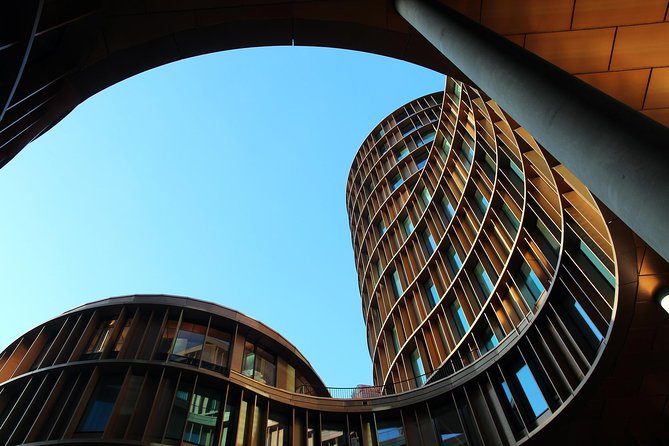
Strøget is Copenhagen’s main shopping street and one of Europe’s longest pedestrian shopping routes. The 1.1-kilometre stretch links City Hall Square with Kongens Nytorv through several connected streets, including Frederiksberggade, Nygade, Vimmelskaftet, and Østergade.
The tour gives this area about 10 minutes. That is enough to understand the route and locate shops or cafés you may want to revisit. It is not enough for serious shopping, so keep your wallet in your pocket until the walk ends unless you are happy to pause and shorten another stop.
I like having Strøget in the itinerary because it shows Copenhagen as a living city, not just a collection of palaces and old squares. You can see the mix of budget chains and high-end brands, then compare it with the quieter side streets nearby. If shopping is not your thing, ask the guide to spend more time on architecture or local life instead.
City Hall Square and the tour’s loose ending
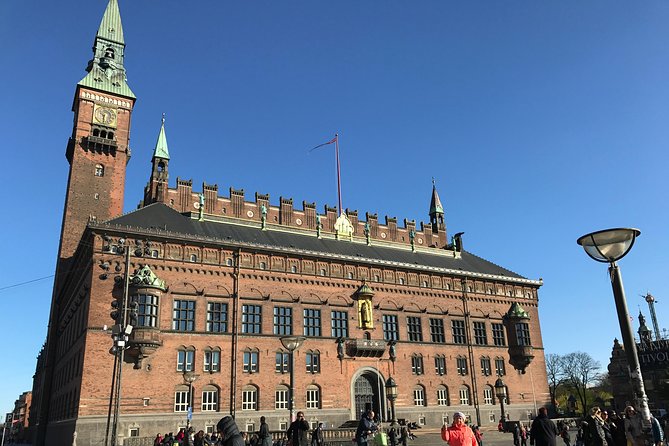
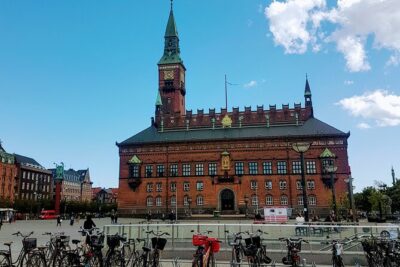
The final listed sight is Copenhagen City Hall and the broad square in front of it. City Hall Square is a central gathering place used for events, celebrations, and demonstrations. Its size and location make it an easy point from which to continue exploring on your own.
The scheduled stop is about 10 minutes. There is no fixed end point because the final route depends on the weather, your group’s interests, and how quickly you walk. That flexibility is useful, but you should not book a timed attraction immediately afterward unless you leave a generous buffer.
The lack of a fixed finish can also work in your favor. Your guide may end somewhere that suits your next plan, although this should be discussed during the walk rather than assumed. Ask for restaurant suggestions, as Tom has been praised for offering recommendations that visitors planned to try during the following days.
Guide quality and the importance of speaking up
The strongest part of this experience is the guide relationship. Jose has been described as personable and good at making Danish history accessible. Morgan has been praised for enthusiasm and for adding context about sites and local life. Tom has earned approval for his command of Danish history and practical restaurant advice.
Michelle and Michel have also been singled out for explaining Copenhagen’s history, people, architecture, and lifestyle with warmth. Michel adjusted a route for a participant with a recent knee surgery, showing what a private booking can do when you communicate your needs clearly.
There is one useful caution. A participant felt pulled through the center because the guide walked too fast and did not check the pace often enough. The company responded that the guide had become absorbed in conversation and did not notice the problem, then said guides would check in more regularly.
I would take that seriously, especially with children, older adults, or anyone recovering from an injury. At the meeting point, say plainly that you want a comfortable pace and regular pauses. A private tour gives you the right to ask. Do not wait until you are already uncomfortable.
Is $285.83 good value for up to 10 people?
At $285.83 per group, the price works best when shared among several people. Ten participants would pay less than $29 per person, while a couple would effectively pay more than $142 each. The value depends on how much you care about privacy, flexibility, and a guide who can respond to your questions.
The fee includes an English-speaking local guide and a customized private walk. It does not include food, drinks, optional activities, entrance tickets, or transport to and from attractions. Since the tour is built around central Copenhagen, you mainly pay for the guide’s time and the stories connecting the sights.
The high rating, 4.9 from 49 ratings, with 98 percent recommending the experience, supports the idea that the format works well for many groups. Still, the price is not a bargain sightseeing loop. You are paying for personal attention, not a bundle of admissions.
Who should book this Copenhagen tour?
I would recommend it to first-time visitors who want a quick city orientation, families who need a private guide, couples who prefer a flexible route, and small groups arriving with limited time. It also suits anyone who wants to ask questions about Danish culture without waiting for a large group to move along.
It is especially useful at the start of a Copenhagen stay. After three hours, you should know where the central sights are and which places deserve a longer return visit. The tour can also help you decide how to spend the rest of your time.
I would think twice if you want long interior visits, a leisurely café break, or a slow photographic walk. The route covers many places, and several stops are brief. It is also not the right choice if you dislike walking or need a guaranteed flat, slow route without first discussing your needs.
Cancellation is free up to 24 hours before the start time for a full refund. Changes or cancellations made less than 24 hours before the start time are not accepted or refunded.
Should you book it?
Book this tour if you want a private introduction to central Copenhagen, especially when your group can share the cost. The best use of the three hours is to request your priorities in advance, then ask for a comfortable pace and enough time for questions.
Skip it if you mainly want admission to Amalienborg, the Round Tower, or other interiors. In that case, plan individual visits instead. For most first-time visitors with only a short window, though, this is a practical way to meet Copenhagen’s major sights and leave with a clearer plan for the rest of your stay.
FAQ
How long does the Copenhagen walking tour last?
The tour lasts approximately three hours.
How many people can join the private tour?
The price covers one private group of up to 10 people. Only your group participates.
Where does the tour start?
The meeting point is Fiolstræde 42, 1171 København, Denmark.
Where does the tour end?
There is no fixed ending point. The final route depends on weather, group interests, and walking speed.
Are entrance tickets included?
No. Food, drinks, optional activity costs, and admission fees are not included. Admission is specifically not included for Amalienborg Palace Museum and the Round Tower.
Can the route be adapted for my interests?
Yes. The itinerary can be customized, and the guide can consider your interests, weather, group speed, and other needs during the private experience.
Newest around Copenhagen
- WWII Copenhagen Nyhavn and War Museum Private Walking Tour★ 5.0 · 2 reviews
- Half Day Exploration of Helsingør and Kronborg★ 3.5 · 3 reviews
- Helsingør Castle and Historic City Self-Guided Walking Tour★ 4.0 · 4 reviews
- Full-Day Tour; Castle, Palace & Cathedral, Winter(JAN-MAR)★ 5.0 · 11 reviews
- walking tour – Copenhagen and Christiansborg 3 hours★ 4.0 · 7 reviews
- Copenhagen Walking Tour with Food Testing (smorrebrod dish & snap)★ 4.5 · 10 reviews
- The Philosopher’s Last Walk: An audio tour on the life of Søren Kierkegaard★ 4.5 · 5 reviews
- The Forgotten Giants Private Tour★ 5.0 · 3 reviews
Walking Tours, compared.
Politically Incorrect Private Highlights Walking Tour
Read our review →
Group Walking Tour – City Highlights – 2 Hours
Read our review →
3h walking tour, small group max 10 people Copenhagen
Read our review →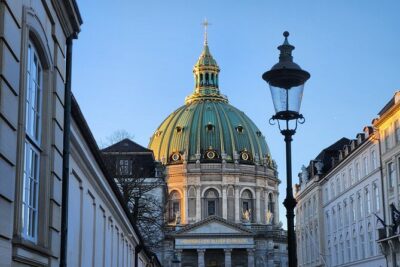
Walk & Canal Tour: Copenhagen Highlights + Changing of the Guards
Read our review →
Browse the lists this tour appears in